

On November 4 at 15:00, in A101 aud. (National Center for Physical and Technological Sciences, Saulėtekio ave. 3), Begoña Vila, Doctor of Astrophysics and NASA Instrument Systems Engineer, will give a public lecture "Two Wonderful Space Telescopes to Explore the Universe: James Webb and Nancy Grace Roman".
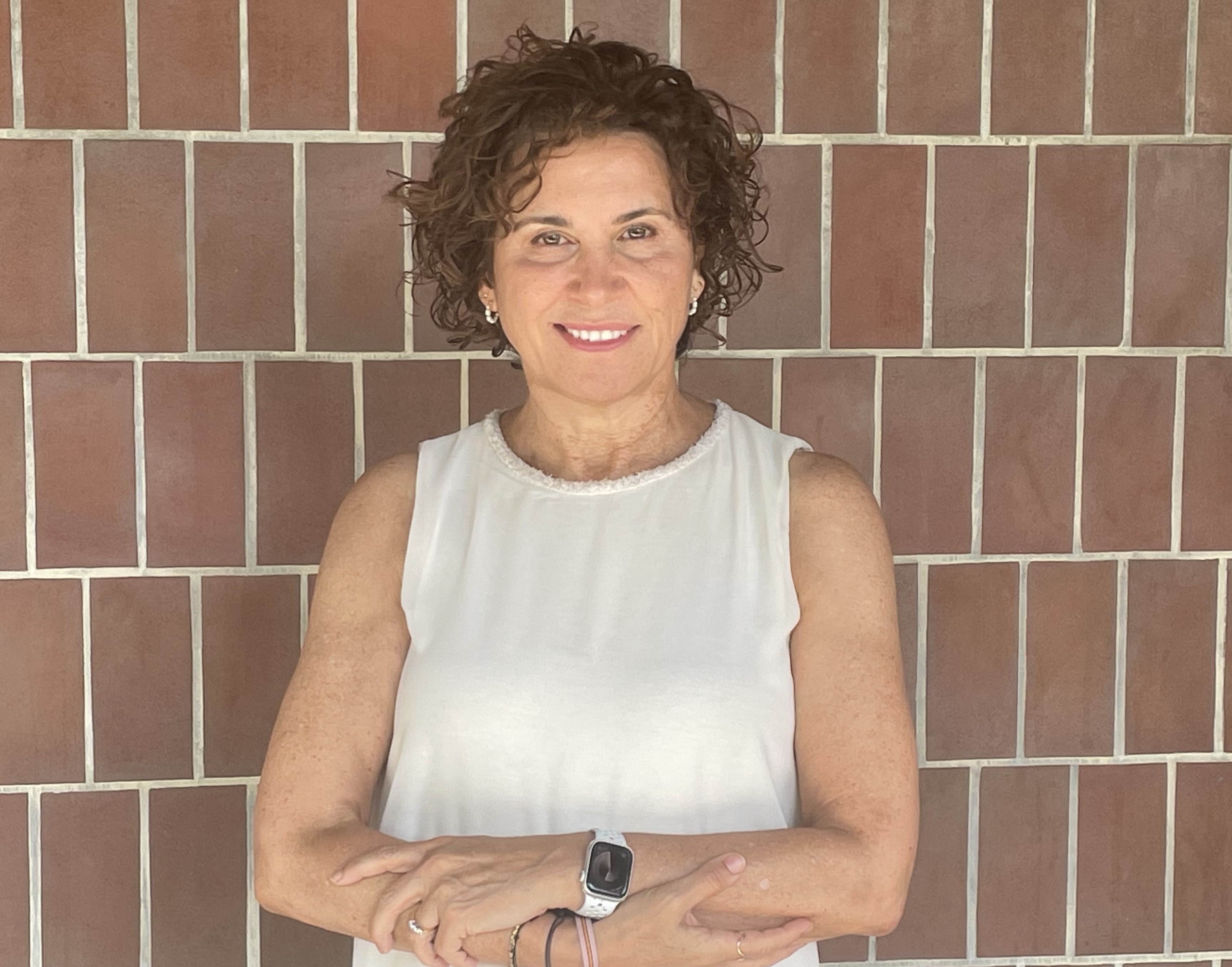
Dr Begoña Vila
In her lecture, the scientist will discuss the projects she is contributing to—the James Webb Space Telescope and the Nancy Grace Roman Space Telescope—the challenges of working on missions of such scale and importance, their advanced technologies, and the opportunities they open up for science.
According to Dr. B. Vila, the James Webb Telescope helps to determine whether there are exoplanets similar to Earth and allows us to explore our own solar system in greater detail.
„The James Webb Space Telescope is the largest and most complex telescope launched into space to date with new technologies that are allowing us, for the first time, to peer back into the early Universe and observe when galaxies and stars formed to help us understand their evolution to a galaxy like ours and a star like our sun," says Dr B. Vila.
The Nancy Grace Roman Space Telescope is scheduled to be launched into orbit in May 2027. The engineer says that it will show an infrared rays image of the sky.
„This will help us understand what dark matter and dark energy could be and will find thousands more planets around other stars in that ongoing quest to learn if we are alone," tells the scientist..
Dr Begoña Vila has been working on the James Webb Space Telescope since 2006 initially in Canada for the Fine Guidance Sensor & Near-Infrared Imager & Slitless Spectrograph (FGS/NIRISS) and since 2013 at NASA as Systems Lead for FGS/NIRISS and as Deputy for Operations of the JWST Science Instruments. She is also part of the Systems team on the Nancy Grace Roman Space Telescope and is the test director lead for its Thermal Vacuum test and co-lead on its Fine Guidance Sensor. She has received various achievement awards including the NASA Exceptional Public Achievement Medal in 2016, the NASA Exceptional Public Service Medal in 2022 and various awards in Spain.
Partners of the event: Embajada de España en Lituania, International Astronomical Union (IAU), European Association for Astronomy Education (EAAE).