Sidebar

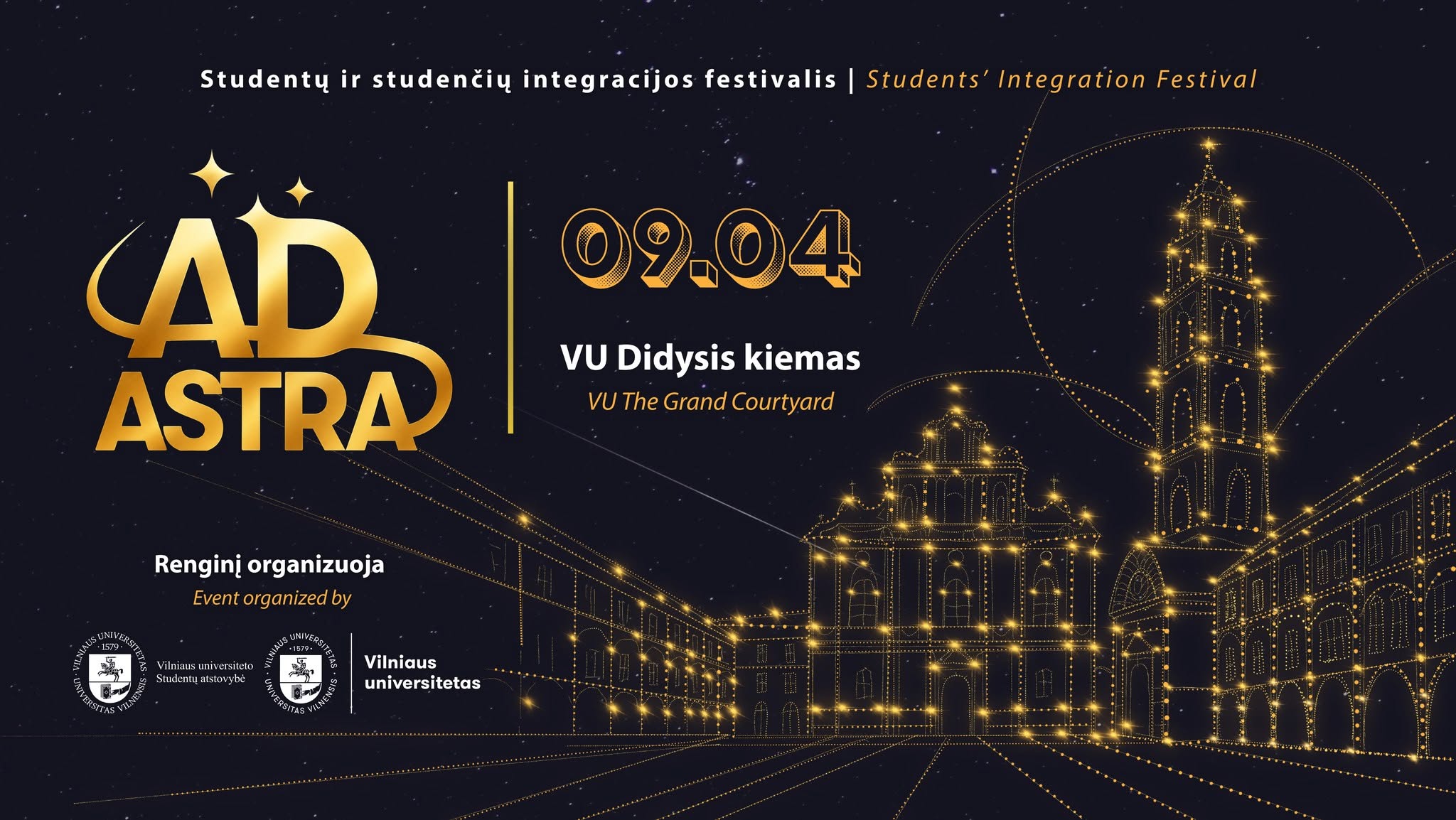
Start time: 2026-09-04 13:00
End time: 2026-09-04 22:00
Vieta: Vilnius University Central Palace (Universiteto St. 3, Vilnius)

For the 7th year in a row, the VU SR integration festival "AD ASTRA" will once again bring the Vilnius University community together to celebrate the beginning of the new academic year!

Start time: 2026-09-01 09:30
End time: 2026-09-01 16:30

Congratulations to everyone on the new school year! On 1 September, we invite all members of the Vilnius University community to come together to welcome the new academic year. Please note that Tuesday, 1 September is the opening day of Vilnius University's academic year, RENOVATIO STUDIORUM – thus there will be no lectures on that day. 

Start time: 2026-09-19 14:00
End time: 2026-09-19 22:00

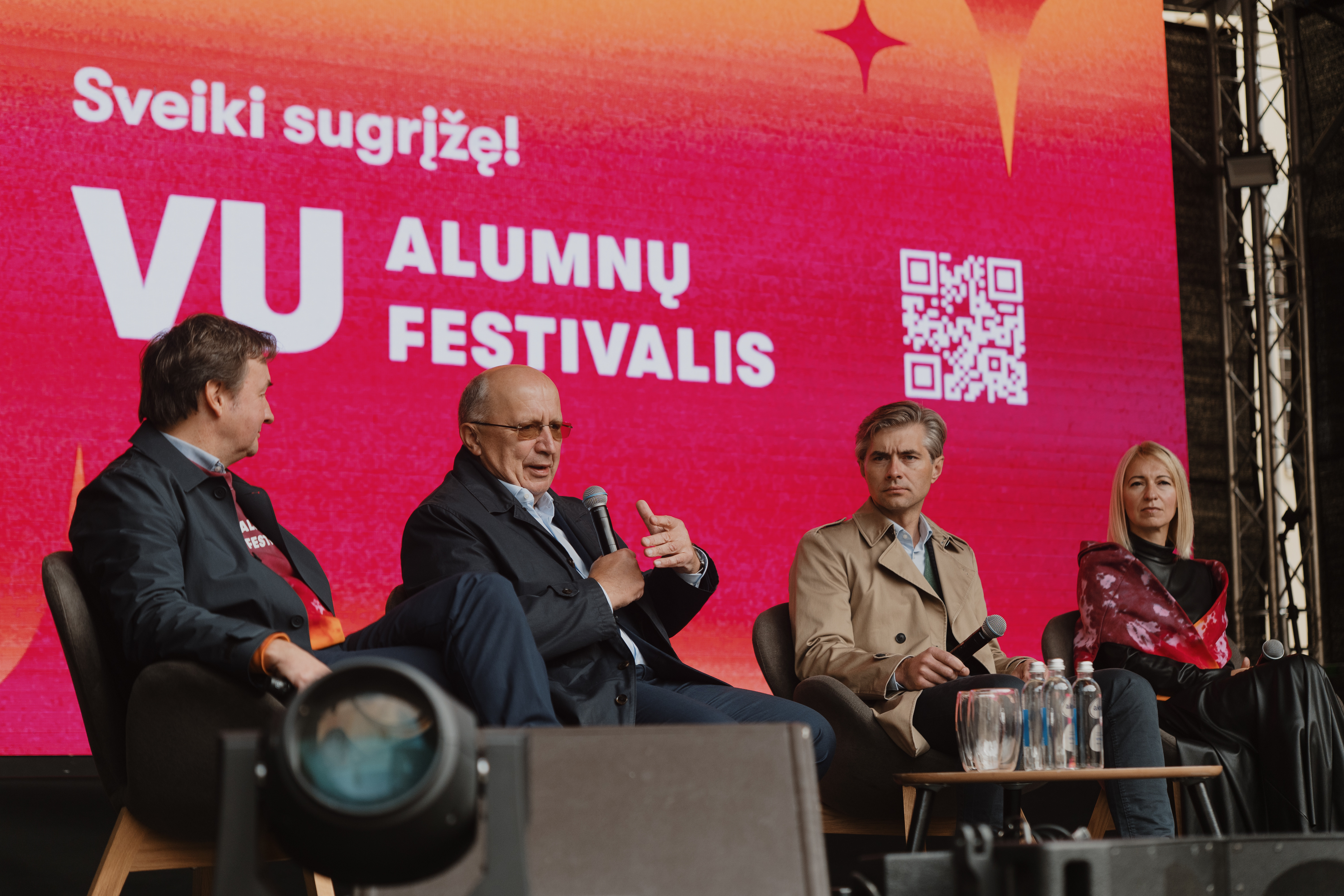
We invite you to the VU Alumni Festival. From 2 p.m., the festival's events will take place at Vilnius University's Central Campus, Universiteto st. 3, in the Grand Courtyard.

Here, your Faculty of Physics colleagues and the festival's main programme will be waiting — activities for the whole family and an evening concert. More information: alumnufestivalis.vu.lt .

Start time: 2026-09-19 11:00
End time: 2026-09-19 13:00
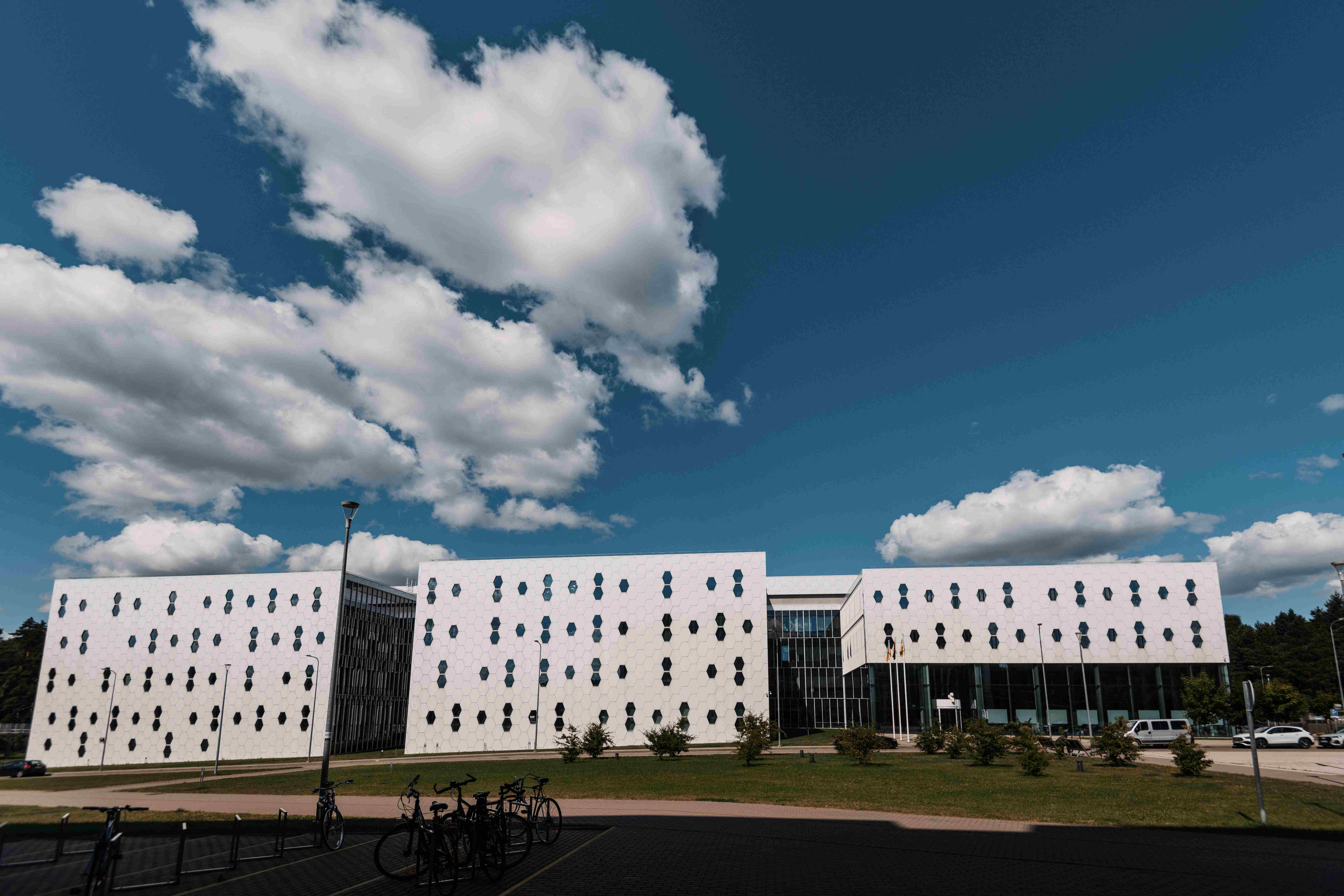
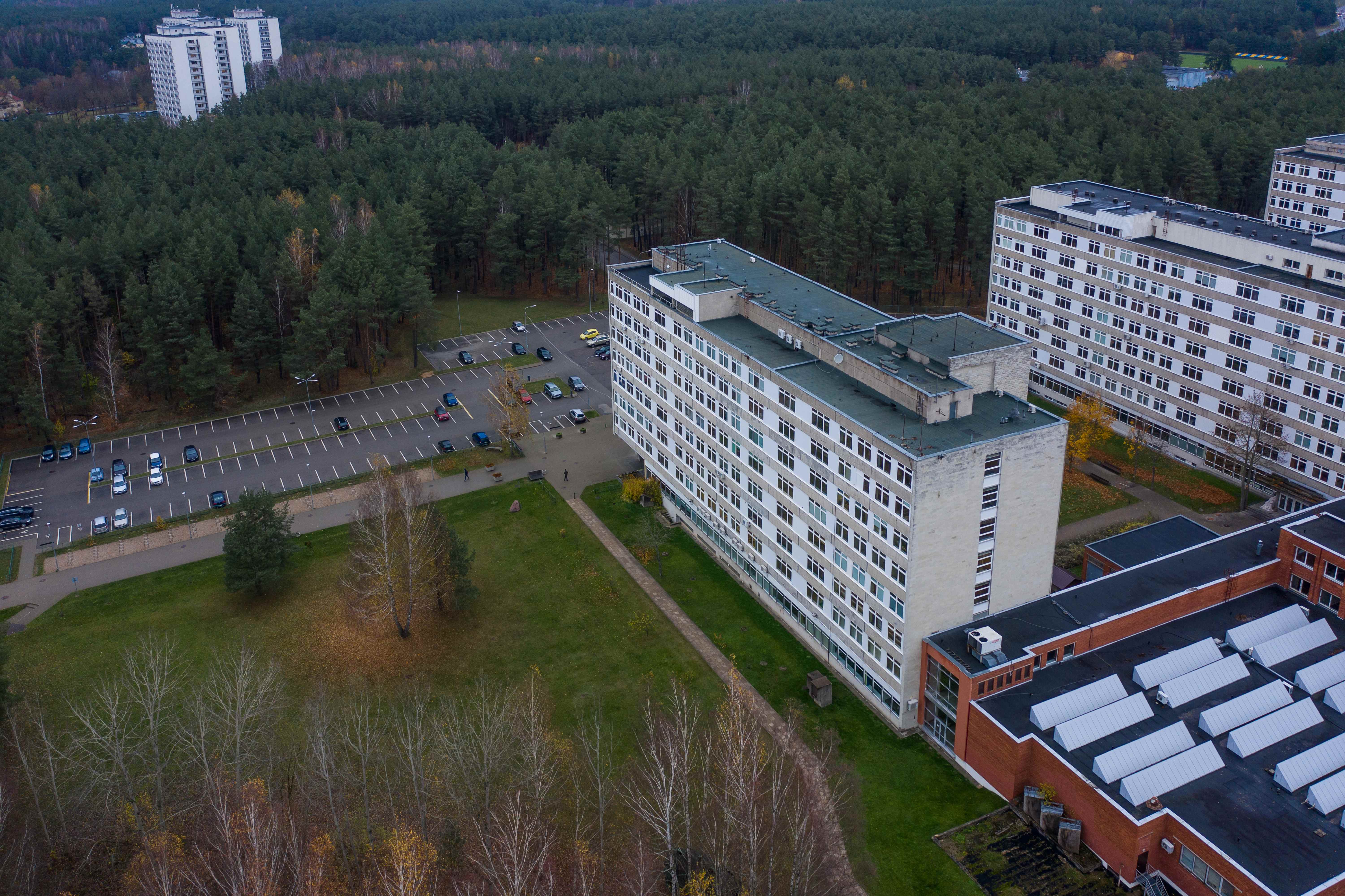
Vieta: Saulėtekio ave. 9, Building III

Whether you completed a bachelor's or master's degree at the Faculty of Physics or earned your doctorate here, you are an important part of the VU community.

We invite you to drop by the faculty at Saulėtekio ave. 9, Building III, and reconnect with coursemates, lecturers, and colleagues you haven't seen in years.

Start time: 2026-05-27 18:00
End time: 2026-05-27 21:00

VU Student's Representatives at the Faculty of Physic's invites everyone to the community evening.  

Students promise you free drinks, food, good music, lots of activities, a chess tournament, other activities.
 

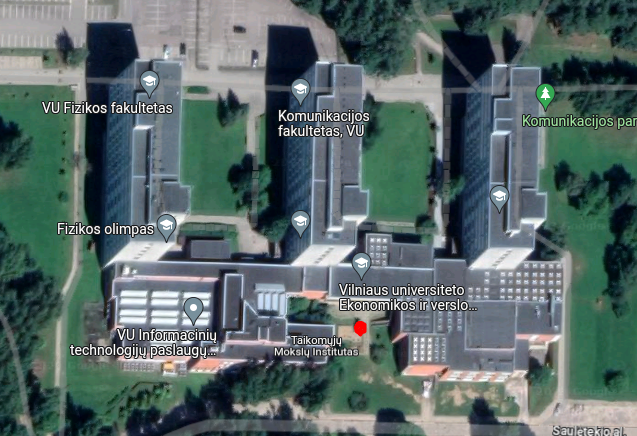
The evet will take place at Saulėtekio av. 9, backyard (marked red), on September 24th at 6:00 PM.

0HjazYjyngCAIDzV 1

Start time: 2026-06-11 17:00
End time: 2026-06-11 19:00

Marking the Faculty’s sixtieth anniversary, we invited our community to share their most memorable moments. Colleagues, alumni, and students remember a wide variety of stories. We warmly invite you to discover or revisit them: to pause for a moment in the corridors and stairwells of the III Building at Saulėtekio av. 9.

Start time: 2026-05-21 14:45
End time: 2026-05-21 16:30

The Association of Spanish Scientists in the Baltic Countries (ACEBaltic) announced the First Edition of the Antonia Ferrín Moreiras Award for the Best Doctoral Thesis in Astronomy and Astrophysics.

Start time: 2026-05-21 09:00
End time: 2026-05-22 13:00

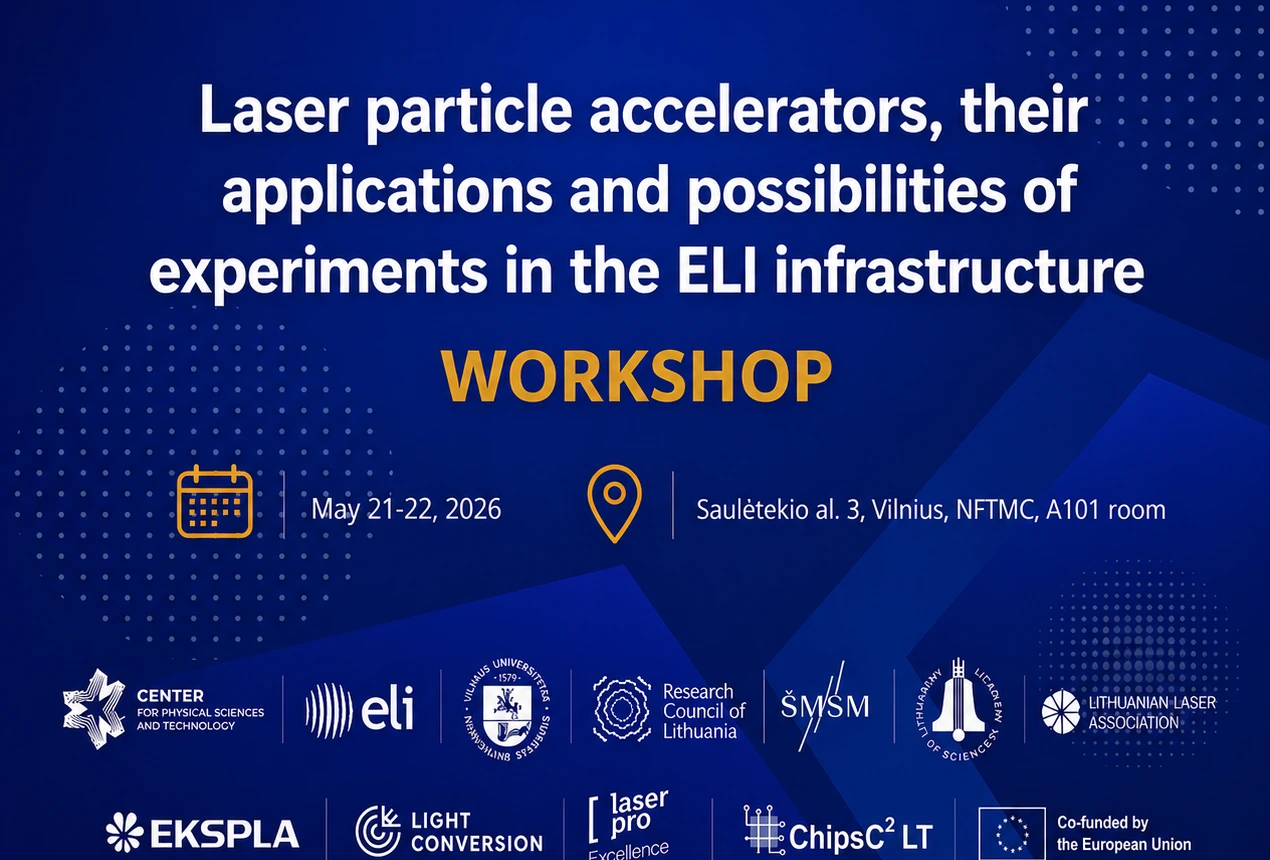
This two-day conference offers a unique opportunity to learn about the latest research conducted at the Extreme Light Infrastructure (ELI) science centre, open access possibilities, and cutting-edge laser plasma technologies. The event is intended for researchers, PhD students, engineers, and anyone interested in ultrafast laser sources, the effects of radiation on biological systems, advances in laser-driven particle acceleration, and the application of artificial intelligence in physics experiments.

Start time: 2026-06-01 14:00
End time: 2026-06-01 15:00

The seminar will present experimental studies of wavepacket propagation in a dissipative engineered quantum chain. The work implements a non-Hermitian synthetic lattice with an abrupt interface between dissipative and non-dissipative sub-chains, using the hyperfine manifold states of an Rb-87 Bose–Einstein condensate. By tuning the dissipation strength, the researchers observed the crossover between ballistic propagation, near-perfect absorption, and quantum Zeno reflection. Numerical simulations revealed that optimal absorption occurs when tunnelling and dissipation are properly matched.

Start time: 2026-07-22 14:00
End time: 2026-07-22 15:00

The lecture will be delivered by Prof. Oleg Chalykh (University of Leeds, UK).

Abstract
For a linear ODE in the complex domain, its singular point x=x0 is called an apparent singularity if all solutions to the ODE are meromorphic near this point. Equivalently, x=x0 is a regular singular point and the monodromy around x0 is trivial. What can one say about ODEs whose finite singular points are all apparent? I will give an answer for the case when x=∞ is an irregular singularity of the mildest kind (of Poincaré rank one). I will then discuss an analogous problem for difference equations. Finally, I'll indicate how these results can be applied to give a geometric interpretation of the algebraic Bethe ansatz for the quantum Gaudin and XXZ models. This is based on ongoing projects with N. Belousov, A. Liashyk, and Y. Xie.
 
Moderator: Dr Vidas Regelskis

Seminar will take place on 22 July at 14:00 val. at NFTMC B435 "Aquarium"

This seminar is part of the "Sunrise Valley Quantum Research Seminars" series.

Organisers: Faculty of Physics, Vilnius University, Center for Physical Sciences and Technology, Lithuanian Quantum Technologies Association, Lithuanian Physical Society.

Start time: 2026-04-20 15:00
End time: 2026-04-20 16:00

We invite you to attend a lecture by Nobel Prize winner Professor Brian Schmidt "State of the Universe."

The professor will offer a comprehensive and accessible overview of current cosmological knowledge, tracing the Universe’s development from the Big Bang through its subsequent evolution. This event is free of charge and open for anyone interested.

The lecture will take place on April 20 at Saulėtekio av. 3, in English. Registration and more information: https://openreadings.eu/special-event-2026/

Start time: 2025-12-11 14:00
End time: 2025-12-11 15:00

The emerging field of Quantum Machine Learning (QML) lies at the intersection of quantum computing and advanced data analysis, offering the potential to fundamentally transform the way complex computational problems are addressed. During the presentation, attendees will be introduced to the core principles of quantum computing, including qubits and the structure of quantum circuits.

Start time: 2026-03-26 13:00
End time: 2026-03-26 14:00

In recent years, Rydberg atoms have emerged as a promising platform for quantum sensing, enabling the detection of electromagnetic fields across a wide frequency range from MHz to THz. Atomic media offer broad tunability, high quality factors, and intrinsic calibration based on the Autler–Townes effect. However, most existing protocols still do not surpass conventional electronics in terms of sensitivity. Nevertheless, atom-based measurements hold the potential to approach the fundamental limits of electromagnetic field detection. The talk will present our efforts to develop novel Rydberg sensing protocols in both hot and cold atomic ensembles, including interaction-assisted measurements and multi-wave mixing techniques.

Start time: 2025-11-27 14:00
End time: 2025-11-27 16:00

Point defects are atomic-scale imperfections in otherwise periodic crystals that strongly influence the electrical and optical properties of semiconductors. Once regarded as undesirable, these defects have become key building blocks of emerging quantum technologies, enabling applications in sensing, communication, and information processing.

Subcategories

Page 1 of 4