

In 2026, we will mark the 150th anniversary of Jeronimas Ralys (1876–1921), a doctor, translator, and prose writer. Dr Kazimieras Černis, a researcher at the Institute of Theoretical Physics and Astronomy at the Vilnius University (VU) Faculty of Physics, named an asteroid discovered together with Dr Justas Zdanavičius at the VU Molėtai Astronomical Observatory after him.
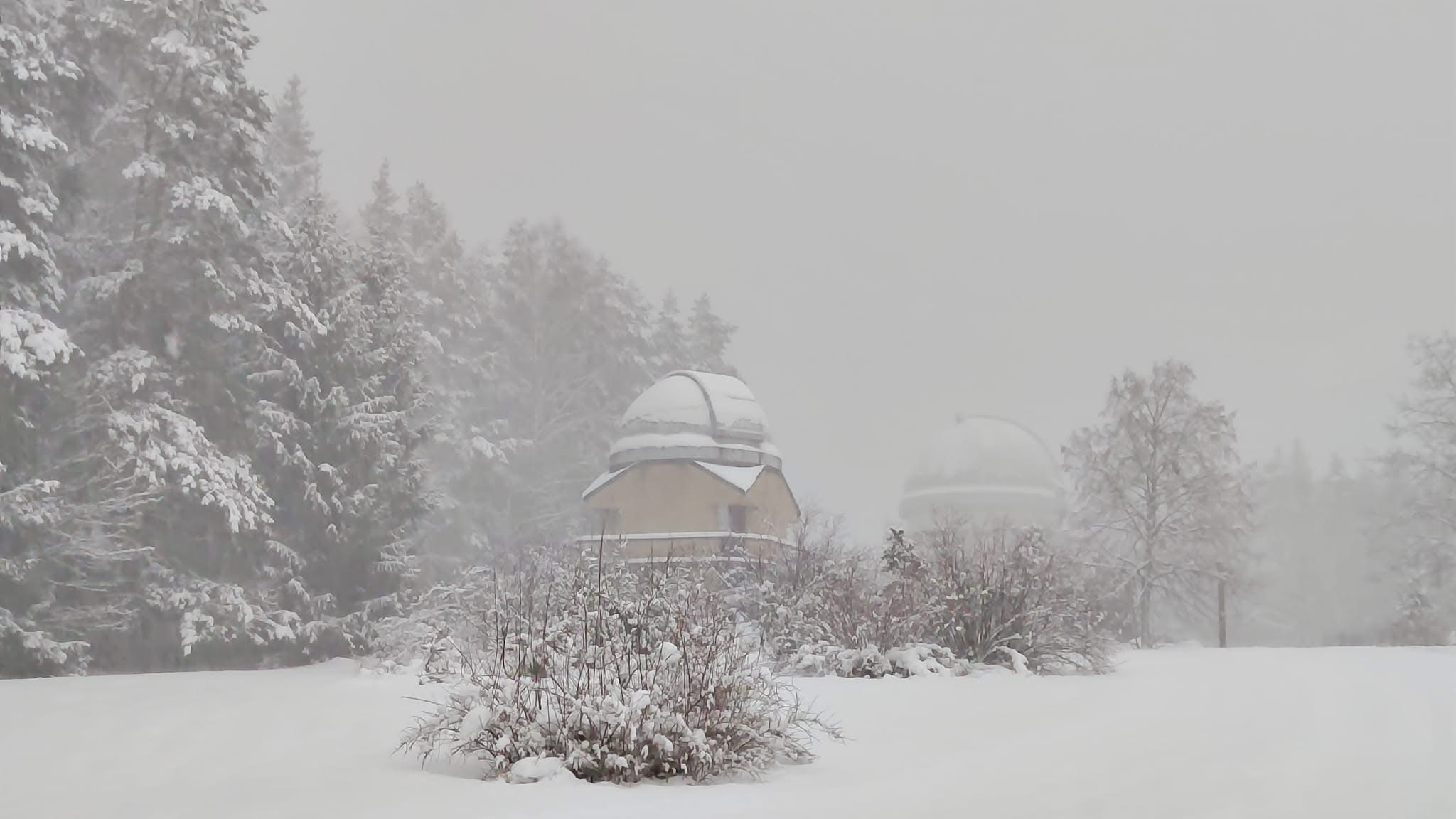
Molėtai Astronomical Observatory of the Institute of Theoretical Physics and Astronomy, VU Faculty of Physics
Dr Eligijus Raila, associate professor at the VU Faculty of History, describes this VU professor as an active promoter of the Lithuanian press.
“Jeronimas Ralys was a doctor by education. After graduating from Šiauliai Gymnasium, he studied at the Faculty of Medicine at Moscow University. For some time, he worked as a doctor in the Russian Navy, and after returning to Lithuania, he worked in Prienai, Taujėnai, Ariogala, and Jonava until 1914. He lived in the latter until his death. Ralys contributed to the Lithuanian press: “Varpas”, “Ūkininkas”, “Lietuvos žinios”. Having learned classical languages well at the gymnasium, he was the first to translate Homer’s “Odyssey” into Lithuanian. His translation of the “Iliad” was later completed by Sofija Kymantaitė-Čiurlionienė, Jurgis Talmantas, and Pranciškus Žadeikis. He was undoubtedly a guiding star for all Lithuanian translators who attempted to render Homer’s epic poems into Lithuanian,” says the historian.
Asteroid Ralys is currently orbiting in the Scorpius constellation as a 22.3 magnitude object.
Minor Planet Center of the International Astronomical Union database shows that the asteroid is, on average, 2.55 times farther from the Sun than the Earth, and orbits the Sun in 4 years and 26 days. Astronomers have classified this asteroid as belonging to the Maria (MAR) asteroid family. Such asteroid families are identified by the very similar orbits of their members, especially their distance from the Sun, orbital inclination, and shape, which indicate a common origin.
The Maria (MAR) family is a group of stony asteroids formed after a larger parent body asteroid collided with another asteroid. It is believed that the members of the family are mainly composed of silicate minerals and iron. The family is named after its largest and brightest member, the asteroid (170) Maria.
Elements of this asteroid’s orbit: a = 2.5489057 av, e = 0.153 i = 15.28483 °, P = 4.07 m.
On 17 March this year, the International Astronomical Union announced that the asteroid with the catalogue number 2006 SA368 (406006) has been named Ralys. The asteroid was discovered on 23 September 2006 at the VU Molėtai Astronomical Observatory. A scientific paper confirming the discovery was published in the journal “Baltic Astronomy“ in 2016. The asteroid was confirmed by US astronomers from Mt. Bigelow Observatory in Arizona, and the asteroid received a designation on 16 April. The orbit had finally been determined in 2019.