

CERN has announced a breakthrough from the Large Hadron Collider beauty (LHCb) experiment at the Large Hadron Collider, revealing the discovery of a new particle. This particle belongs to a category called baryons. The familiar baryons include protons and neutrons, the particles found at the centre of atoms. Dr Adam Benjamin Morris, a researcher of the LHCb Vilnius group at the Faculty of Physics of Vilnius University (VU), says that this discovery by LHCb resolves a quarter-century controversy over its existence and properties.
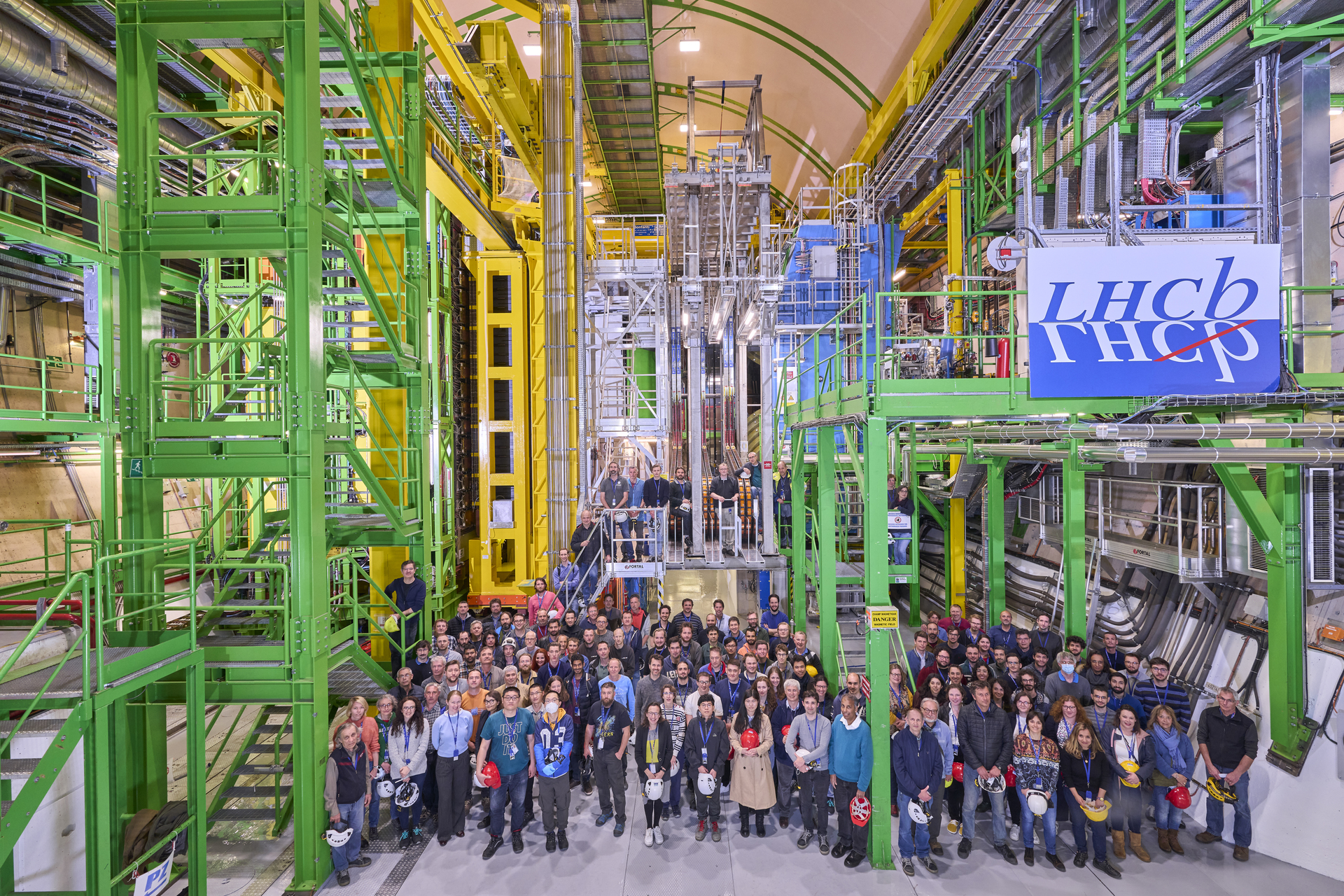
CERN LHCb experiment scientists. Photo by CERN.
What this New Particle is and Why it Matters
“Baryons are made of three fundamental particles called quarks. There are three positively-charged quarks and three negatively-charged quarks. The differences between them are their masses. The lightest ones are called up and down, and they occur very commonly. This new doubly charmed baryon is similar to a proton, but instead of two positively-charged up quarks, it has heavier charm quarks. This makes it over three times as heavy as a proton,” explains VU physicist Dr Morris.
He notes that producing baryons with a single charm quark is quite common. “These have been seen in experiments since the mid-1970s. Baryons with two charm quarks are much rarer. It wasn't until 2017 that the first one was found. This new particle can be thought of as a sister to that first one; they differ in that one has an up quark while the other has a down quark,” he highlights.
This particle was predicted decades ago. “There is an interesting 60-year history here. In principle, the existence of this particle has been assumed since 1964. Predictions of its specific properties date back to 1975. The 2000s saw serious experimental searches, after an experiment at Fermilab in Chicago claimed to have seen it in a 2002 paper. However, several other experiments in the US, Japan and Europe failed to replicate this observation. LHCb has been searching for this particle since it began taking data, with negative results published in 2013, 2019 and 2021. Once its sister was found in 2017, the large difference in mass cast further doubt on those initial claims”, Dr Morris says.
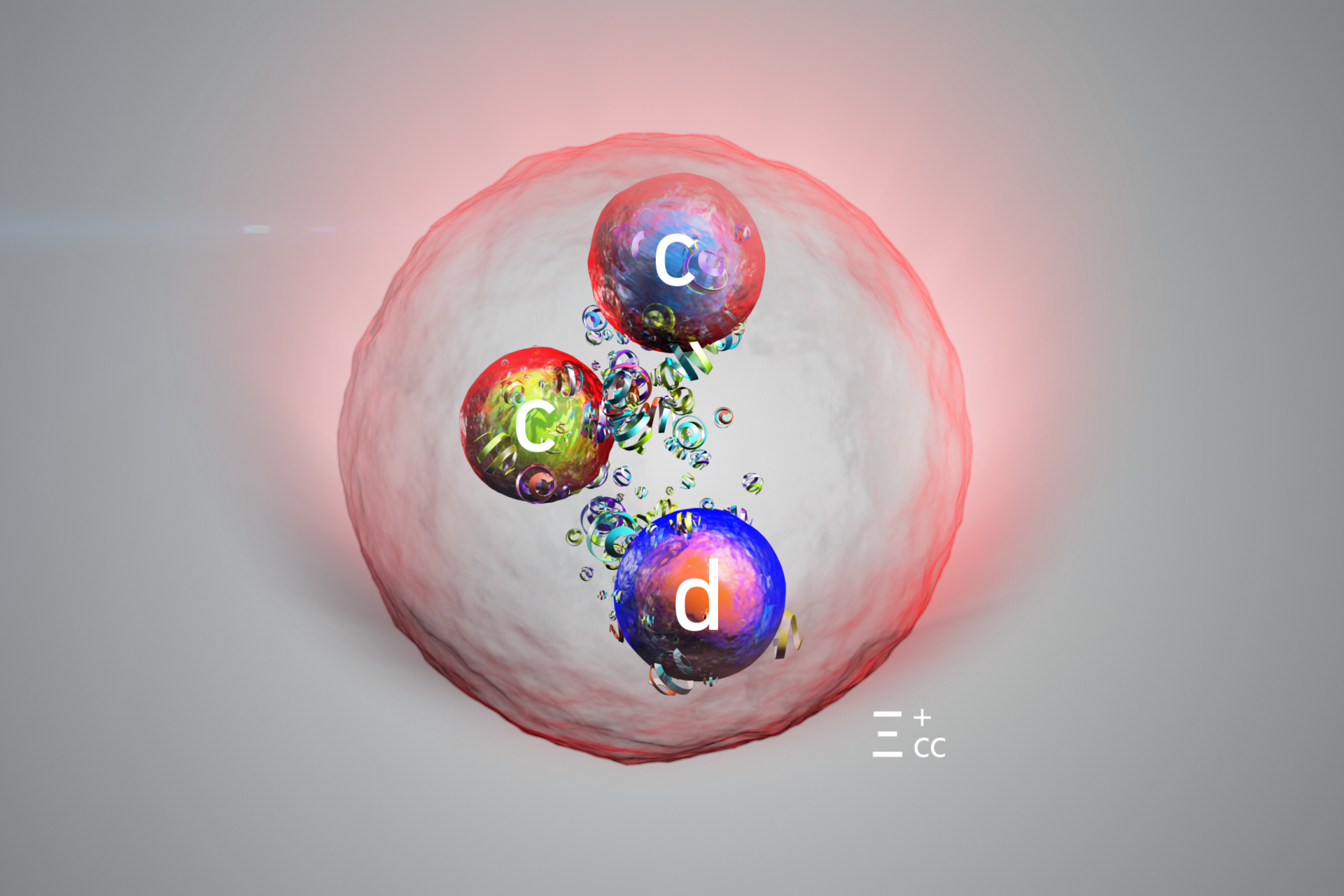
Artist’s impression of the new particle, which contains two charm quarks and one down quark. Image by CERN.
So far, LHCb researchers have found that the mass is very similar to that of the particle discovered in 2017. “We know one of the possible combinations of particles that it can decay into, because it was found by studying exactly this. We do not yet have a good estimate of the lifetime, which is how long it exists, on average, before decaying. We estimate it in the range of 15 to 160 femtoseconds. By comparison, the sister particle lives for about 300 femtoseconds,” he adds.
The short lifetime of this particle makes it challenging to detect. “Since it decays so close to the collision, it is very difficult to distinguish it from random combinations of particles. It is right on the limit of what the LHCb detector can resolve. As a result, we can only detect this particle around 10 per cent as often as its sister,” the physicist explains.
Upgrades Boost LHCb Detector Performance
Theoretical calculations involving particles composed of quarks are very challenging and often rely on experimental measurements. “Measuring the properties of this particle, and similar ones, is important input to those calculations. The short lifetime is interesting: it is possibly the shortest-lived weakly decaying baryon yet observed. Additionally, it demonstrates that the upgraded LHCb detector can make new kinds of measurements that weren’t possible with the original detector. Thanks to the upgrade in 2018-2020, we can detect these kinds of particles 10 to 20 times faster than before”, says Dr Morris.
Specific upgrades to the LHCb detector are crucial for making such a discovery possible. CERN can make precise lifetime measurements and study the different combinations of particles into which it can decay. According to LHCb physicists, it is the first new particle discovered with the upgraded LHCb detector. With the new detector, they identified it in just one year, whereas with the old detector it was not possible even in ten years.
“The detector itself was upgraded to give equivalent data quality at 5 times the rate of collisions. In particular, the focus is on precisely measuring where collisions and decays occur and on identifying different particles. The additional factor of 2 to 4 comes from the upgraded electronics and computers, which read out and process the data faster and much more efficiently”, he adds.
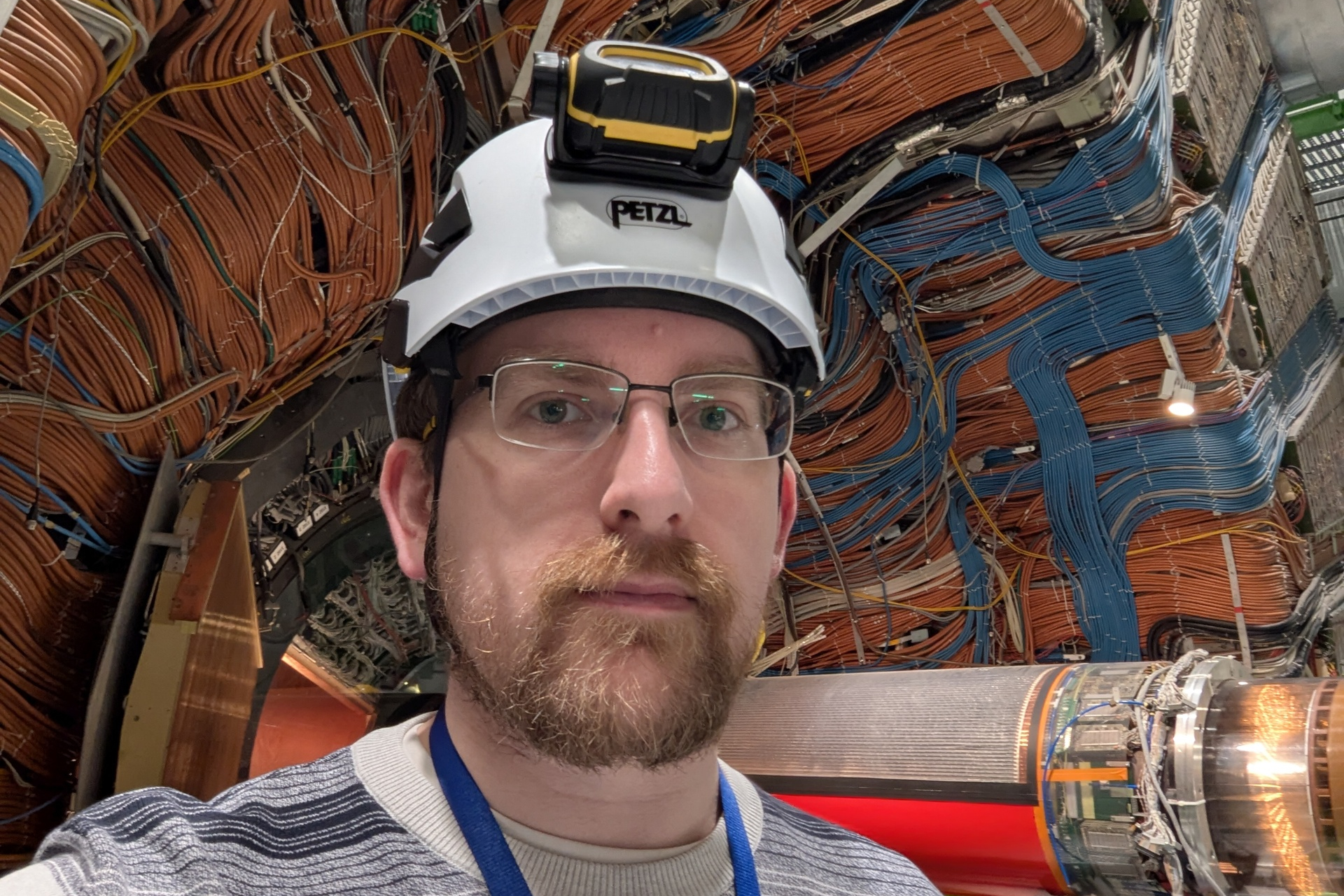
Dr Adam Benjamin Morris. Photo from personal archive.
The precision of researchers’ measurements depends on how much data they collect. “The data from a single collision on its own is not very useful; instead, we look at the patterns made by many detections. We are currently collecting more data, so in the short term, we can make measurements with better precision, including the lifetime of this recently discovered particle. We will also hunt for a similar particle made of two charm quarks and a strange quark,” a CERN physicist adds.
“A second upgrade of the LHCb detector is planned that will again significantly increase the amount of data we can collect. This will allow us to find even more particles with multiple heavy quarks, and make precise measurements of their properties”, he concludes.
VU Involvement in the Research
Dr Mindaugas Šarpis, head of the LHCb Vilnius group, explains that researchers from VU will contribute to the upcoming upgrade of the detector, and Lithuania’s contribution will be more noticeable in the context of future observations and discoveries.
“In LHCb Vilnius, we are working on LHCb data flow, simulation, detector development and characterisation, as well as doing particle physics data analysis. The experiment we are working on involves 1,200 physicists and 600 engineers from more than 20 countries. Such research is only possible by combining global expertise and technologies. For example, hundreds of scientists contributed to the research leading to the discovery of this new particle,” he explains.

Dr Mindaugas Šarpis. Photo from personal archive.
Dr Morris’s research focuses on data analysis and simulation. “The LHCb team at VU is searching for more exotic kinds of baryons using a sophisticated technique and the most recent data collected by LHCb. I also play a leading role in producing simulated data for the entire collaboration, which is vital for physics measurements and for designing upgrades to the detector. I aim to collaborate with VU’s computer scientists, who are already working on applying machine-learning techniques to particle physics simulations, to greatly reduce the computing power required for LHCb simulations,” Dr Morris says.
He has been a member of the LHCb collaboration since 2013. He received his PhD from Edinburgh in 2017 and has since worked at universities in France and Germany, as well as at CERN itself. Since September 2025, he has been part of the LHCb Vilnius group, led by Dr Šarpis.
In 2018, Lithuania became an Associate Member of CERN. In the autumn of 2024, the LHCb Collaboration Board approved VU as a new institute for the CERN LHCb experiment. This September, Vilnius will host its first LHCb Week, bringing together about 600 CERN physicists from around the world for one of the experiment’s largest annual meetings.
In autumn 2025, Lithuanian higher education institutions, including VU, signed a memorandum with CERN to participate in the feasibility study for the Future Circular Collider project.