

On 23–24 April, the Baltic Countries Magnetic Resonance Meeting gathered more than 70 scientists from across Europe at the VU Faculty of Physics.
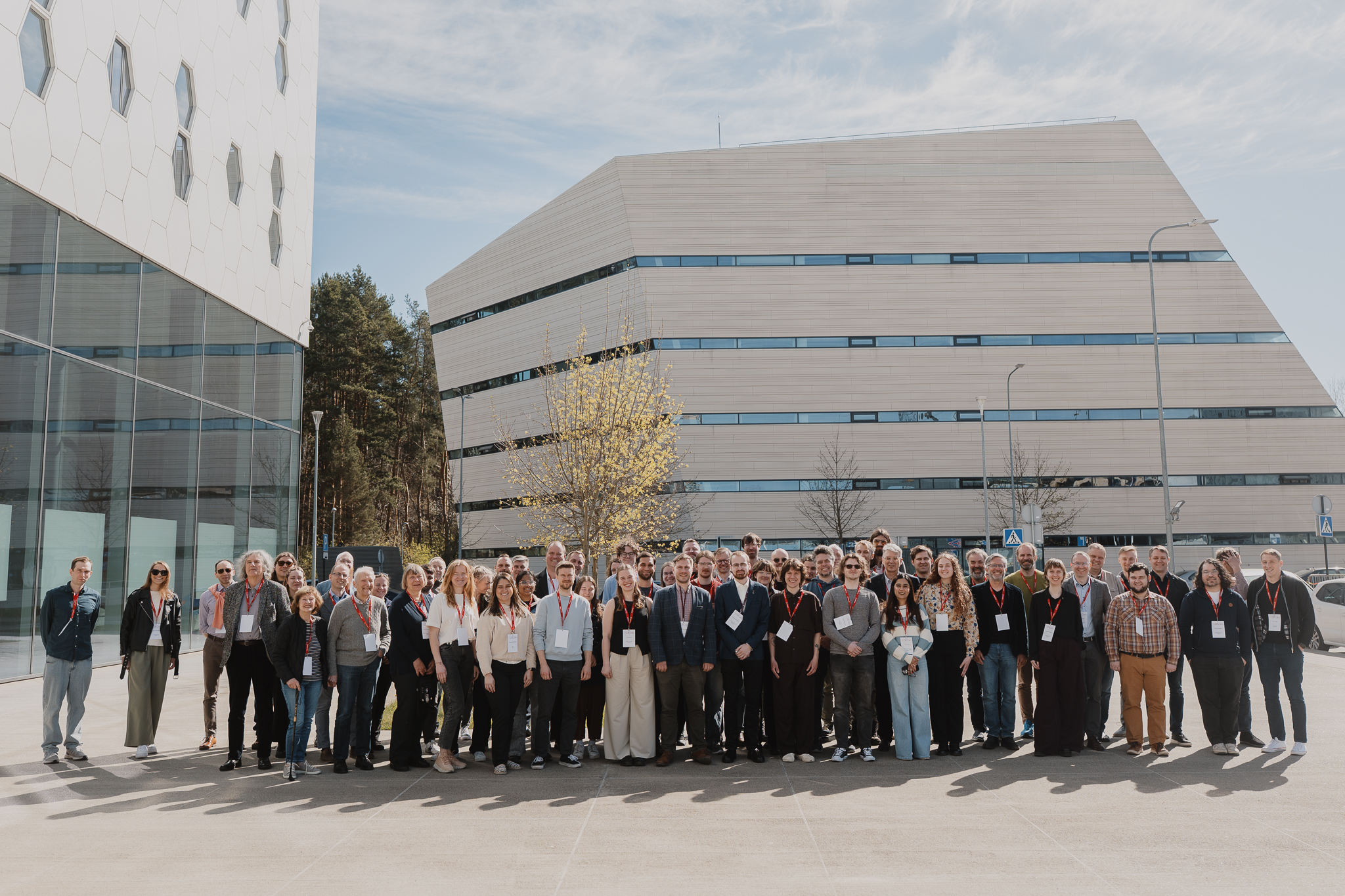
“Baltic Resonance 2026” meeting. Photo by VU / Ugnius Bagdonavičius
“The main aim of this event is to create a platform for communication and collaboration. I am very pleased that the meeting was attended not only by the leaders of research groups, who already know one another well, but also by postdoctoral researchers, PhD and younger students. They presented research in a ‘Flash Talk’ format, using three minutes to convey the essence of their projects and highlight the key findings”, says Dr Vytautas Klimavičius, leader of the Group of Magnetic Resonance spectroscopy at VU Faculty of Physics.
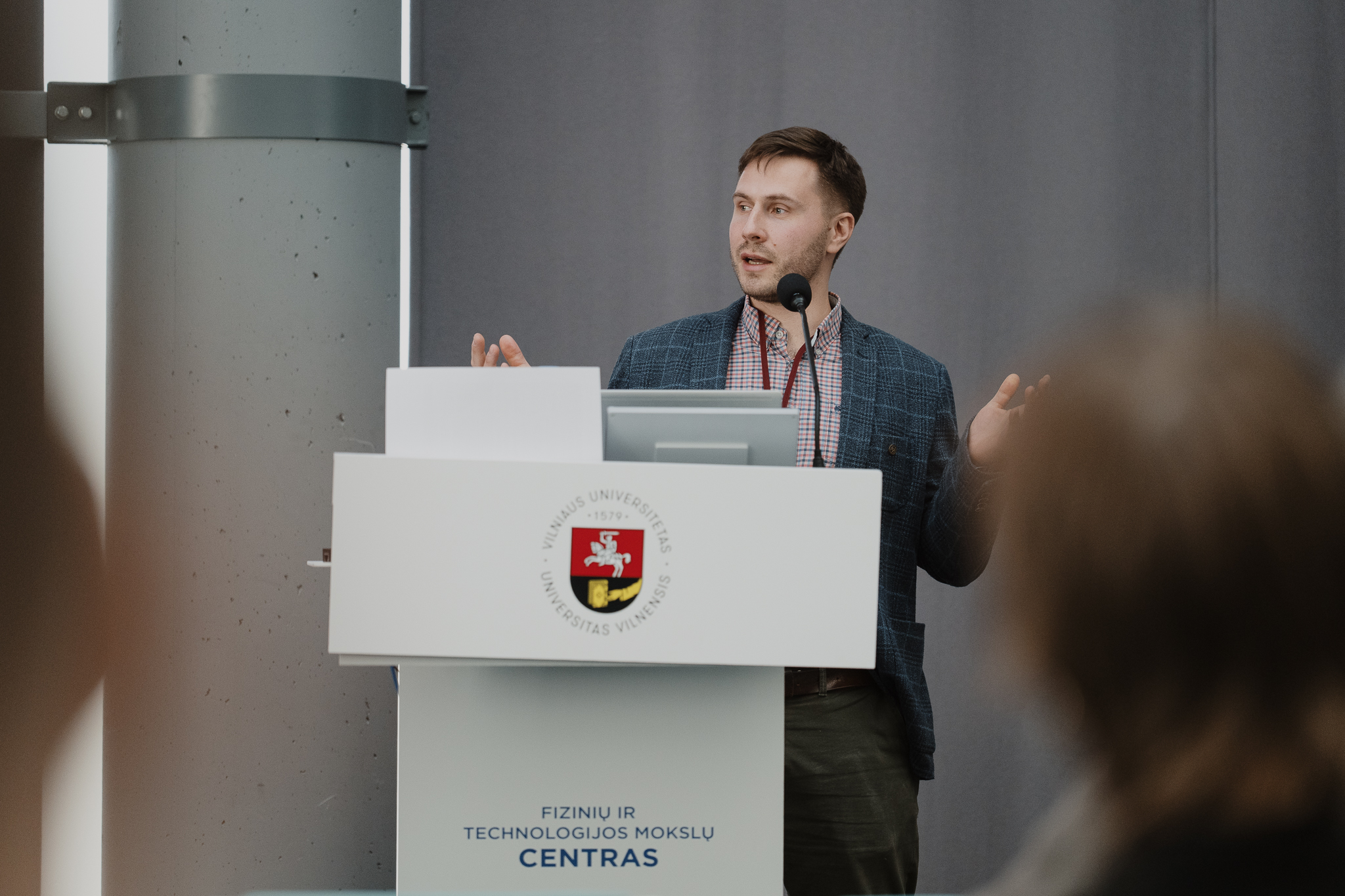
Dr Vytautas Klimavičius. Photo by VU / Ugnius Bagdonavičius
Across the different sessions of the meeting, participants reviewed a wide range of ongoing research — from solid‑state nuclear magnetic resonance (NMR) and electron paramagnetic resonance (EPR) to biological NMR and hyperpolarisation.
According to the organisers, the need for such an event emerged as a magnetic resonance community began to form across the Baltic region. The meeting in Vilnius attracted attention not only from researchers in the Baltic states but also from Scandinavia, Germany, Poland, France and the United Kingdom.
The first “Baltic Resonance” meeting took place last year in Tallinn, Estonia.
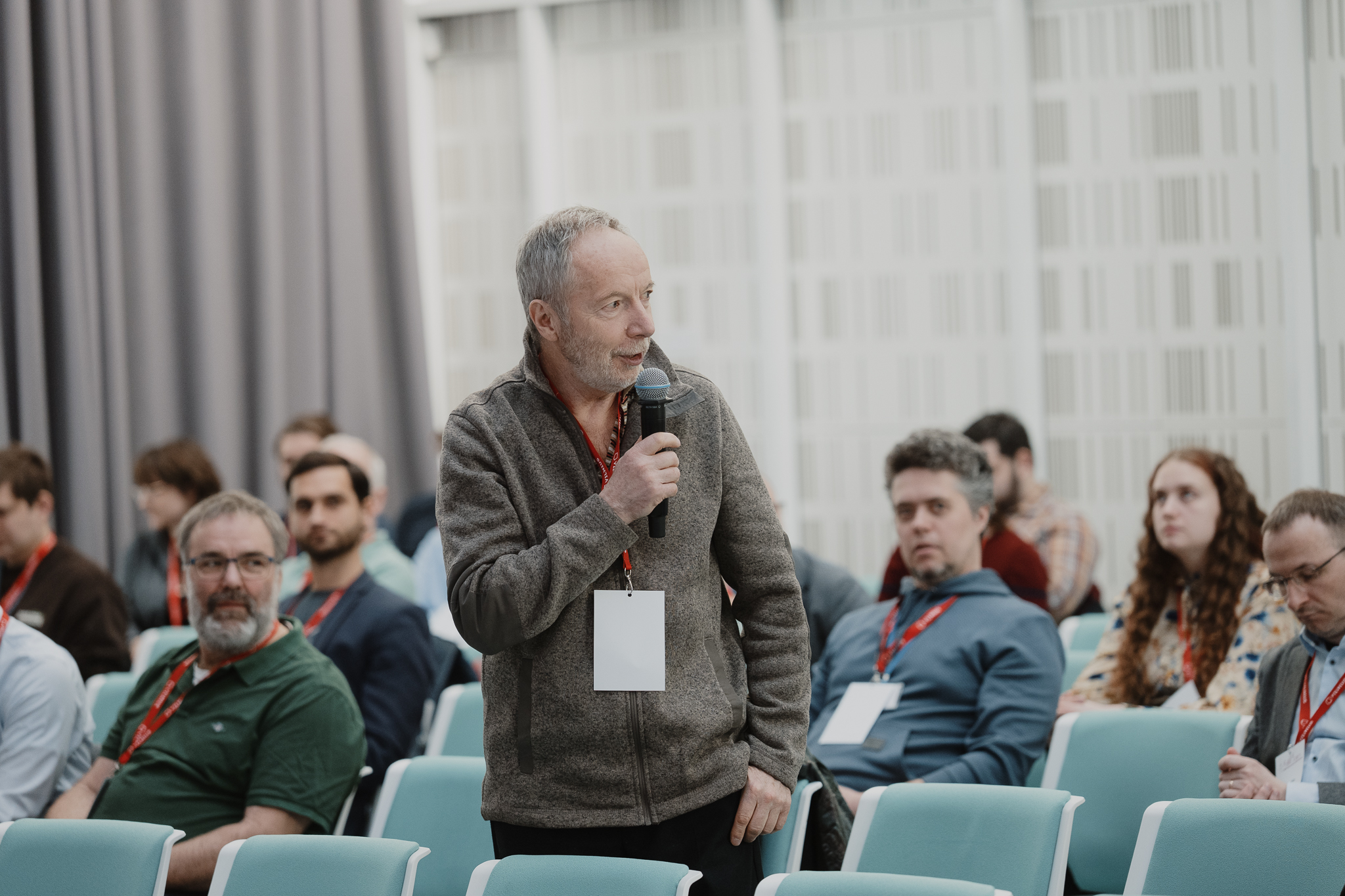
Photo by VU / Ugnius Bagdonavičius