

The international conference “Nordic-Baltic Astronomy Days 2026” took place in Turku from May 26 to 29. The event aimed to strengthen scientific ties between the Nordic and Baltic countries and to promote joint research. This is an important regional event for the astronomy community, in which Lithuania actively participates, contributing to international cooperation and the advancement of astronomical science.

The Lithuanian delegation (from left): Dr Carlos Viscasillas Vázquez, Dr Matas Tartėnas, Milda Valytė, Assoc. Prof. Šarūnas Mikolaitis, Vladas Šatas, Dr Markus Ambrosch, Dr Marius Maskoliūnas. Photo from personal archive.
"The Lithuanian delegation had a strong and visible presence in the scientific programme. Lithuanian research institutions were represented by seven researchers, contributing four regular oral talks and four posters accompanied by rapid talks. Their contributions covered a wide range of topics, including microlensing studies, Active Galactic Nucleus-driven outflows, Galactic chemical evolution and Carbon, Nitrogen, Oxygen, hot subdwarf stars, stellar chemical clocks, and the historical legacy of early solar photography at Vilnius Observatory," says Dr Carlos Viscasillas Vázquez.
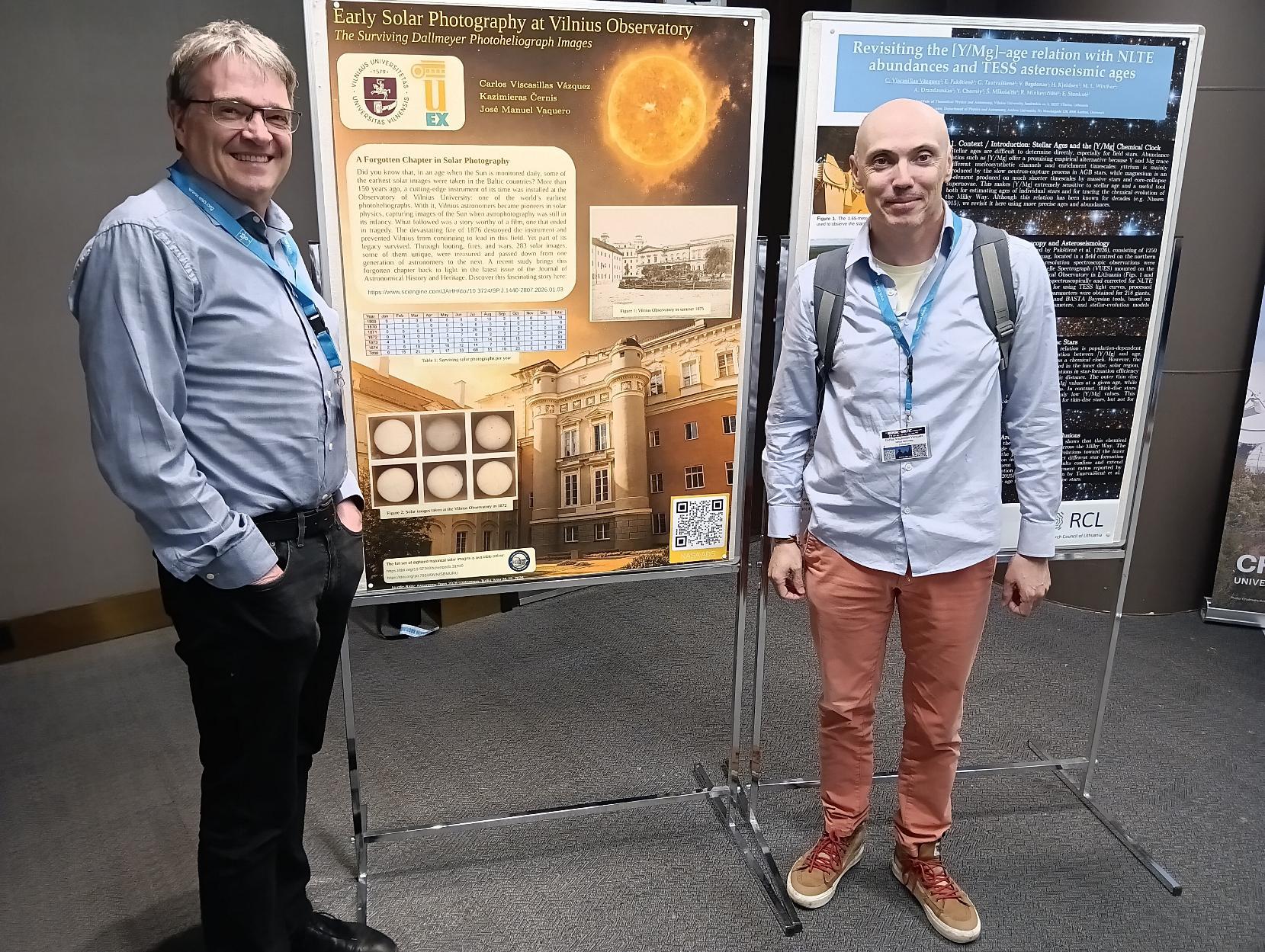
From left: Prof. Hans Kjeldsen, Honorary Doctor of Vilnius University, and Dr Carlos Viscasillas Vázquez. Photo from personal archive.
The event brought together more than 200 members of the scientific community. A total of 185 scientific presentations were delivered, with a strong focus on networking, early-career researchers, and collaboration among regional scientists within major international infrastructures, such as the European Southern Observatory, the European Space Agency, and others. There were also numerous invited and plenary presentations delivered by representatives of major astronomical infrastructures and collaborative projects.
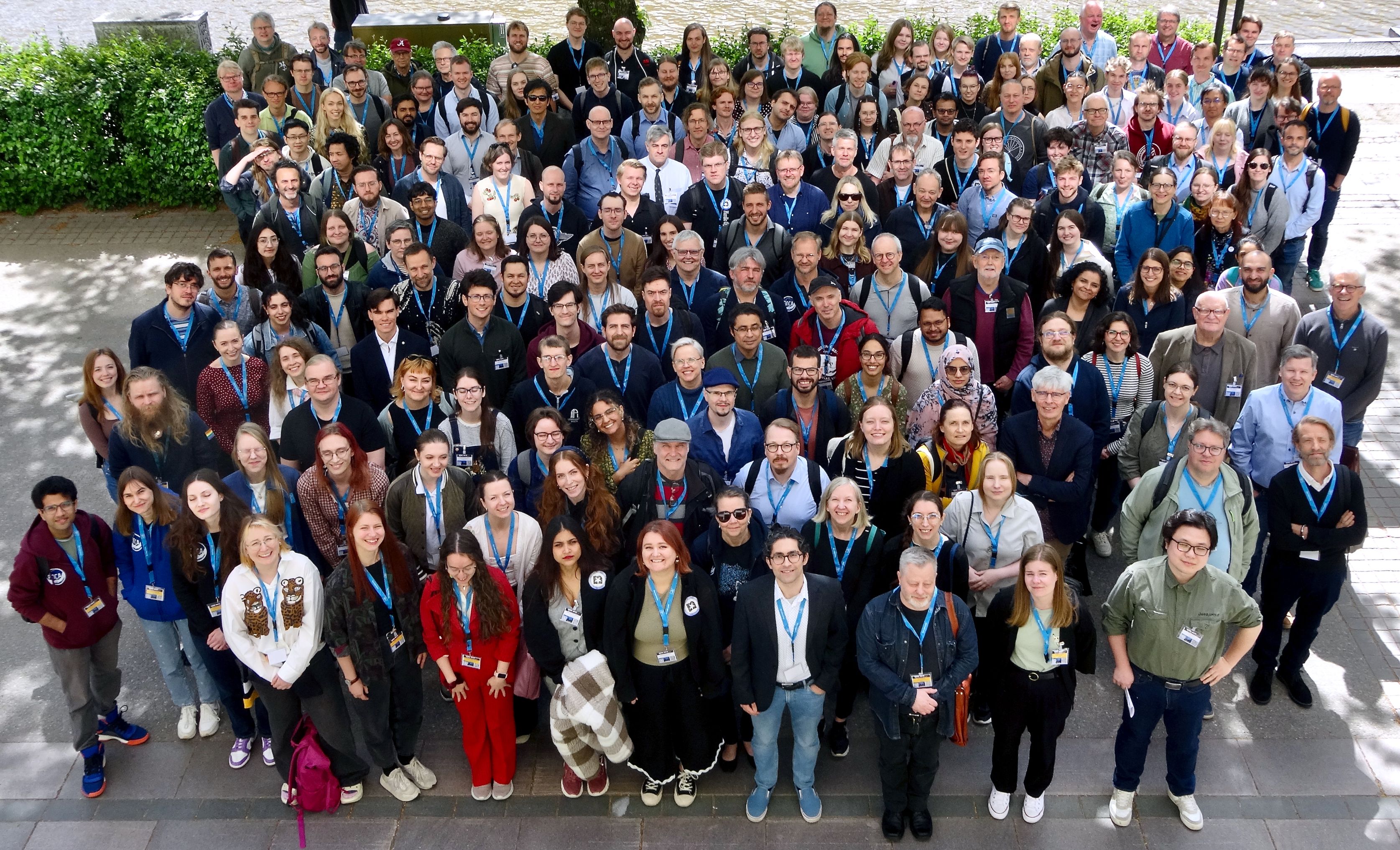
“It was a very valuable experience for me. The environment was very favourable for networking, especially for young researchers. I learned about the research being conducted right next to Lithuania and met colleagues. The presentations were of a high standard and very interesting; there were at least several sessions going on at the same time,” says Milda Valytė, a master’s student in Theoretical Physics and Astrophysics at Vilnius University.
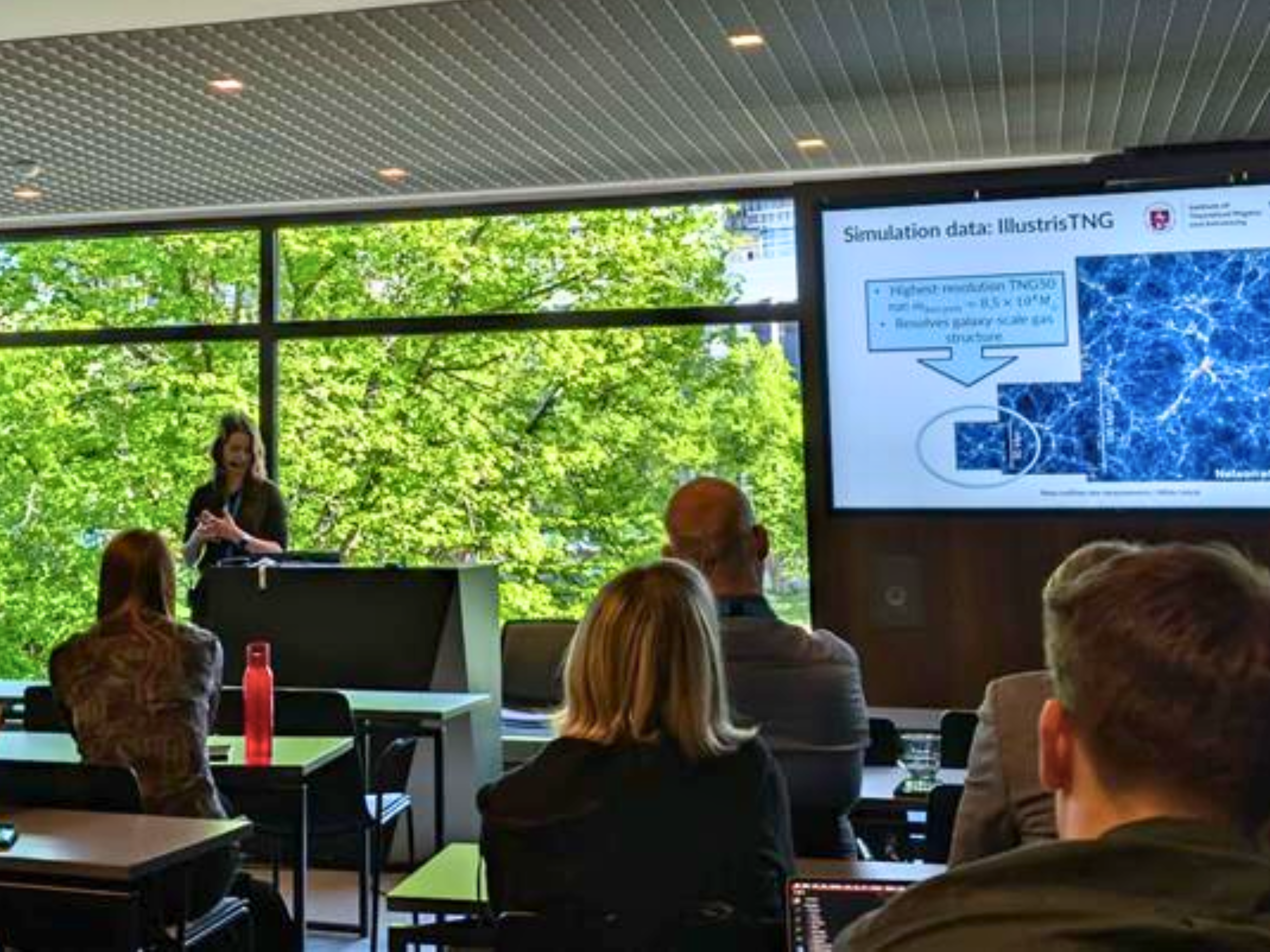
Milda Valytė. Photo from personal archive.
The meeting is significant in a symbolic sense—the last regional meeting of this scale took place in 1990, at a conference in Uppsala. At the time, it was one of the first attempts to unite the astronomical communities of the Nordic and Baltic countries following the political changes in the region.
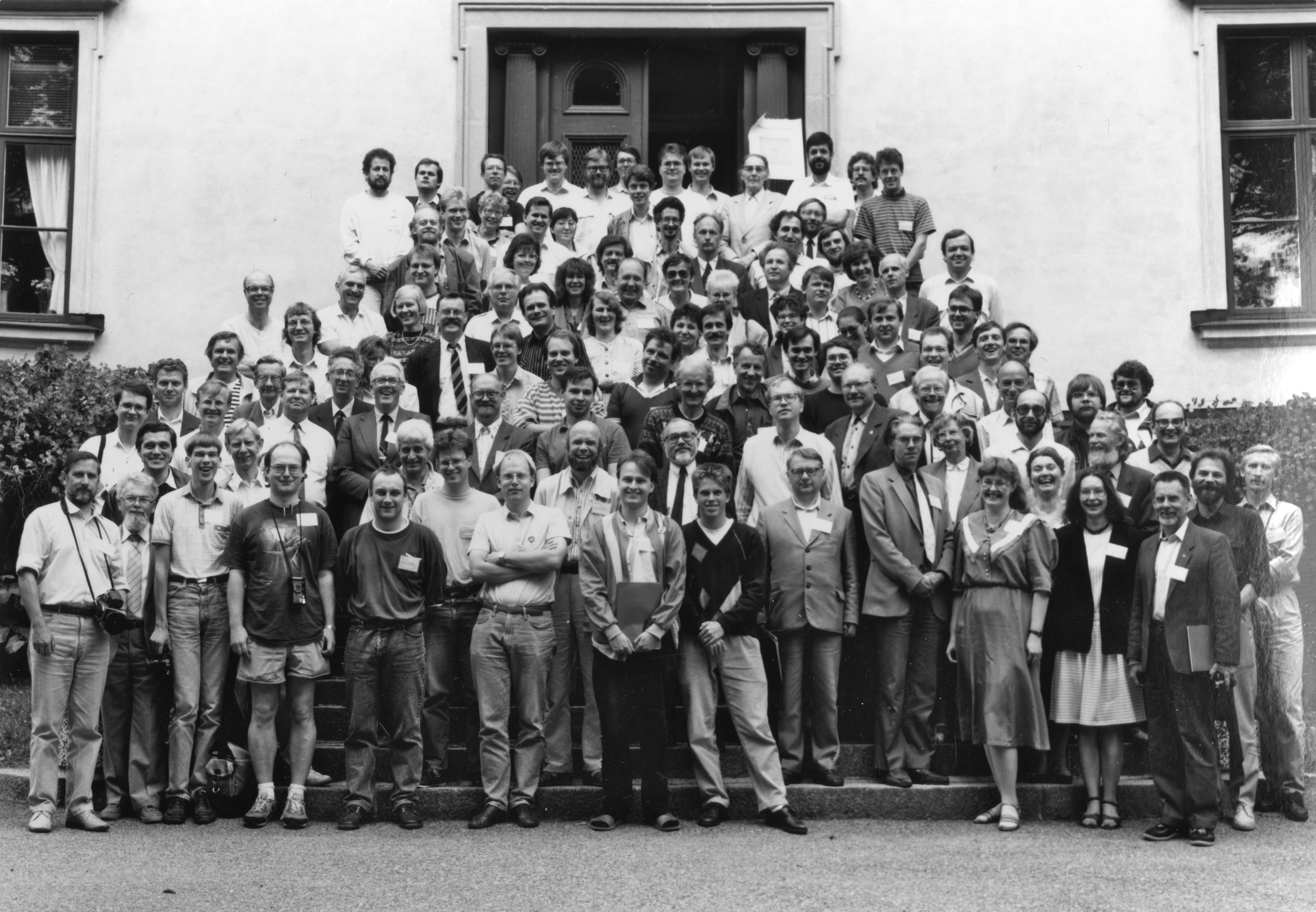
Conference in Uppsala in 1990. Photo from the personal archive.