

At the beginning of June, 30 young members of the Lithuanian diaspora arrived in Lithuania to take part in internships through the six-week “Bring Together Lithuania” programme. The initiative offered participants a unique opportunity to explore the country, its culture, and its professional landscape. Born in the United States, Andrew Basso is delighted with his decision to undertake an internship at Vilnius University (VU) Faculty of Physics. He completed his placement in the Institute of Photonics and Nanotechnology, where he gained valuable experience.
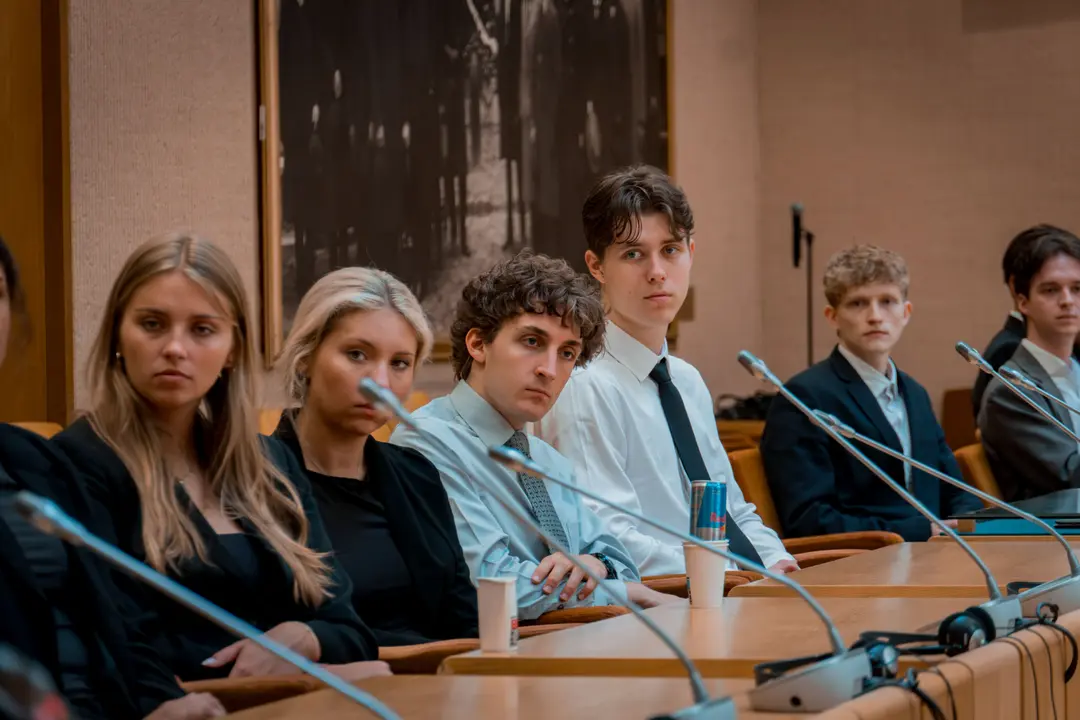
Andrew Basso (third from the left). Photo from the “Bring Together Lithuania” archive.
Keen to stay longer
“I finished my bachelor’s, and I’ll start my master’s in August. I did my bachelor’s in Arizona, and my master’s will be in Vegas. I’ve always thought that there’s a decent chance I’d end up coming here to either study or work,” he said about Lithuania.
Basso had visited Vilnius, his mother’s hometown, on several occasions before. Until the internship, he had not been familiar with the specific work undertaken by VU physicists. During previous visits to relatives living close to the Saulėtekis campus, he had seen the area develop over the years, including the new facilities such as the National Centre for Physical Sciences and Technology, which is home to a number of the Faculty of Physics’ research laboratories. “I watched these buildings getting built,” he said.
During his undergraduate studies, research opportunities tended to be highly specialised. One lecturer, for example, focused extensively on liquid crystals, while others worked on quantum materials and similarly niche topics. However, there was relatively little theoretical research. Although some of it was carried out in areas such as astronomy, it was generally quite limited.
“I come here, and there’s a lot of experimental, a lot of niche work that pairs together with companies like “Light Conversion”. The Faculty is building certain systems, building technology. I see it like that,” Basso said.
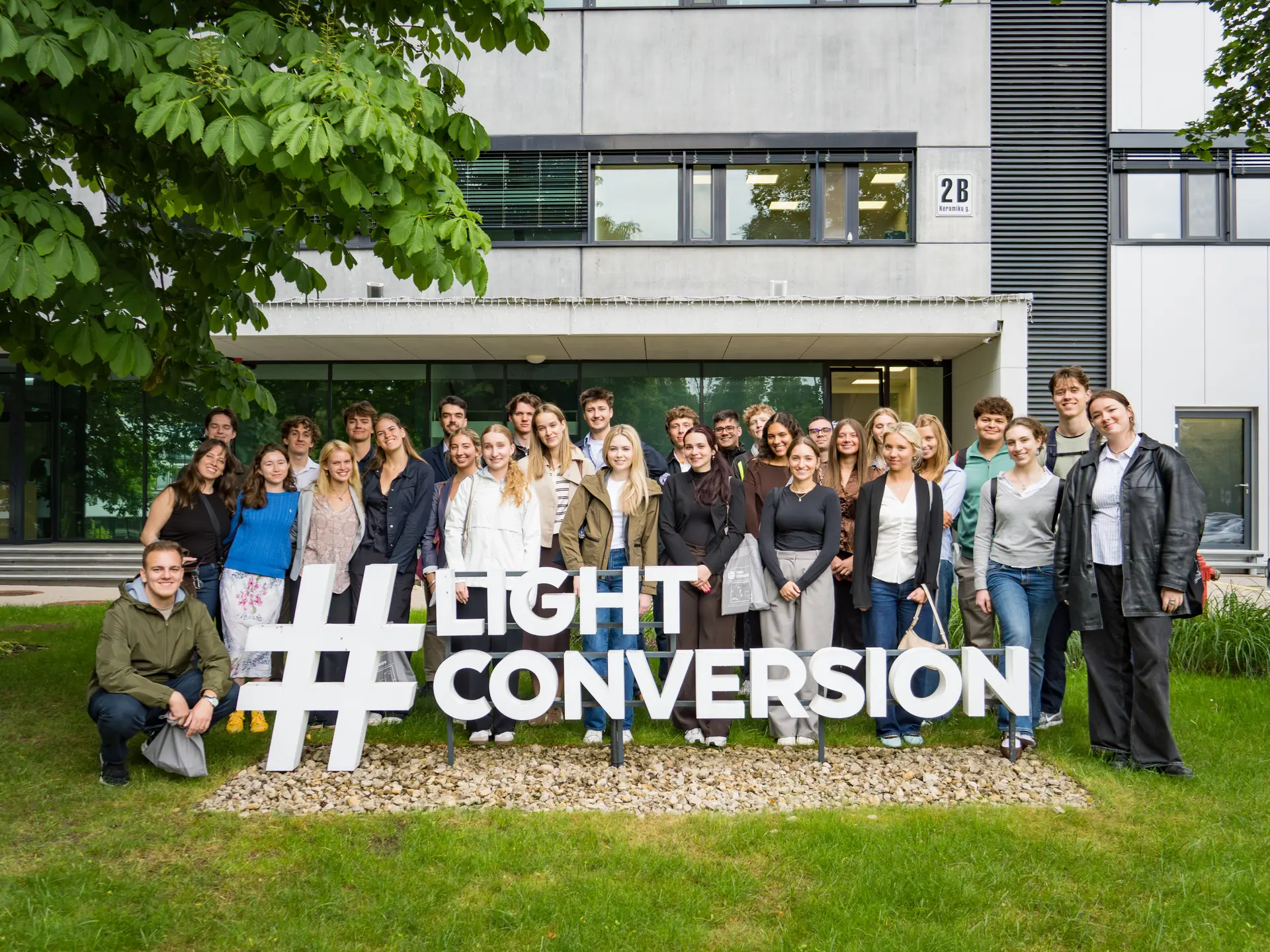
Project participants visited “Light Conversion”. Photo from the “Bring Together Lithuania” archive.
During his internship at VU, he worked under the supervision of Dr Jonas Jurkevičius. “He basically does different types of microscopy work, and I’m doing some programming. I was modelling different types of cells and trying to create a model that can take an image of a cell and then extract a certain type of ID from it, so we could later recognise that cell if it’s been moved around or rotated,” added he.
“I wish I could stay here longer and do more work. Everything is really new here. At my school, the buildings were maybe 60 years old. I worked in a basement lab, and it was very dusty and old stuff in there. Everything feels nice here,” he added, emphasising that time in Lithuania was spent either at the Faculty of Physics or taking part in events and travelling around the country through the “Bring Together Lithuania” programme.
A very optimistic view of Lithuania
Born to a Lithuanian mother and an American father, Basso grew up in Phoenix, Arizona. Lithuanian was his first language during childhood. However, according to him, there were few opportunities to speak Lithuanian in the United States, as he had very few people with whom he could use the language. Lithuanian had gradually faded with time, after years of studying and living in an English-speaking environment, from school through to university. “There’s a lot of Lithuanian communities in the US, but in Phoenix and Vegas, where I’ve lived most of my life, there’s basically only like a couple of Lithuanians, so there’s not really any groups or meetings there,” he said. Two summers ago, he did a Lithuanian language programme in Kaunas.
Although he sees many similarities as well as differences between Lithuania and the United States, there is one contrast he singles out in particular. “I think the main difference here is that everyone’s very optimistic. I see that in talking about the future of Lithuania, and I can see it myself, too, of how the city and the economy are growing a lot. And people actually want to come here and work because there are good, well-paid jobs here, and you get lots of time off, which is not a thing in the US for a lot of different places. So, I think that’s the biggest difference I see. People here are very passionate and optimistic about the work life and culture, and just living here,” he remarked.
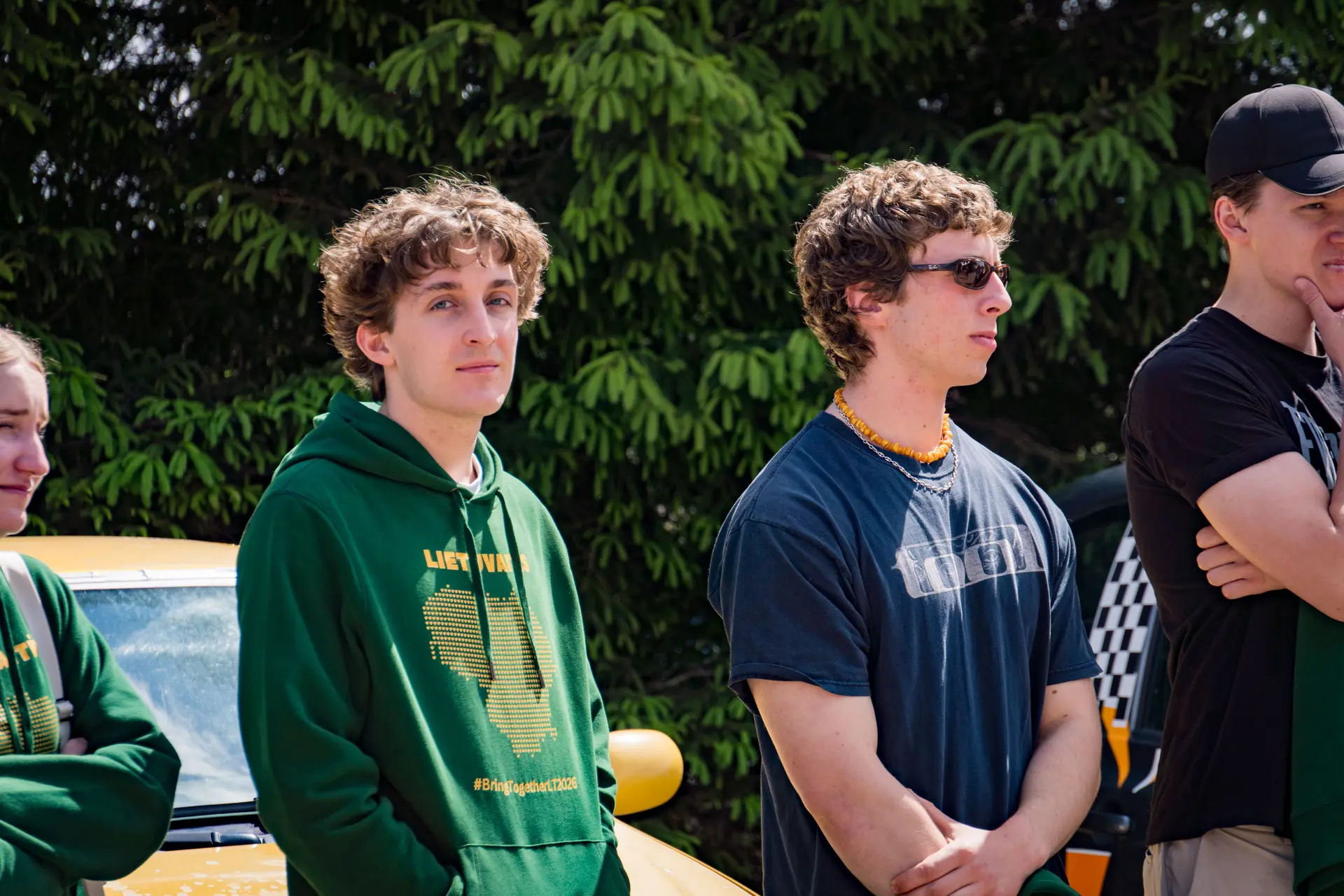
Andrew Basso. Photo from the “Bring Together Lithuania” archive.
Securing internships and similar professional opportunities in the United States is far from easy. “I’ve tried to apply to internships in the US. It feels like I’m sending ten applications and it’s just “no, no, no, no, no.” I’m happy to get the opportunity. It’s nice to work here and meet all these people. I’ve been here but I’ve never seen what the working culture is like in Vilnius or Kaunas or anywhere,” he said, adding that the programme had also helped him develop a deeper understanding of Lithuania.
Throughout the “Bring Together Lithuania” programme, participants were given the chance to explore the country in greater depth. They visited a range of places, including Governmental institutions and leading industrial companies, while also discovering Lithuania’s cultural heritage through trips to Trakai, the seaside and other parts of the country.
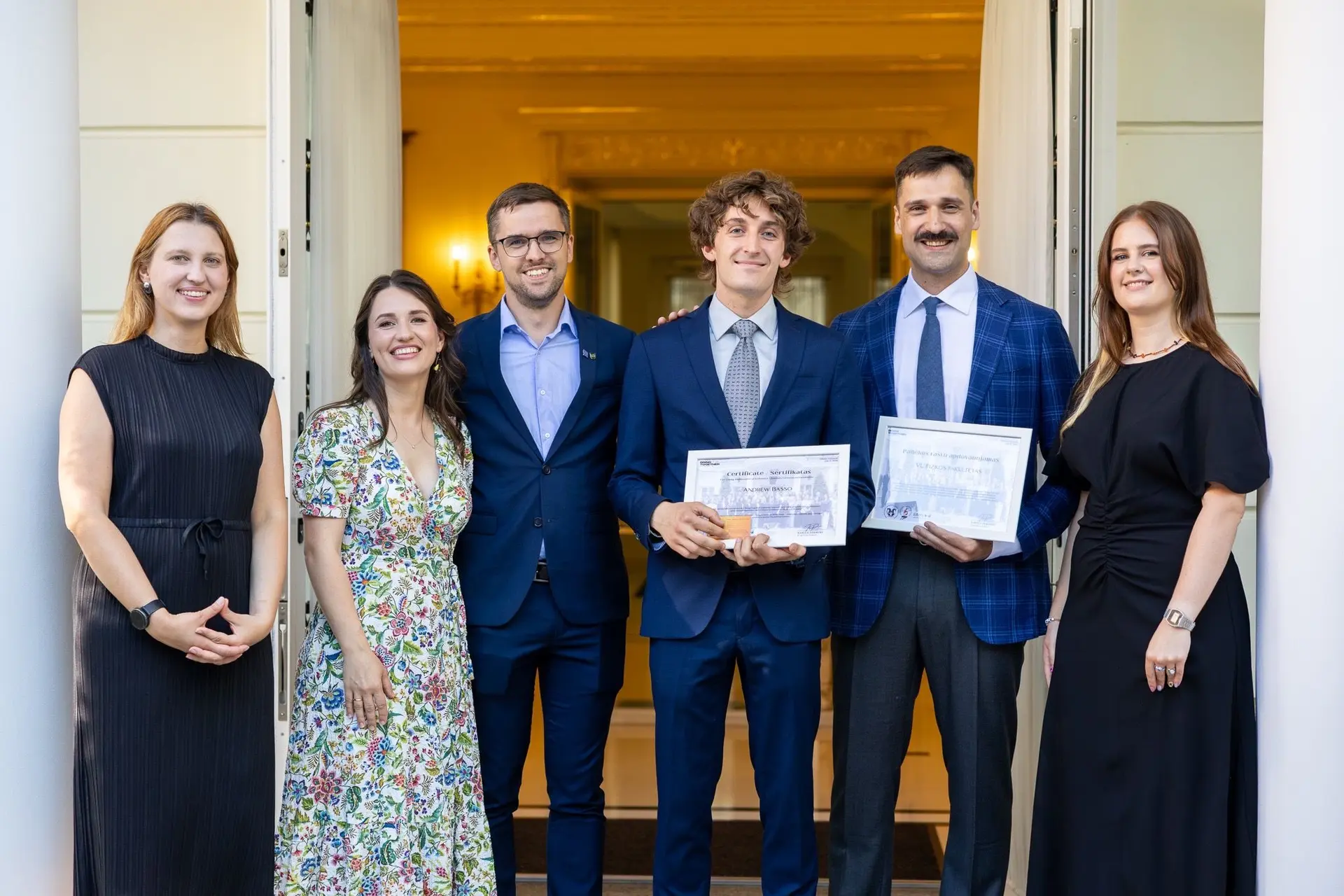
Andrew Basso (centre). Photo from the “Bring Together Lithuania” archive.
Initiated and supported by the Kazickas Family Foundation, the “Bring Together Lithuania” programme brings together young members of the Lithuanian diaspora from around the world. It offers them an opportunity to strengthen their connection with Lithuania and its culture, while gaining valuable professional experience and developing practical skills.