

Vilnius University (VU) Photonics and Nanotechnology Master's student Akvilė Paskačimaitė spent the final week of summer at the Eindhoven Semicon Summer School in the Netherlands. The event brought together 80 participants from 16 countries, who attended expert lectures, visited leading technology companies, and collaborated on team projects.
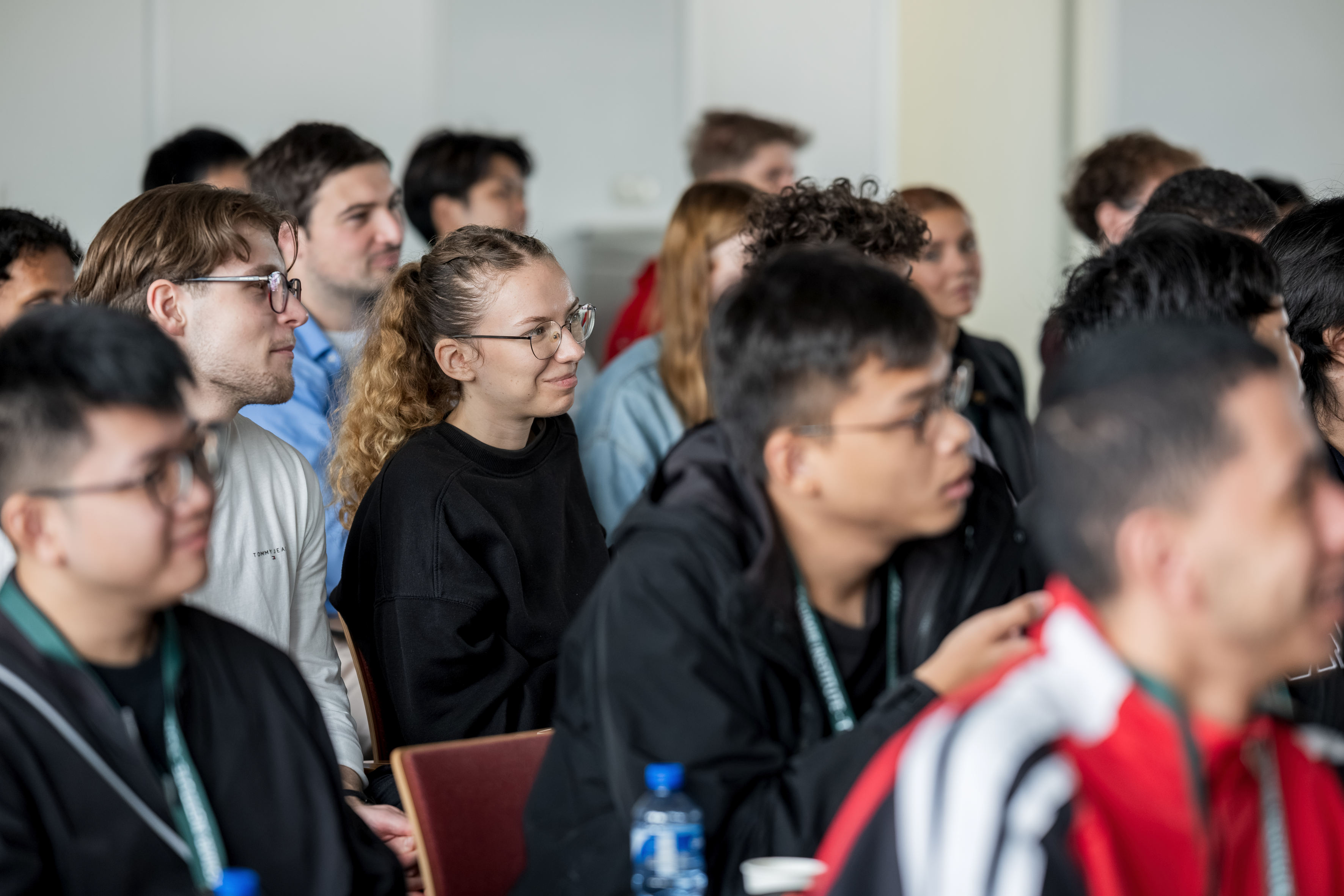 Photo from the students' personal archive
Among ten competing teams, awards were presented to those that most successfully met the project requirements and delivered the most compelling presentations. Paskačimaitė’s team was awarded first place.
Together with her teammates, VU student explored how conventional electronic processors used for artificial intelligence could be replaced by photonic, light-based neural network systems employing metasurfaces.
“Our goal was to investigate how optical signals representing numerical input data can be manipulated using a photonic metasurface structure to perform matrix-vector multiplications and subsequently be detected using integrated photodetectors. Such a system would carry out computations at the speed of light while consuming virtually no electrical energy. These characteristics are particularly attractive for applications where artificial intelligence is needed but battery capacity is limited, for example in deep-sea ocean exploration,” she explained.
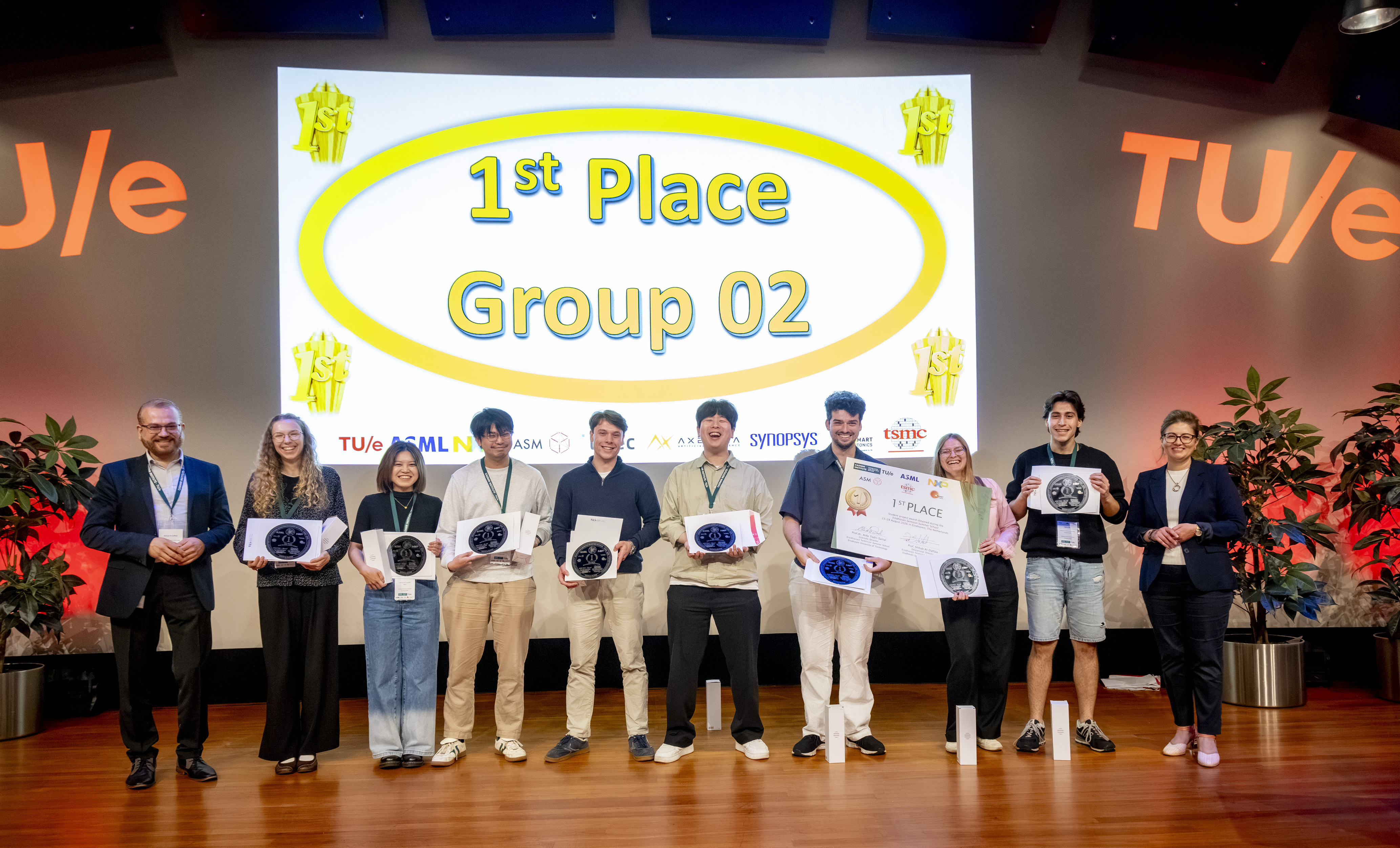
Photo from the students' personal archive
According to the student, one of the most memorable aspects of the summer school was visiting the world-leading semiconductor companies ASML and NXP Semiconductors and meeting the people behind their innovations.
“While studying semiconductors, I often come across images of ASML’s EUV lithography machines in lecturers’ presentations. They are usually mentioned as just one step in the chip manufacturing process, but seeing the scale of work required to design and operate such a machine was both impressive and inspiring,” said A. Paskačimaitė.
Alongside colleagues from Eindhoven University of Technology (TU/e) and universities across the world, including institutions from Germany, Japan, India, Taiwan and South Korea, participants gained insight into the entire semiconductor value chain, from materials and manufacturing processes to devices, circuits, systems and their practical applications.
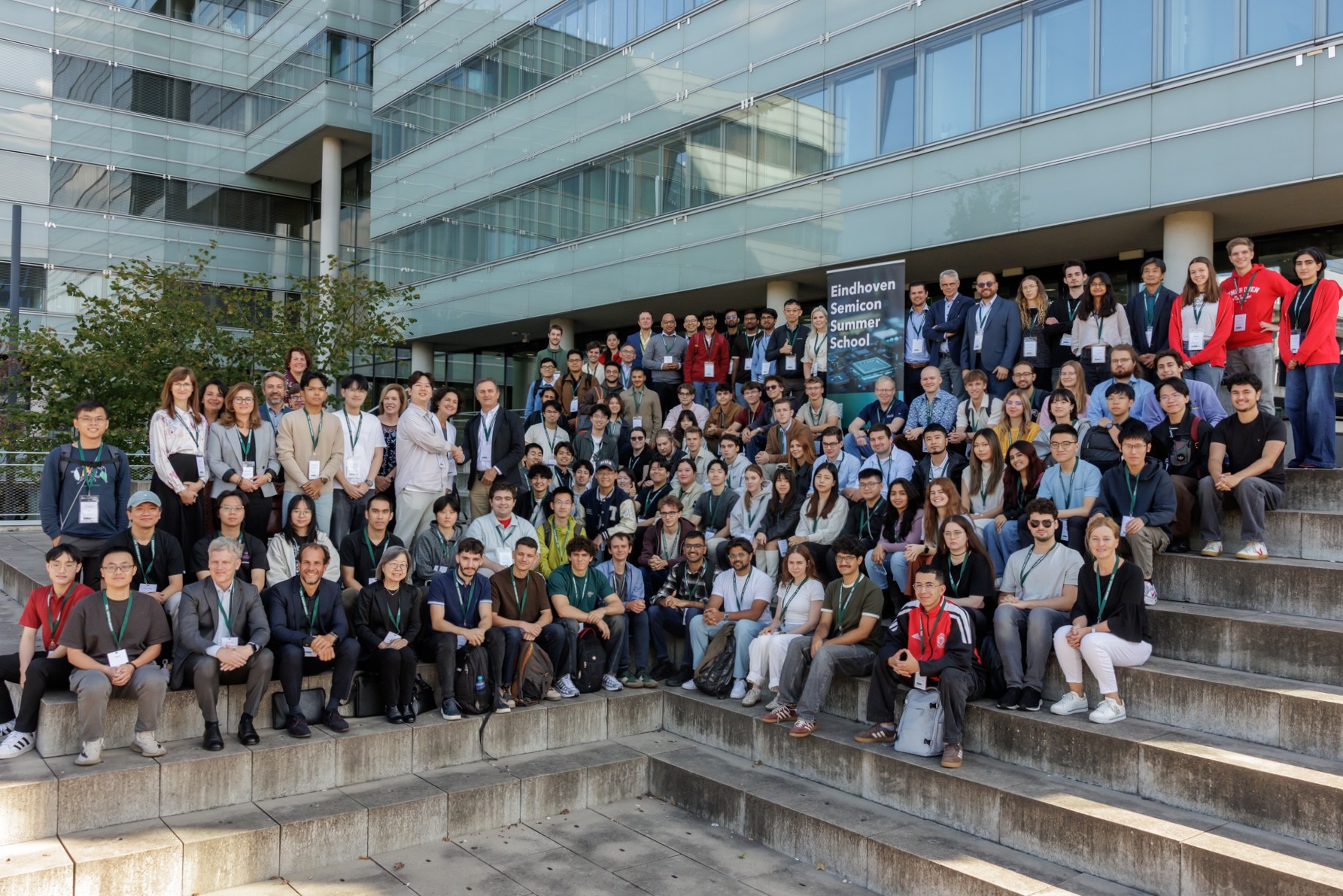
Photo from the students' personal archive
Paskačimaitė represented Lithuania together with Justas Žuvelis from the Center for Physical Sciences and Technology. His team secured second place in the competition.
The Eindhoven Semicon Summer School has been organised for the fourth consecutive year by TU/e in partnership with leading semiconductor industry companies, including ASML, ASM, NXP, TSMC, and Smart Photonics.