

From 31 August to 4 September, four students from the Faculty of Physics at Vilnius University (VU) – undergraduate Emilija Vaikšnoraitė, Master’s student Gabrielius Rusonis, and PhD students Lukas Kamarauskas and Miroslav Saniuk – took part inthe Extreme Light Infrastructure (ELI) Summer School of 2026.
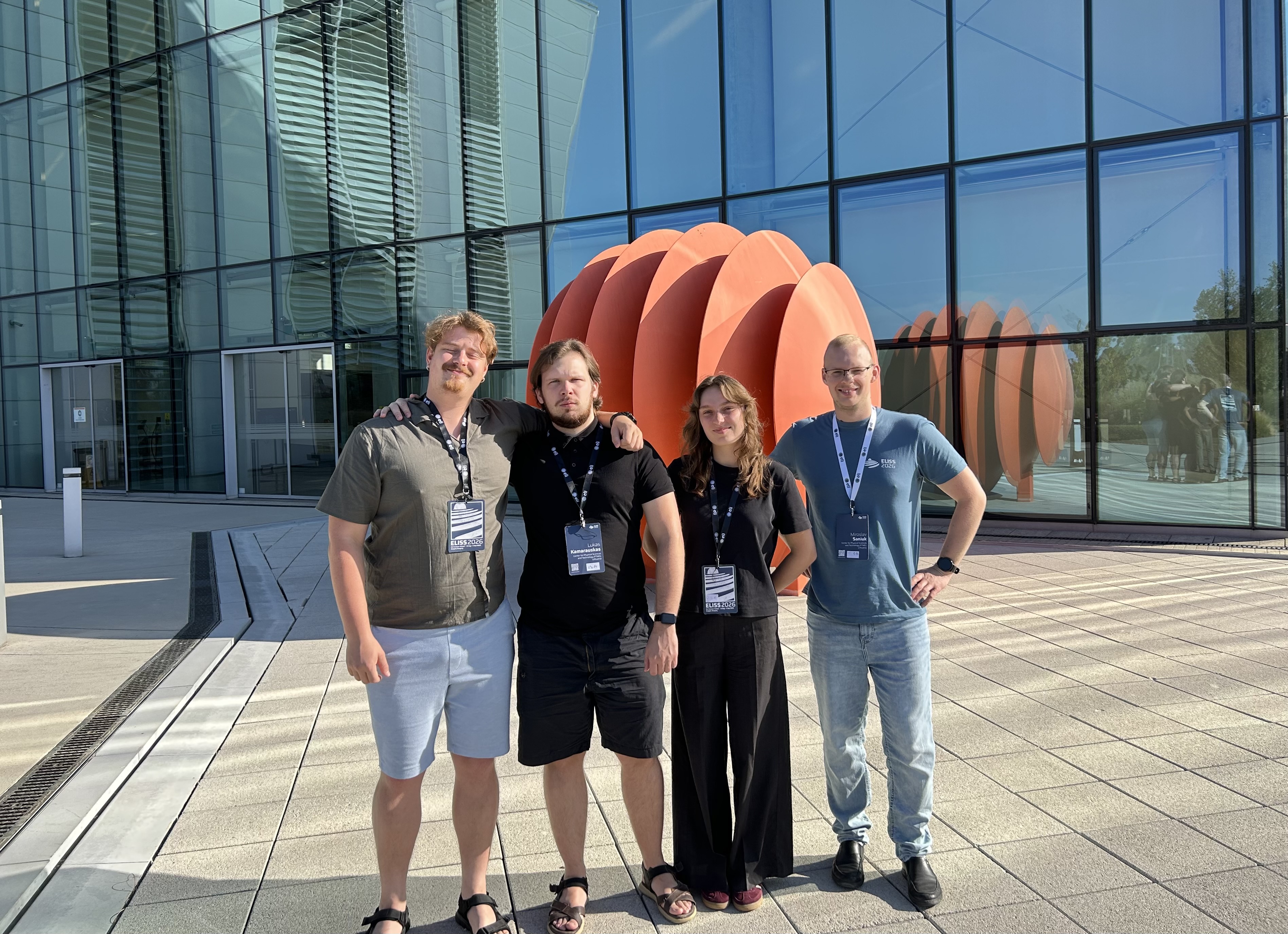
From left: Gabrielius Rusonis, Lukas Kamarauskas, Emilija Vaikšnoraitė, Miroslav Saniuk. Photo from personal archive.
During the event, the students explored the operation of high-intensity laser systems and the generation and application of high harmonics; they visited Lithuanian laser facilities in Hungary and forged links with colleagues from Europe and South America.
“This is our first time visiting the ELI-ALPS research centre in Hungary. It is located in a town on the outskirts of Hungary, Szeged. It is a cosy town, where world-class laser systems “live”. The research centre itself left a huge impression simply because of its size, as we have not seen a larger one dedicated solely to laser research. The competence of the staff and the event made a lasting impression, alongside with the quality of the presentations, and the newest and most impressive laser systems boasting the most impressive specifications, which we were able to see up close,” said Saniuk.
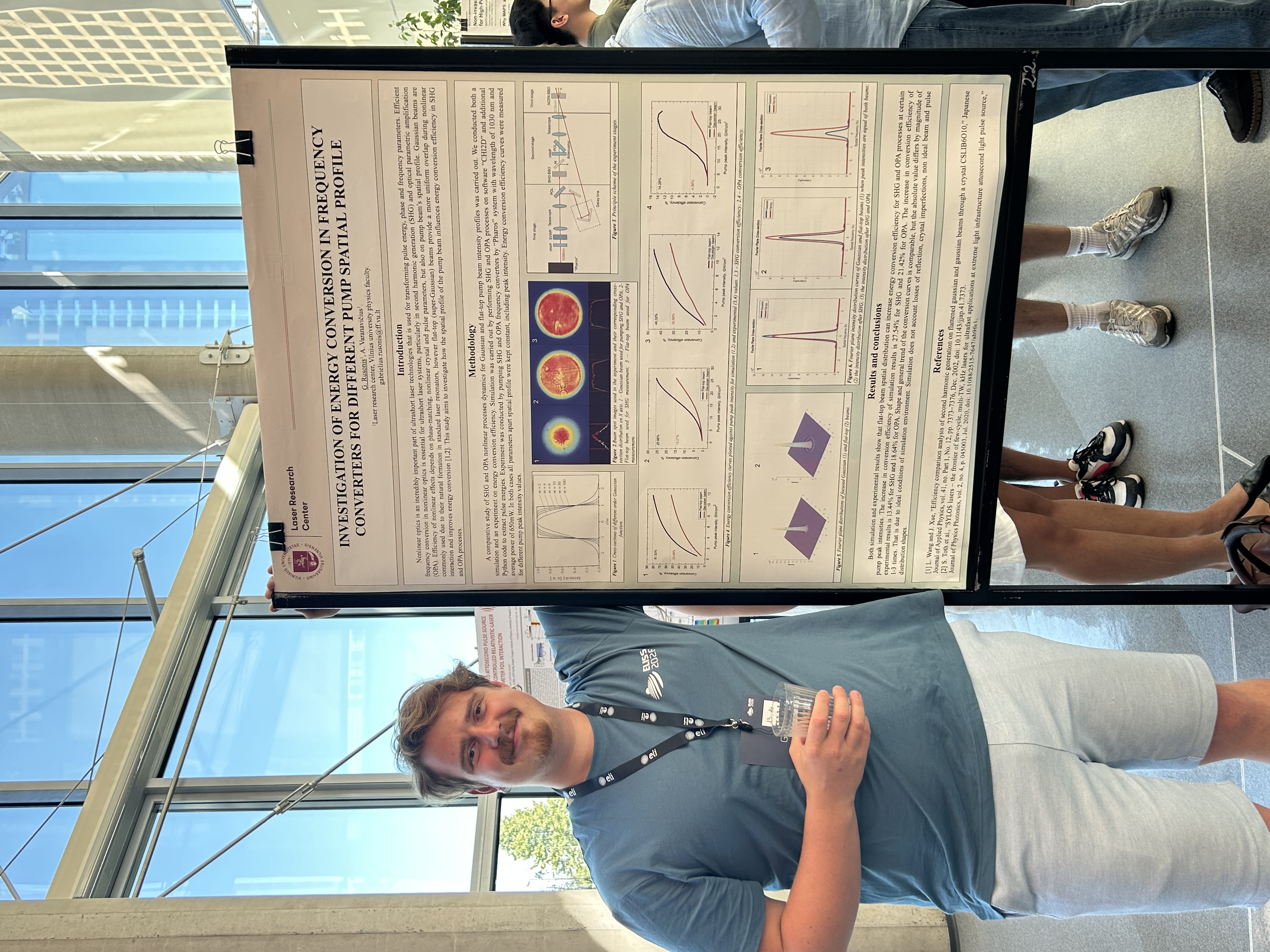
Gabrielius Rusonis. Photo from personal archive.
Presentations were given by high-profile representatives from European research centres, including Prof. Anne L'Huillier, a Nobel Prize laureate in Physics. Students noted that, although the concepts of laser physics were complex, the speakers presented them in an accessible manner.
“We learned about the latest “trends” in the application of high-power lasers creating the shortest laser pulses in the world, new states of matter, secondary sources of ionizing radiation, and so on. It is a complex field of study, but it was presented quite clearly and in an accessible way. During the field trips, we had the opportunity to take a close look at these impressive lasers. We were also able to physically test certain technologies by carrying out mini-laboratory experiments, both with real lasers and through simulations,” said Vaikšnoraitė.
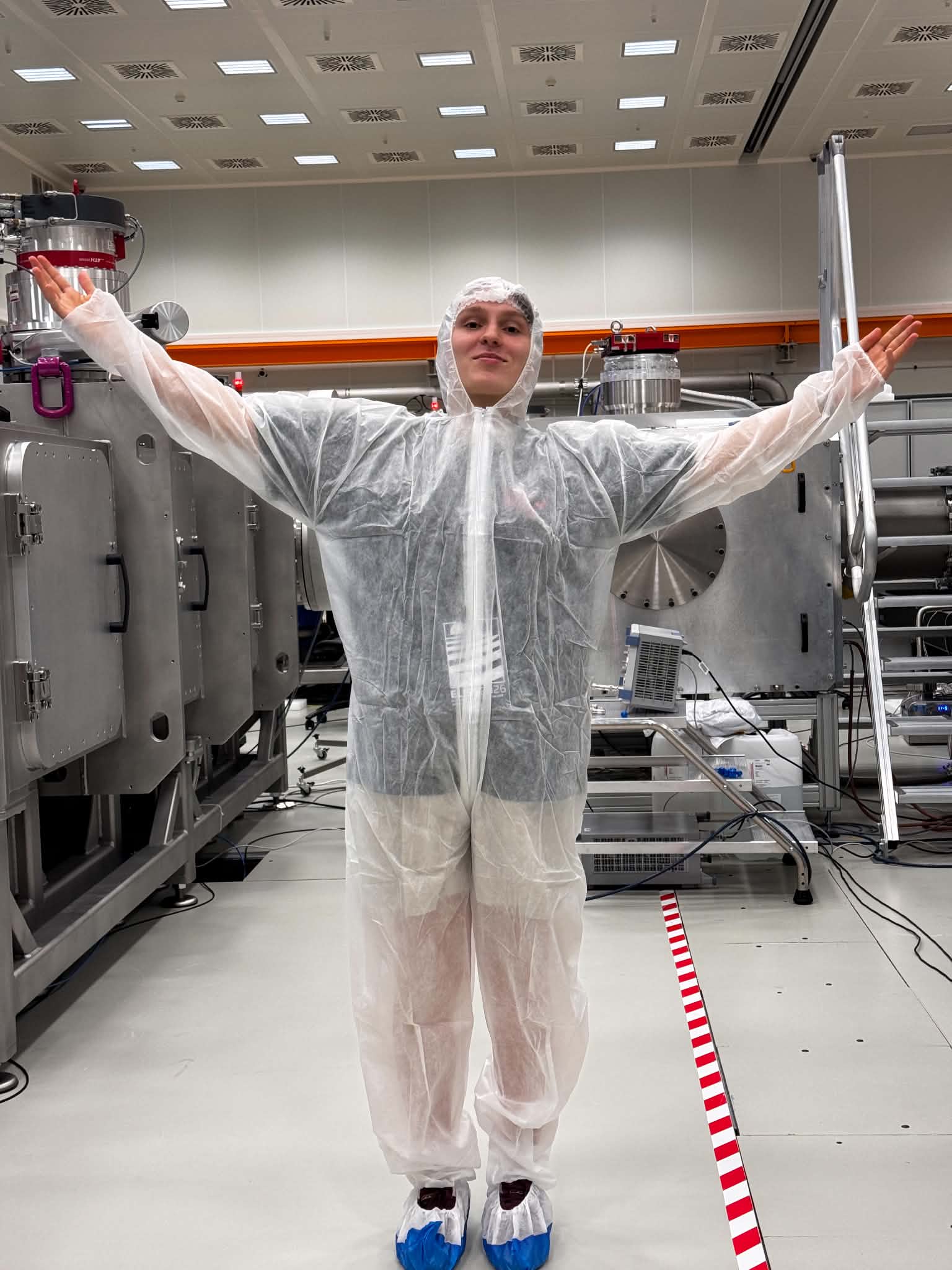
Emilija Vaikšnoraitė. Photo from personal archive.
The ELI-ALPS research centre is renowned for its high-power, short-pulse, high-stability lasers, among which the SYLOS series – developed and manufactured in Lithuania – are some of the best known. “Their system comprises lasers from the companies ‘Ekspla’ and ‘Light Conversion’, whose representatives maintain and manage these lasers. We knew about these lasers beforehand and couldn’t wait to see them and take pride in them in person,” said Rusonis.
The students’ experience shows that it is not only Lithuanians themselves who refer to Lithuania as the 'land of lasers'. “We really felt as though we were from the “land of lasers”. Not just because of the Lithuanian lasers in the research centre, but also because everyone knew who and where Lithuania was, and that we make high-end lasers. During summer school, participants also presented poster presentations, sharing their areas of research and results. And a significant proportion of this research utilised a Lithuanian laser of one sort or another,” said Kamarauskas.
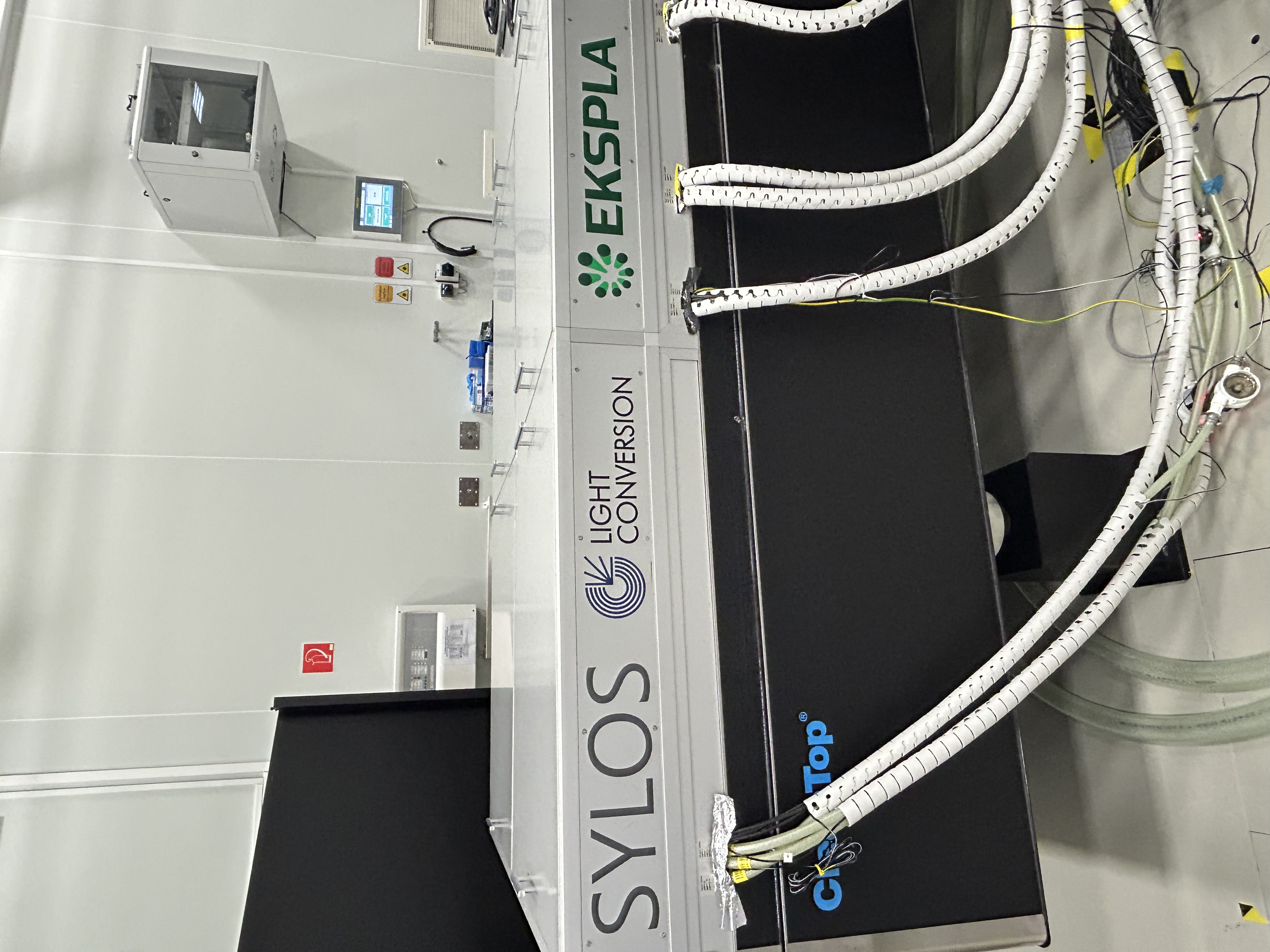
Lithuanian lasers at ELI. Photo from personal archive.
The young physicists describe this trip as having broadened their horizons and sparked their curiosity, and they are delighted with the international connections they have made. “It was very useful to learn about the latest scientific challenges in laser technology and the proposed solutions. We’re returning with a greater understanding not only of how lasers work, but also of their wide range of applications. At the same time, we’ve gained a great deal of motivation to study and conduct research. It was a wonderful coincidence that this summer school took place just before the start of the academic year, so we’ll be able to put this motivation to good use straight away. Of course, it was also incredibly enjoyable and rewarding to meet so many new young people who are equally passionate about laser technologies and keen to share their knowledge. These new friendships will be remembered for a long time,” concluded Rusonis.