

In 1966, just six years after the world’s first laser was created, the first laser in Lithuania was fired at Vilnius University. Today, the country is home to more than 60 laser and photonics companies, with over 2,000 highly qualified specialists working across the sector and its research centres. More than 90% of Lithuania’s laser industry output is exported.
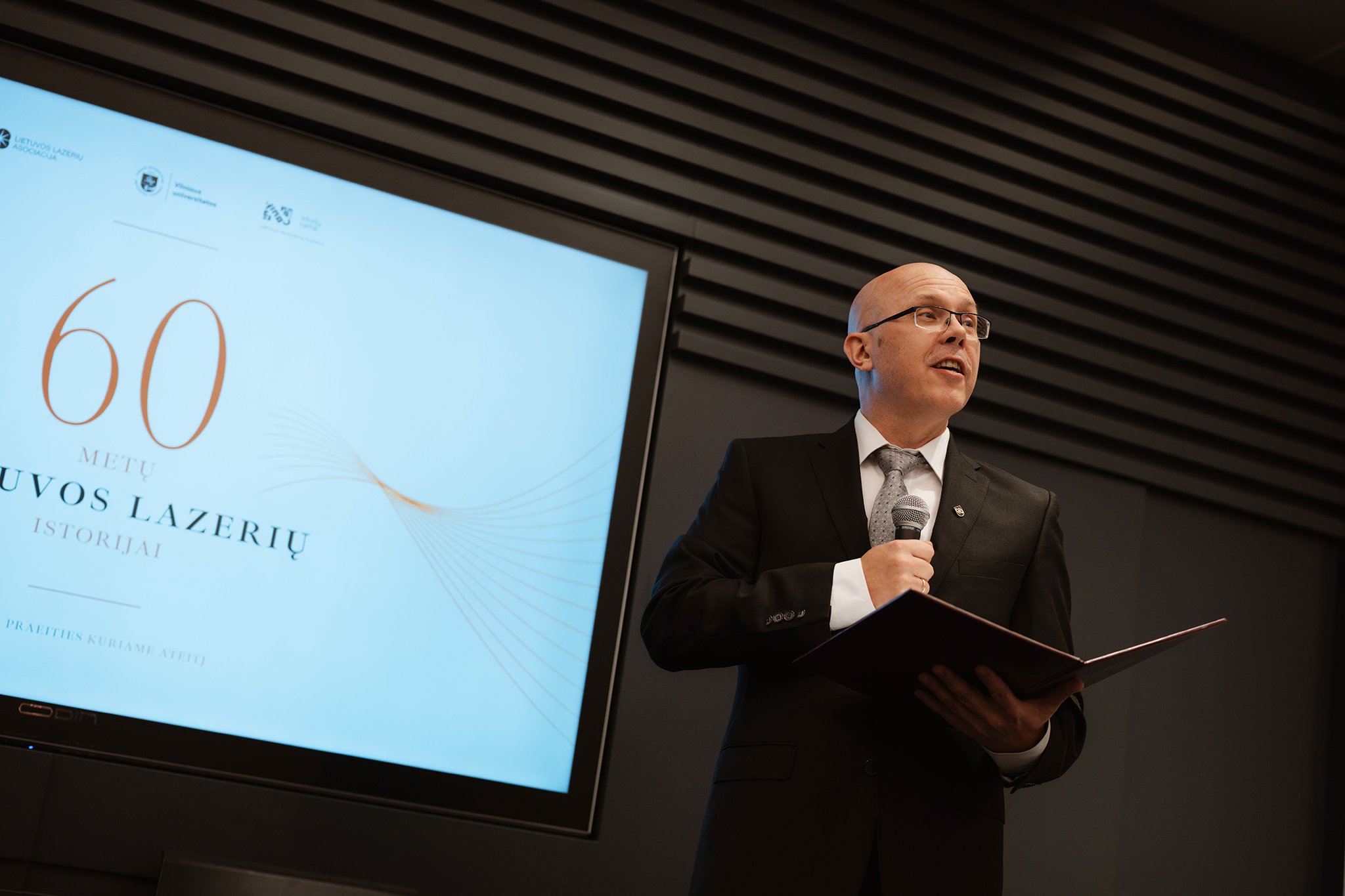
Photo credit: Greta Vaisėtaitė
On 10 September, Lithuania’s laser community, together with the pioneers of the sector and representatives of science, business and government, marked 60 years of lasers in Lithuania. The anniversary was an opportunity not only to look back at the path travelled, but also to reflect on what the ecosystem of science, business and talent built over six decades means for Lithuania today.
60 Years of Investment in Science and People
“The success of Lithuania’s laser sector sends a very clear message to the state: investment in fundamental science, people and innovation ecosystems pays off by creating long-term value,” said Marija Jakubauskienė, Adviser to the Prime Minister, at the 60th anniversary event.
According to her, Lithuania’s laser and photonics ecosystem is important not only economically. It strengthens the country’s innovation potential, brings science and business together, develops highly qualified specialists, and contributes to Lithuania’s technological resilience and autonomy.
The significance of Lithuania’s laser sector to the country was also highlighted at the anniversary event by Guoda Burokienė, Vice-Minister of the Economy and Innovation; Vidmantas Verbickas, Vice-Minister of Foreign Affairs; and Rimantas Vaitkus, representative of the Ministry of Education, Science and Sport. Speaking about the sector’s importance to Lithuania, they emphasised its contribution to the country’s economy, the development of science and high technologies, and Lithuania’s visibility internationally.
Prof. Rimvydas Petrauskas, Rector of Vilnius University, described the development of Lithuania’s laser sector as one of the best examples of scientific advancement and knowledge transfer. The industry that grew out of academic research has not only created high-value-added businesses but has also maintained close ties with science: people who moved into business return to the university, support research and studies, while companies invest in the development of new technologies.
Over six decades, this relationship has become one of the defining features of Lithuania’s laser ecosystem.
Photo credit: Greta Vaisėtaitė
From a Few Research Groups to More Than 60 Companies
Today’s ecosystem had much more modest beginnings. As early as 1962, Prof. Povilas Brazdžiūnas recognised the potential of laser technology, which had emerged globally only two years earlier, and initiated the training of young Lithuanian physicists in the field.
Four years later, Juozas Vidmantis Vaitkus, Jurgis Viščakas and Remigijus Baltramiejūnas fired the first laser in Lithuania at Vilnius University. Interestingly, the laser was not developed as a new technology for its own sake – it was needed as a tool for semiconductor research.
Strong schools of laser research subsequently emerged at Vilnius University and the Institute of Physics. Scientists built their own instruments, engineers worked side by side with researchers, and some of the expertise accumulated in these environments eventually developed into businesses.
Following the restoration of Lithuania’s independence, the country’s modern laser industry began to take shape. Ekspla was founded in 1992, followed by Light Conversion in 1994, while companies specialising in optics, components, laser sources and technological systems continued to emerge and grow. Today, Lithuania’s laser and photonics ecosystem covers the entire value chain – from fundamental research to the deployment of technologies in industry.
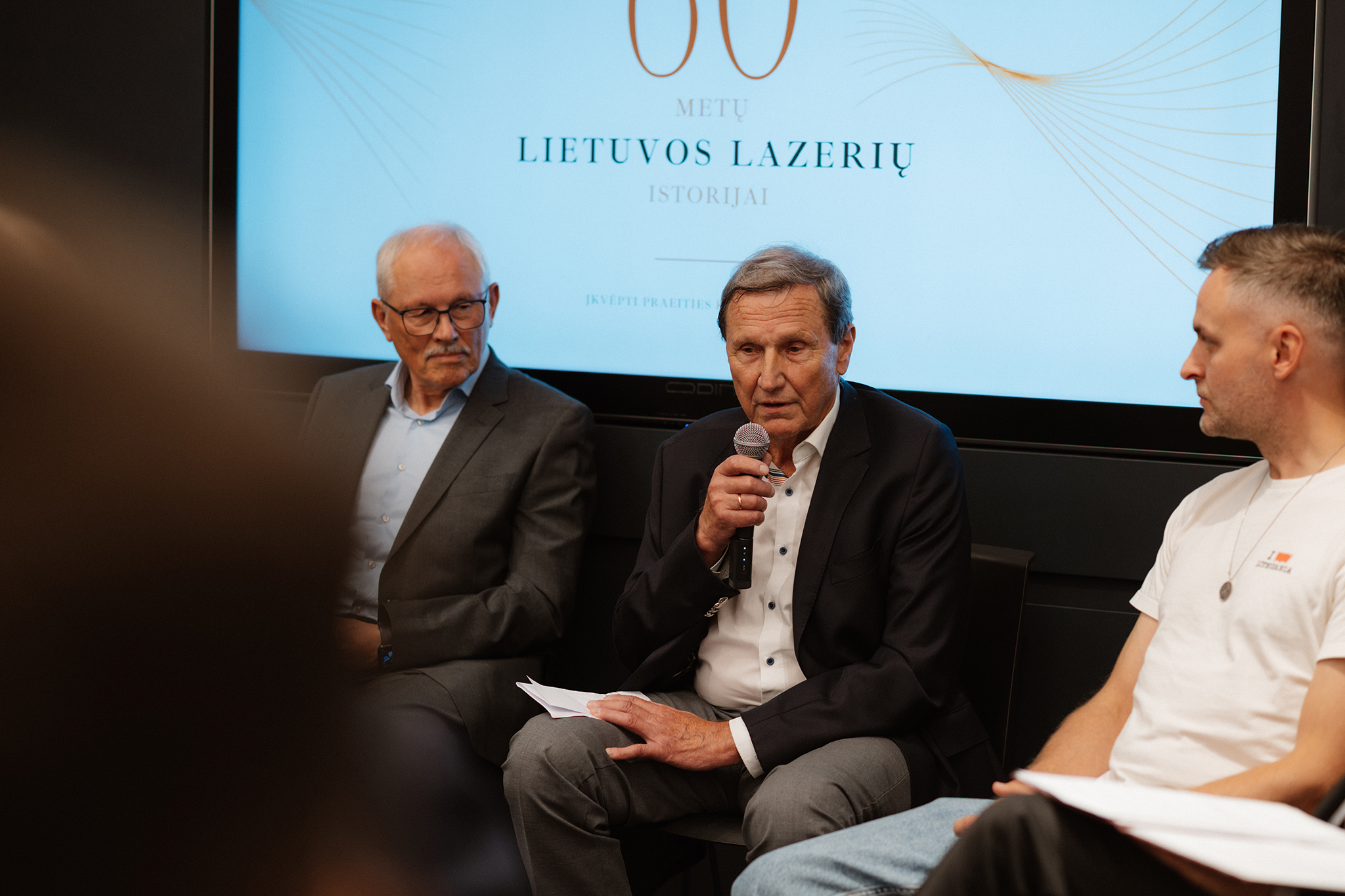 Photo credit: Greta Vaisėtaitė
Building the Next 60 Years
The future of Lithuania’s laser sector remains closely linked to one of the country’s strongest areas of expertise – ultrashort-pulse lasers and their applications. At the same time, growing opportunities are emerging in semiconductors, quantum technologies, communications, medicine, defence and space.
Lithuania is a founding member of ELI ERIC, Europe’s major laser research infrastructure. In 2023, the joint Ultrashort Pulse Laser Technology Research and Innovation Center (ULTRI) was opened in Taiwan in cooperation with the Industrial Technology Research Institute (ITRI).
According to Lithuanian Laser Association President Gediminas Račiukaitis, Lithuania’s future strength will not necessarily lie in mass production. A greater opportunity is to maintain strong positions in areas requiring exceptional expertise, develop components and technologies that are difficult to replace, and become an important part of major international projects.
Lithuania’s 60-year laser story demonstrates that high-tech ecosystems do not emerge within a single funding cycle or over just a few years. They require the consistent development of people and scientific expertise, room for experimentation, collaboration between science and business, and the ability to pass accumulated knowledge on to the next generation.
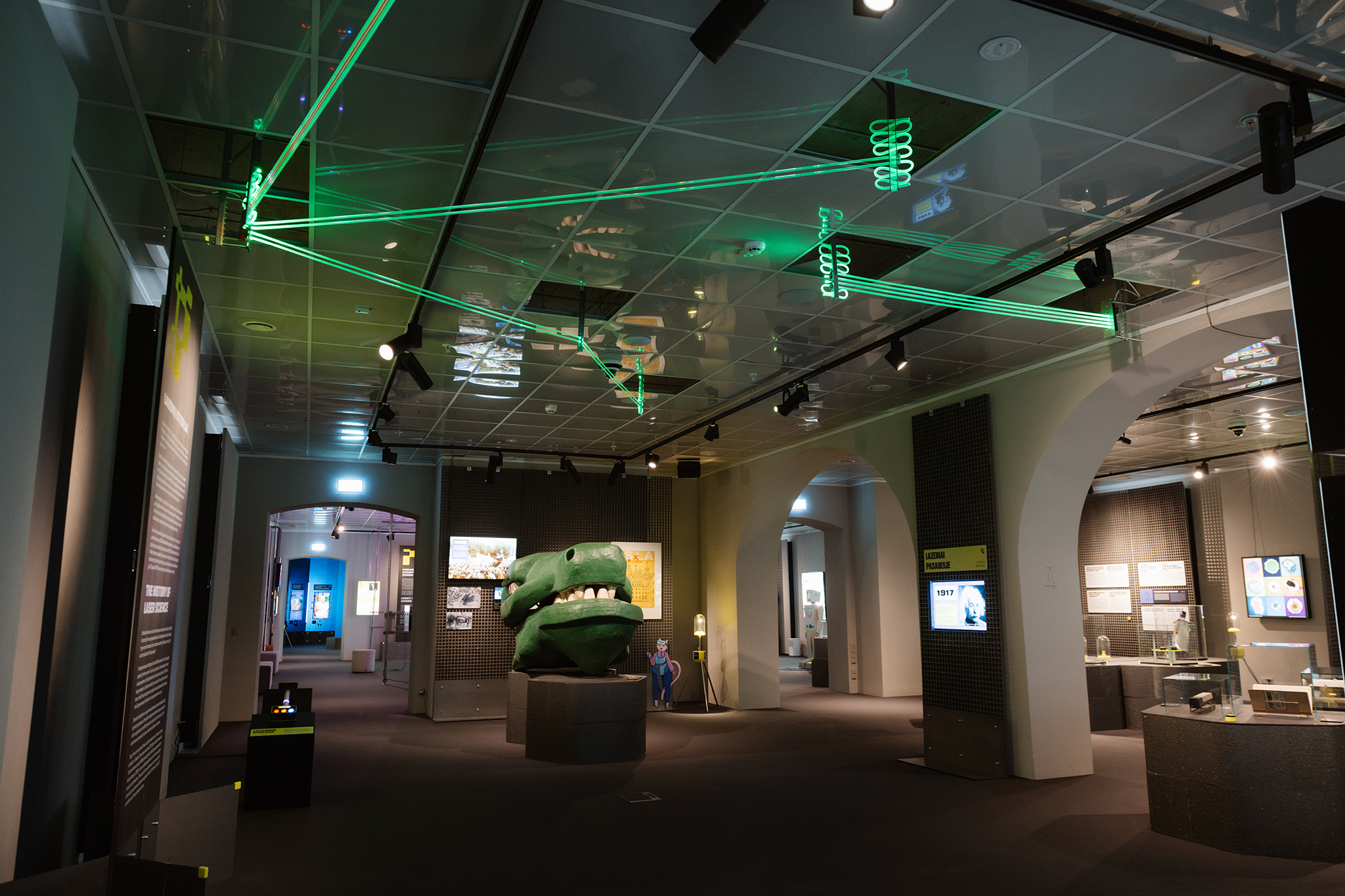
Photo credit: Greta Vaisėtaitė
Bringing the 60-Year Story to the Public
During the anniversary year, the story of Lithuania’s lasers can also be explored beyond laboratories and companies.
The exhibition “Trajectory of the Future. The History of High Technology in Lithuania” at the House of Histories of the National Museum of Lithuania presents the development of Lithuania’s laser sector, its pioneers and the people who built its scientific knowledge, technologies and companies.
Since July, the Energy and Technology Museum has also hosted the photonics exhibition “From Light Waves to Laser Beams”, inviting visitors to explore light, photonics and the principles of laser operation through hands-on experiences.