

On 26–28 October, members of the International Advisory Board of the Lithuanian Consortium for Particle Physics (LCPP), whilst visiting Vilnius University (VU), spoke very positively about the work carried out by the Consortium’s researchers over the past few years.
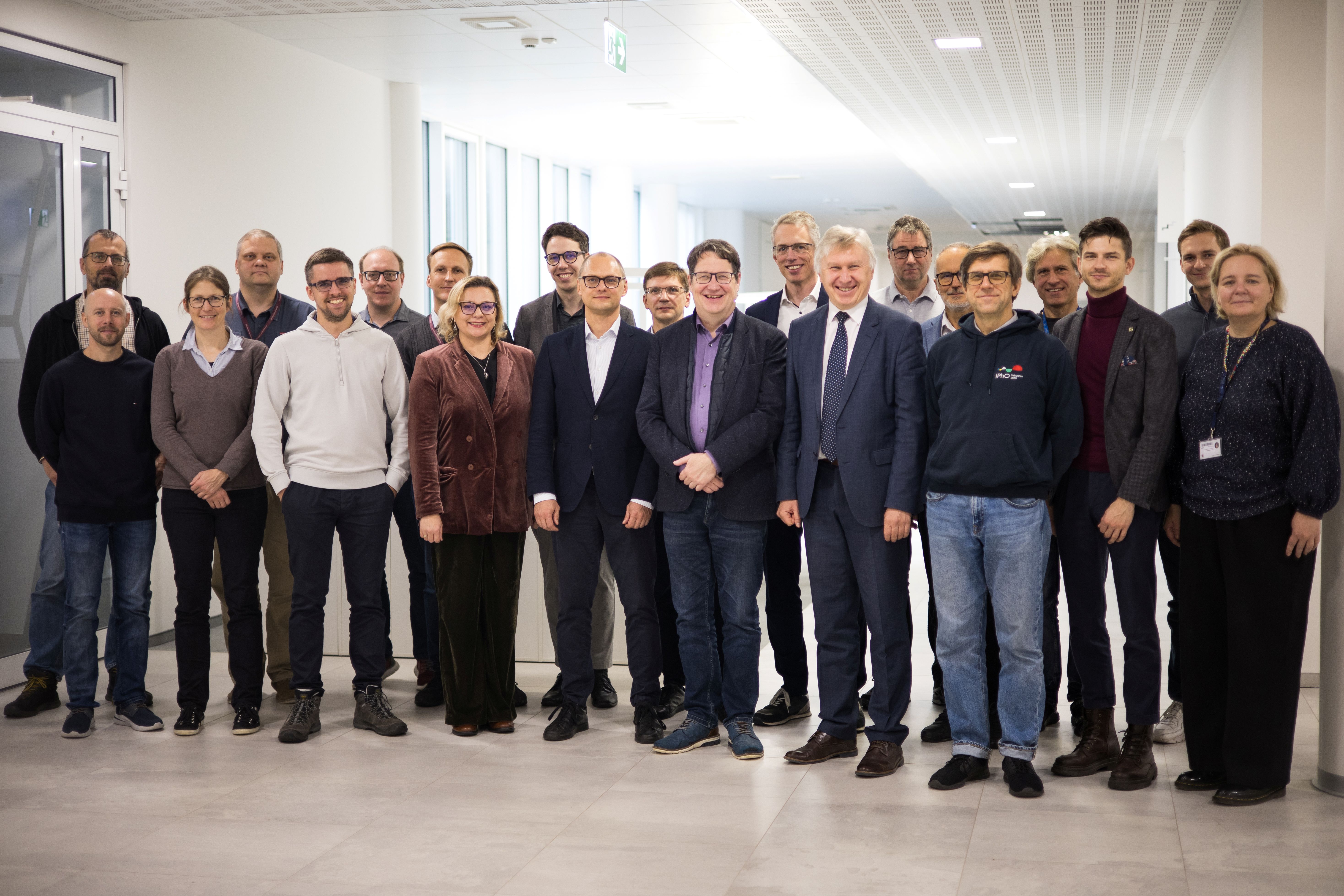 Photo credit: Patricija Strumilaitė
VU researchers have set up two laboratories for the testing and assembly of detector modules that will be used in the Compact Muon Solenoid (CMS) experiment at the European Organisation for Nuclear Research (CERN). Twelve such modules have already been assembled and dispatched.
Work is also beginning on the development of an upgraded light injection system for the fibre-optic detector (SciFi) in the Large Hadron Collider beauty (LHCb) experiment. A Lithuanian team has been entrusted with the task of developing this system.
Researchers at Kaunas University of Technology have proposed and refined a new technology for the manufacture of contact-specific detectors using laser drilling.
In addition to all this, Lithuanian scientists are actively involved in a range of other activities on a daily basis – conducting research as part of various CERN projects, organising seminars and training sessions for teachers, organizing International Physics Masterclasses, and much more.
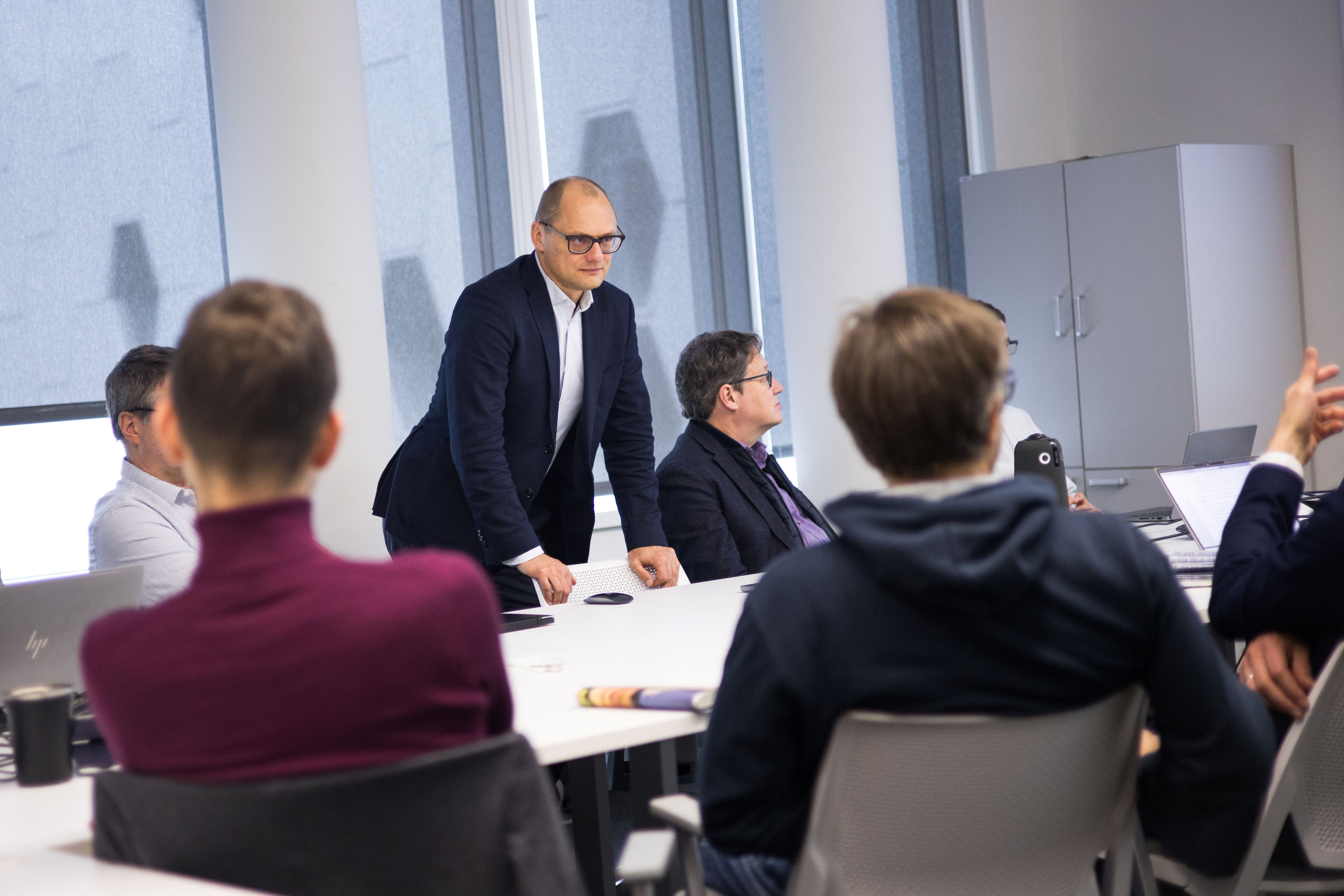
Photo credit: Patricija Strumilaitė
“Perhaps the most important part of the visit’s programme was the launch of the strategic plan for 2028–2032. This plan must align the requirements of CERN experiments with national needs, as well as the expertise of LCPP researchers and the equipment available. This period is particularly important in view of Lithuania’s aspiration to become a full member of CERN,” explains VU Prof. Ramūnas Aleksiejūnas, Executive Director of the LCPP.
Meetings were also held with research groups which are not yet members of the LDFK but would like to and are capable of joining the CERN experiments. The meetings were attended by researchers from the Centre for Physical Sciences and Technology, VU Faculty of Physics Laser Research Center, VU Life Sciences Center, VUH Santaros Clinics and the National Cancer Institute. During the meetings, CERN representatives could propose specific steps on how to commence activities at CERN.
The Advisory Board will set out the conclusions of the visit in a public document.
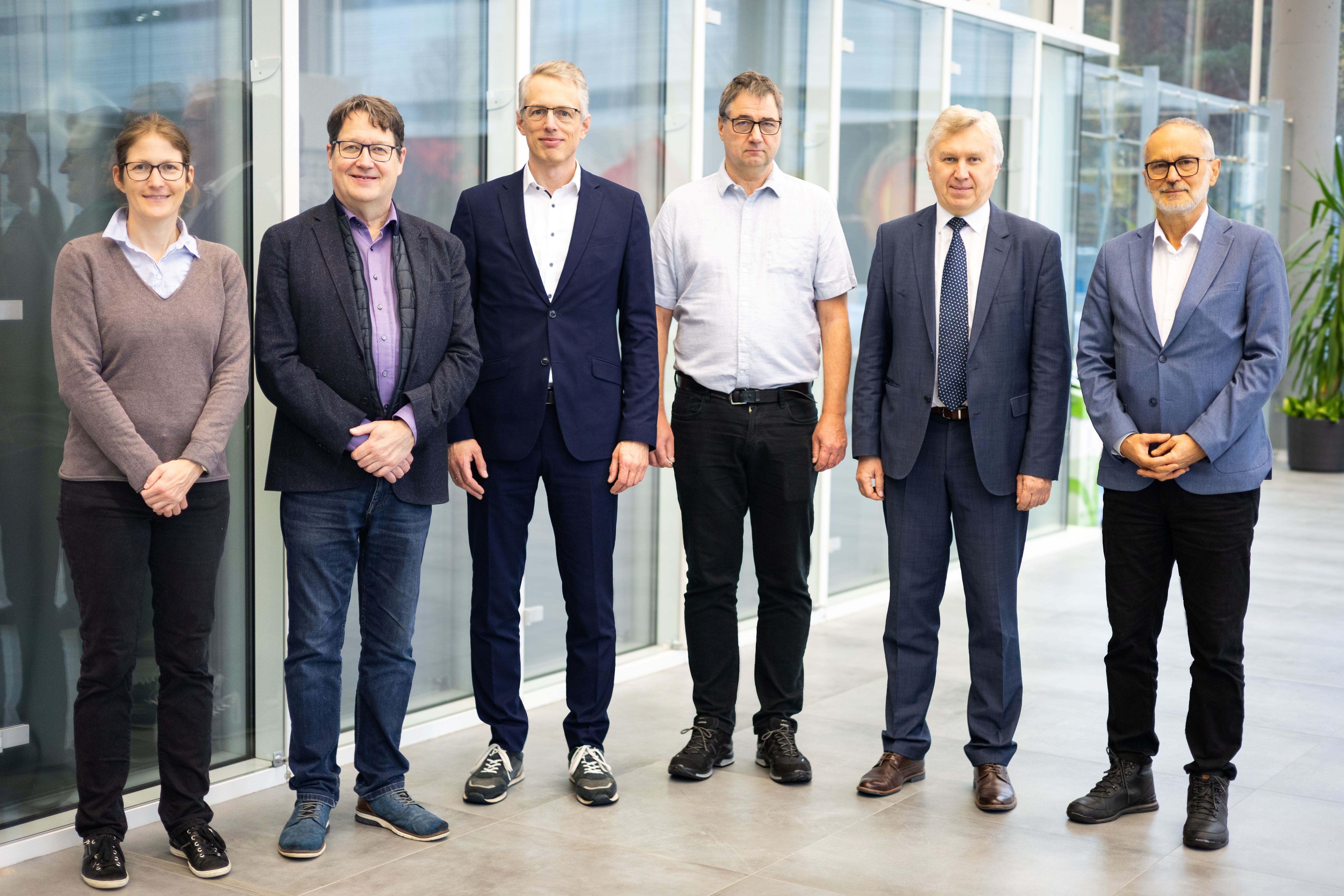
Photo credit: Patricija Strumilaitė
The Board consists of six CERN scientists and is currently chaired by Dr Maksym Titov of the French Alternative Energies and Atomic Energy Commission (CEA). The Board's main task is to monitor the activities of the LCPP and help align them with CERN’s objectives. This is the second such visit to Lithuania.