

Visitors to the MO Museum's exhibition “Is It Real? Art, Technology and Us” can discover its smallest exhibit only through a microscope. It is a superconducting spiral microresonator developed by physicists at Vilnius University.
 Photo credit: Laurynas Skeisgiela / MO Museum
Professor Mantas Šimėnas and doctoral student Gediminas Usevičius explained that, with this device, experiments that once could take up to a year can now be performed in a matter of seconds, making it possible to investigate phenomena that were previously impossible to detect. The device has valuable applications in quantum technologies, broadens the capabilities of microresonators, and paves the way for studying trace amounts of a wide variety of materials.
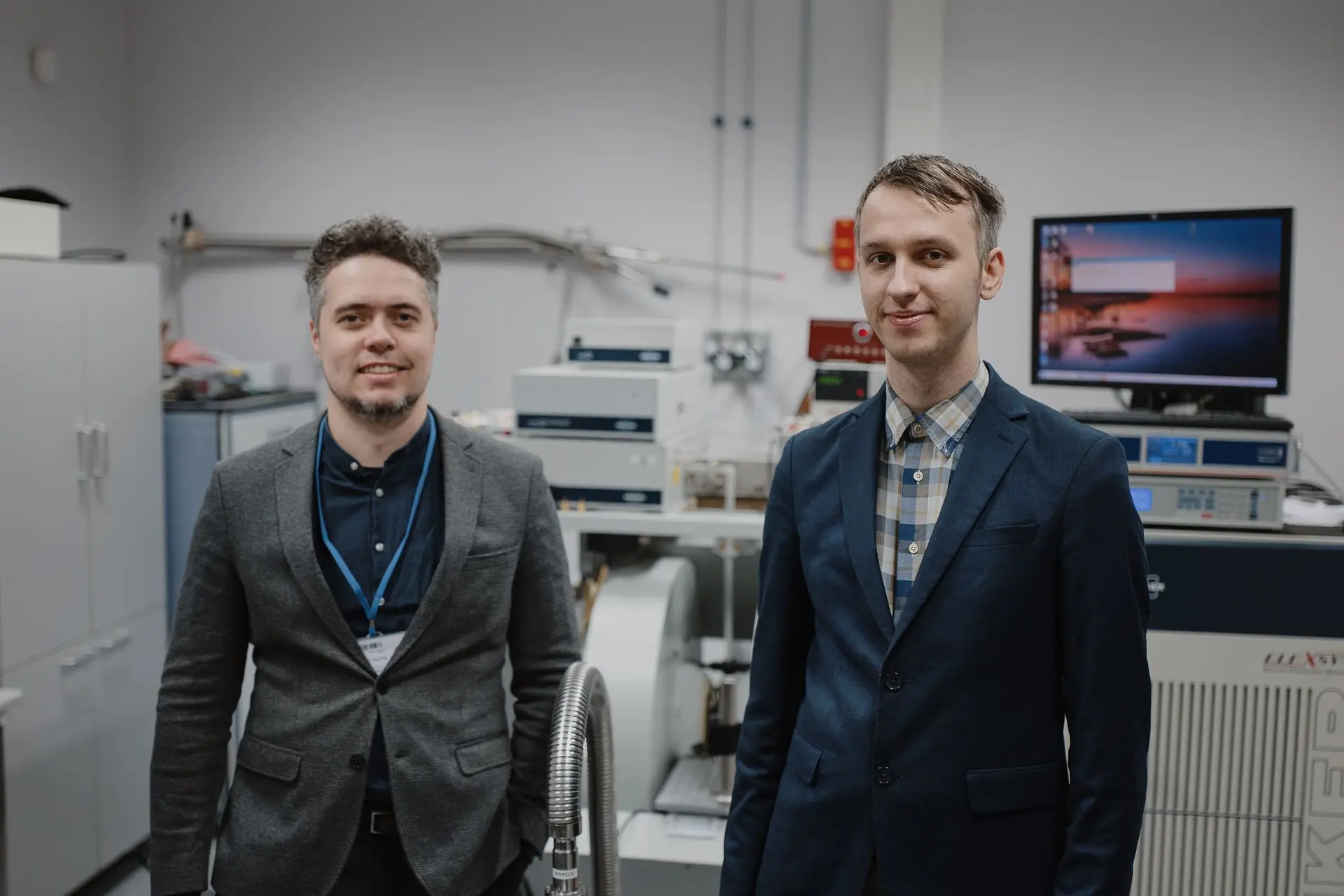
Prof. Mantas Šimėnas and doctoral student Gediminas Usevičius. Photo credit: Vilnius University
According to researchers at the Institute of Applied Electrodynamics and Telecommunications at VU Faculty of Physics, the microresonator could prove highly valuable in biochemistry and other fields that use electron paramagnetic resonance (EPR) spectroscopy. It helps researchers investigate materials and their structures at the microscopic level.
Made from YBCO, a high-temperature superconductor, the microresonator generates a strong magnetic field, enabling exceptionally sensitive EPR measurements. The device was fabricated using laser lithography in collaboration with researchers from University College London (UCL).
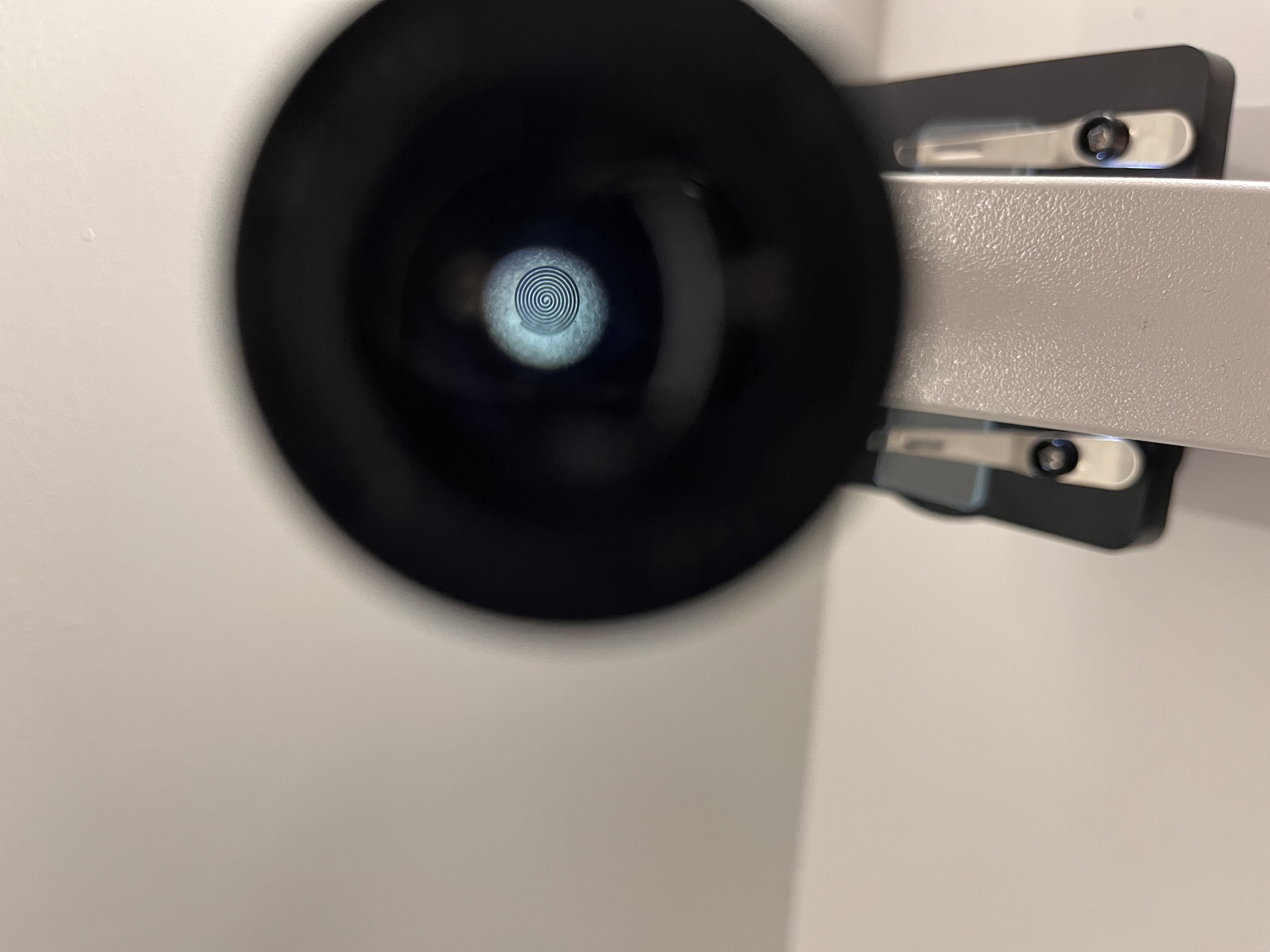
Photo credit: Faculty of Physics
Find out more about this highly sensitive spectroscopic device.
The exhibition invites visitors to reflect on technology and the reality we inhabit today. Ideas that once seemed like science fiction are now becoming part of everyday life. We invite you to visit the MO Museum, Pylimo St. 17, Vilnius.
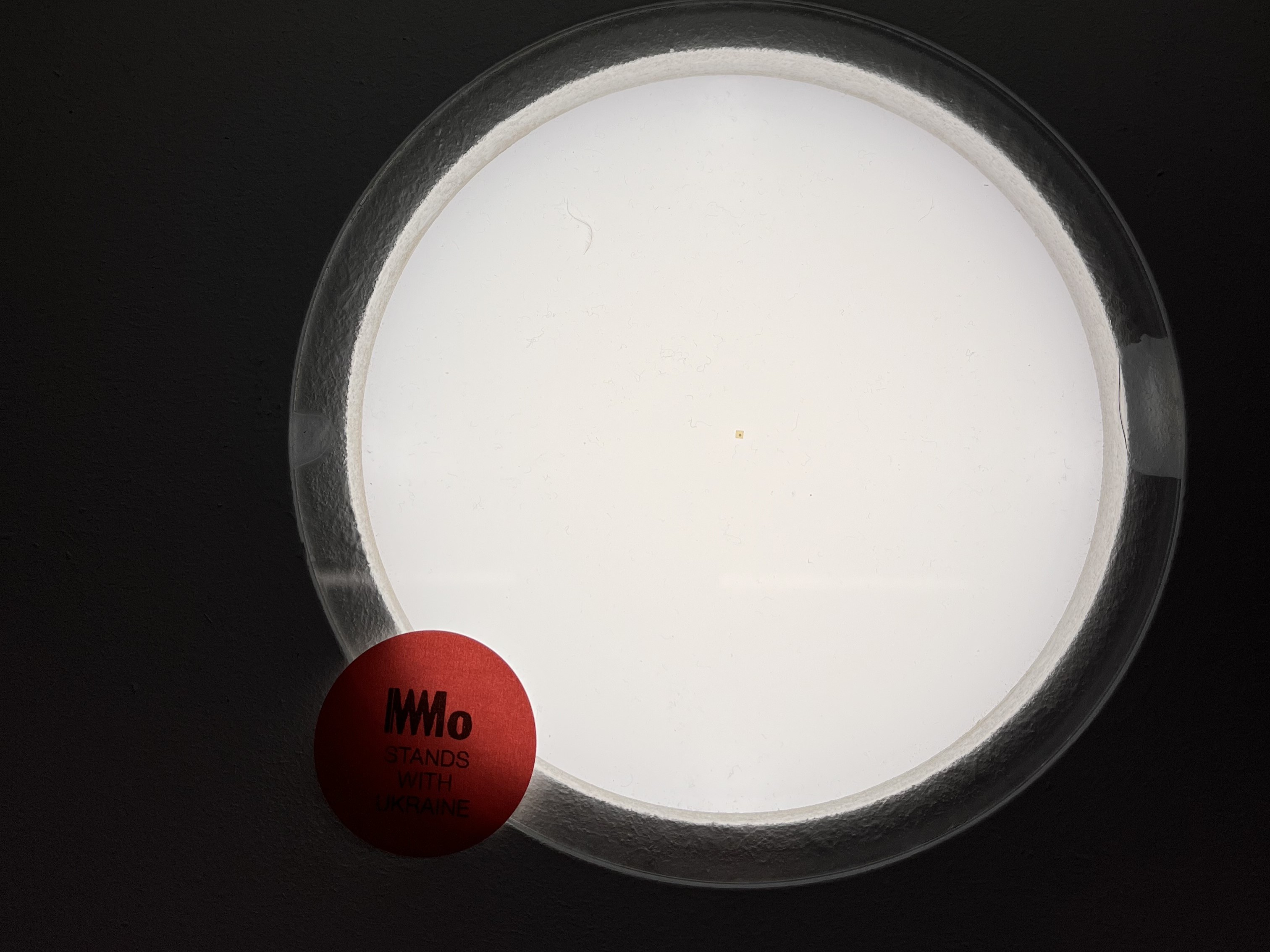
Photo credit: Faculty of Physics