

'Nature here is so beautiful and abundant that I haven’t even missed the mountains that much,' says Eulàlia Puig Vilardell, a student at Vilnius University (VU) Faculty of Physics from a small town in Catalunya, near Barcelona. Currently pursuing a joint PhD between VU and the University of Tartu, she conducts her research on femtosecond lasers at the Faculty’s Laser Research Center.
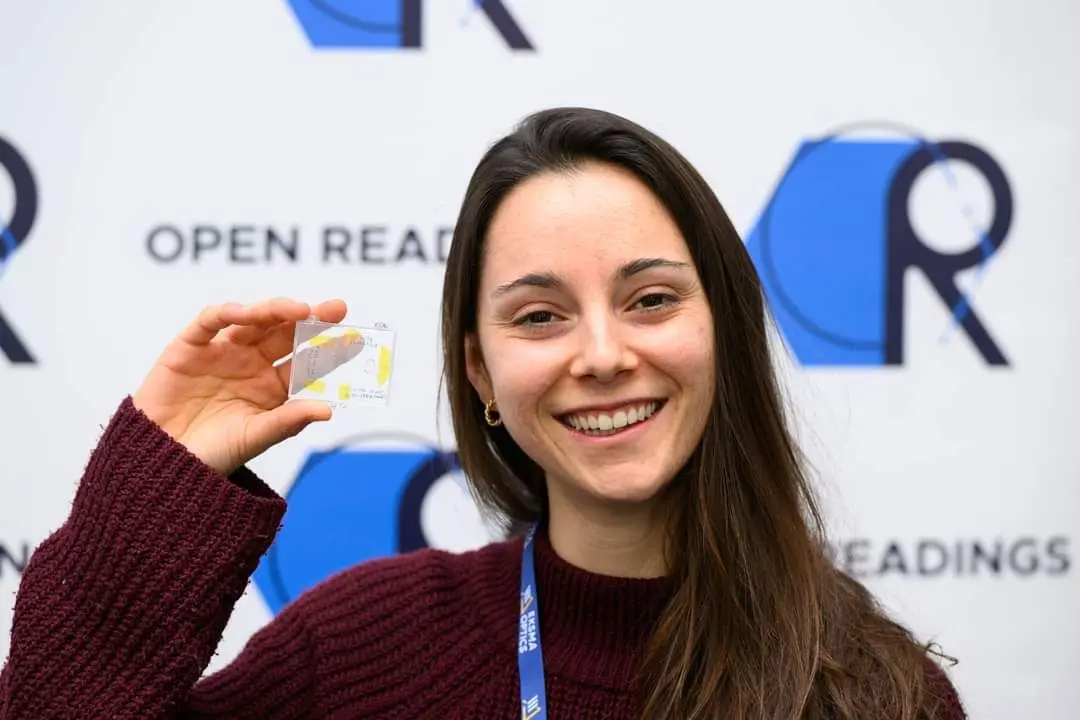
Photo credit: Open Readings / Nail Garejev
Her journey into physics began with childhood curiosity. 'In primary school, I read two novels about quantum physics and life at CERN, which motivated me deeply,' she recalls. Later, a supportive professor helped her switch from Nanoscience to pure Physics, while another professor guided her to the Europhotonics Erasmus Mundus Joint Master’s program.
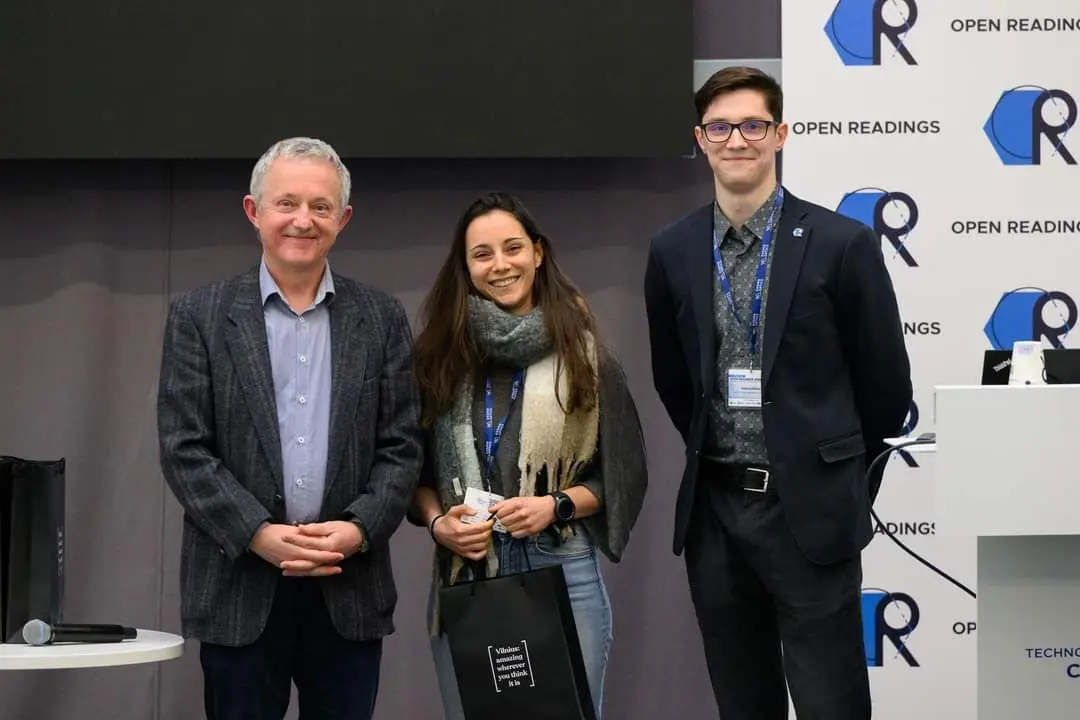
Photo credit: Open Readings / Nail Garejev
Choosing the Faculty of Physics for Research-Driven Learning
The Europhotonics Erasmus Mundus Joint Master’s program spans multiple leading European universities, allowing students to experience diverse research environments. While some peers moved every semester, Puig Vilardell chose to spend her first year in Marseille, France, and her second in Vilnius. Here she earned a master’s degree in the Laser Technology programme.
'Initially, I just wanted to go abroad for the first year and then return to Barcelona. However, to keep my scholarship, I had to stay abroad. Among the different options, VU was the most attractive to me. There was more time dedicated to research in the lab and preparation for the master's thesis compared to the other universities. I came just for the third semester, but then I decided to stay for the last one to complete the thesis here, and I couldn’t be happier with the choice,' explains the student.
Connecting Beyond the Lab
Relocating across Europe presents obvious challenges, but administrative support and local communities made the transition seamless. Although Puig Vilardell joined the faculty only for the final year of her master’s degree, she quickly recognised the community’s vibrant role within the VU and Faculty of Physics. The student points to major student-led initiatives like the famous Physicist’s Day festival (FiDi) and the international scientific conference 'Open Readings' as fantastic opportunities she would have loved to participate in as a local or undergraduate student.
To integrate into the international scene upon her arrival, she participated in activities organised by Erasmus Student Network at VU and lived in the international student dormitories, which she found to be excellent ways to meet new people and explore Vilnius. However, her closest social circle blossomed within the local Lithuanian community through the VU Hikers' Club.
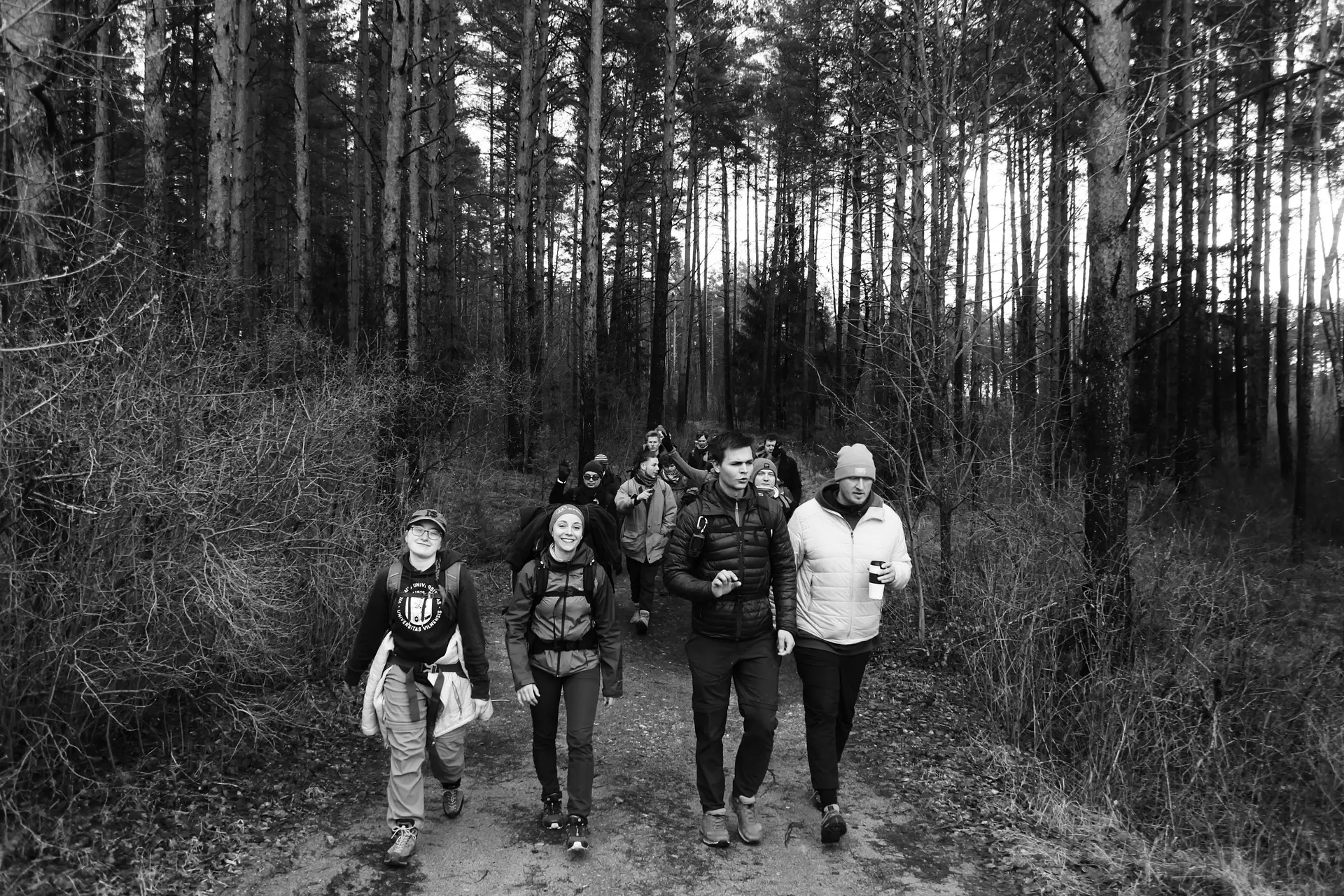
VU Hikers' Club. Photo credit: personal archive
'I was very excited to live in new places and to experience and try to adapt to different cultures and environments. I think when moving abroad, finding your type of people or a group you vibe with helps a lot. The hiker’s club is a very nice and active community of lovely people,' says Puig Vilardell.
Lithuania’s nature was a highly reassuring surprise for a young researcher. 'I love it here! My general impression is that of a calm country very connected to nature. I really like how many forests there are and how close they are to the city, especially in Saulėtekis. I also like the winters here. I’m not used to so much snow at home, so it’s very nice to experience this type of winter,' she says.
'A Great Place to Be': Femtosecond Lasers and Unwavering Support
Academically, the Laser Research Center became her primary hub. She highlights the immense support of mentors like master’s supervisor Prof. Mangirdas Malinauskas, then advisor and current PhD supervisor Dr Darius Gailevičius, and the head of the Center Dr Dalia Kaškelytė, colleagues from her research group, other students, and the professors.
'Everyone has been very nice to me since the first day, and I felt very welcome. The work in the lab, the lectures, conferences, presentations and defences, etc., contributed a lot to my growth as a researcher as well. As a person doing research with femtosecond lasers, I think it’s a great place to be,' smiles the student.
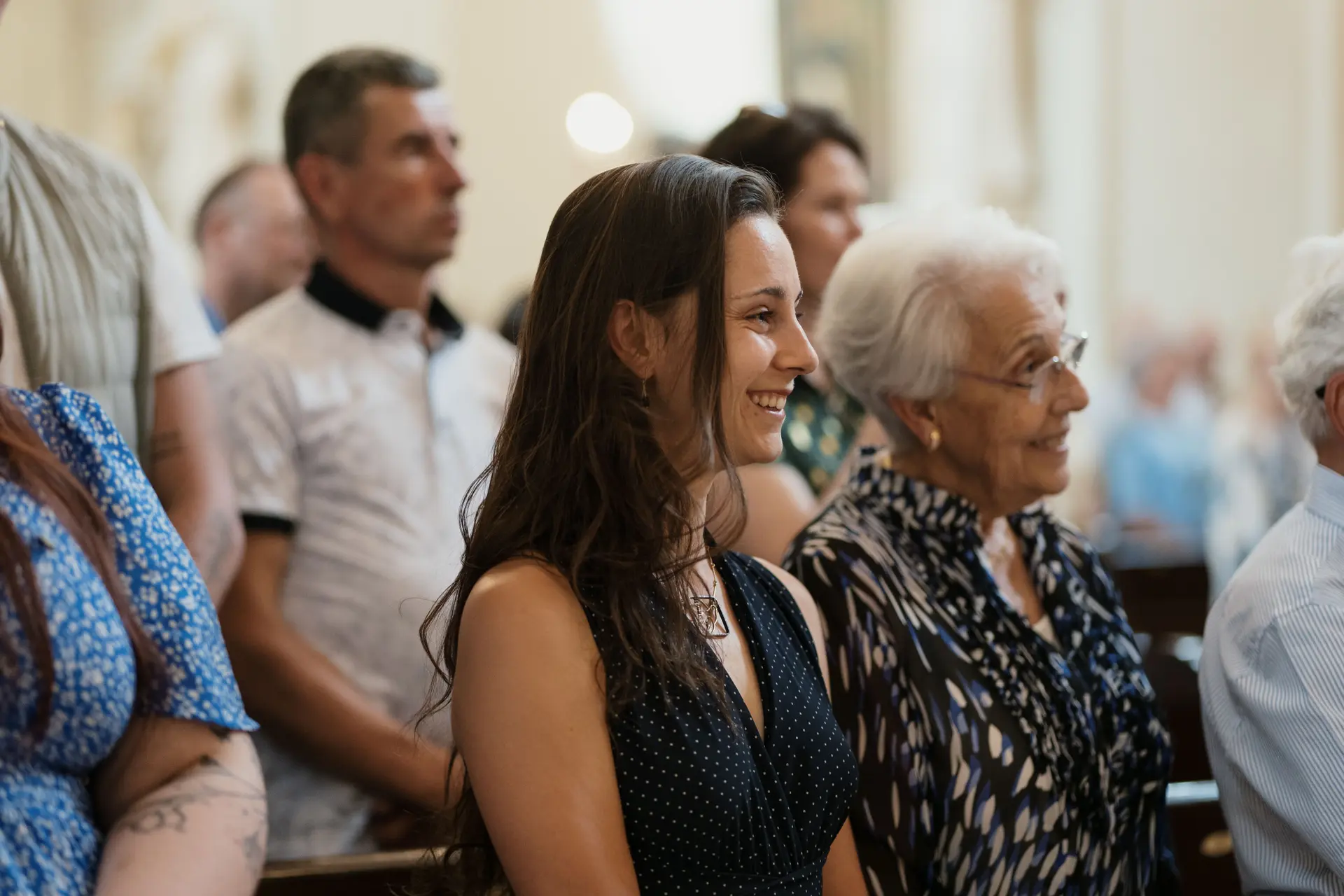
Photo credit: VU
Now pursuing a joint PhD, her research addresses a complex engineering challenge: building a lens-free camera that uses invisible infrared light, specially designed optical masks and complex math to take 3D microscopic pictures of things we normally can’t see.
'We aim to achieve such imaging systems by using advanced laser manufacturing techniques to modify materials transparent in the infrared range and make coded apertures with them. The flat plate has a complex pattern carved or engraved in it, so that when the light goes through it, the plate makes the light waves bend and interfere with each other, creating a very specific pattern on the camera sensor. Even though the raw image looks like a blurry, scrambled fingerprint to the human eye, a computer algorithm knows the exact pattern of the coded aperture and can 'decode' that blurry shadow, instantly reconstructing a perfectly sharp image,' explains Puig Vilardell.
Until this summer, she was at the University of Tartu doing research on this type of imaging system, led by Dr Vijayakumar Anand. Afterwards, she had an internship on the other side of the globe and visited the research group of Prof. Saulius Juodkazis, Head of Nanotechnology Research Facility and VU honorary doctor and adjunct research professor. 'It was a new area of expertise to me, but I joined a group that specialised in that, which helped me acquire the knowledge I needed. It was an intense learning experience, from which, apart from learning a lot on the topic and getting hands-on training, we managed to publish two articles out of it. Then I did a short internship at Swinburne University with Prof. Saulius Juodkazis, where I started working on laser ablation and learned a lot about laser material modifications and characterisation,' says the student.
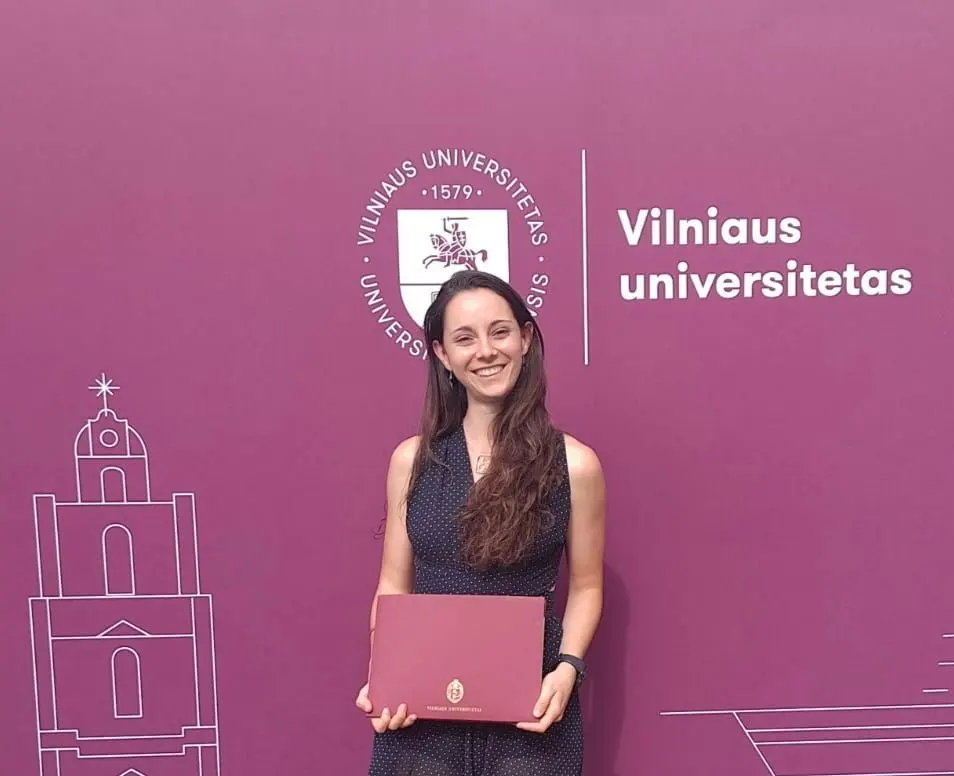
Photo credit: personal archive
Now she’s finally starting the part of advanced laser manufacturing of elements to be used as coded apertures at the Laser Research Center. 'We are starting to design the experiments, and I’m getting trained on how to use the equipment that I will need for this new phase of the PhD,' explains Puig Vilardell.
For any international students currently debating whether to take the leap and study at VU’s Faculty of Physics, Puig Vilardell’s advice is simple: just do it. She highly recommends the program to anyone who thrives in a practical environment and prefers to 'learn by doing' rather than focusing solely on traditional lectures. For those who might still feel hesitant, she suggests a highly practical first step: reach out to alumni or current students who have experienced the faculty firsthand, as talking to someone who has already walked the path is always the best way to clear up any doubts.