Sidebar

The Experimental Nuclear and Particle Physics Center at the Faculty of Physics of Vilnius University (VU) is participating in the development of the Compact Muon Solenoid (CMS) detector technology at the European Organization for Nuclear Research (CERN). VU physicists contributing to the upgrade of the inner tracker are the only ones in Lithuania refining the assembly of the electronic components of the TEPX (Tracker Endcap Pixel) modules, verifying and testing their durability and performance.

The fourth session of the Arqus Research Security webinar series will take place on Wednesday 8 July, from 11:30 to 12:30 CEST on Microsoft Teams. Researchers and research administration professionals working with research governance, compliance and international collaboration are invited to join.

Scientists from the Faculty of Physics at Vilnius University (VU) have developed a sensor capable of accurately detecting radiation, identifying its sources, and determining their intensity and precise location. The device, developed by physicists at the Institute of Photonics and Nanotechnology, Photoelectric Phenomena Research Group, is designed to measure radiation doses. It can detect doses ranging from very small to very large ones, including those typical of industrial environments or nuclear emergencies, from a few gray to megagray.

An international team of scientists, including physicists from Vilnius University (VU), has been selected to develop next-generation quantum simulators. Using multicomponent ultracold atoms, the team will build highly controllable quantum simulators – systems designed to create and study complex quantum materials that are difficult to model with conventional computers.

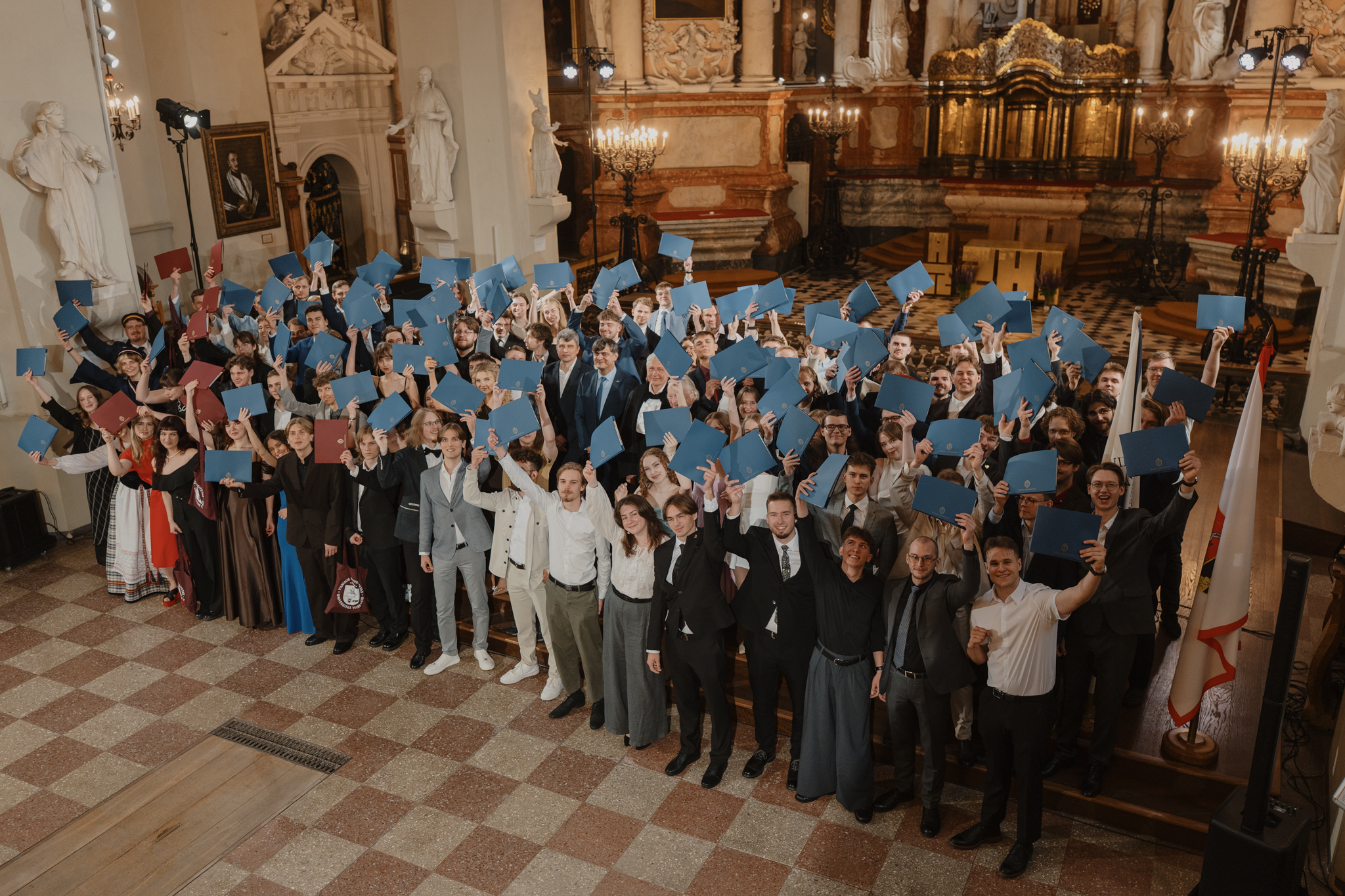
On 16 June, the graduation ceremony of the VU Faculty of Physics took place at the Church of St. Johns. 97 students completed their Bachelor’s studies and 67 students – Master’s studies in the physical, engineering and technological sciences.

Vilnius University (VU) Faculty of Physics Institute of Chemical Physics PhD student Arunjyoti Baidya and Prof. Darius Abramavičius are working on a “PhotoCAM” (Photosynthetic Antennas in a Computational Microscope) project to better understand photosynthesis. Using theoretical and computational methods, the researchers aim to identify the most efficient ways to capture light energy and control energy production.

On the evening of June 11, guests enjoyed guided tours of the Faculty of Physics’ photography exhibition Spectrum of Stories. Prof. Vytautas Balevičius, together with representatives of Physicists’ Day (FiDi) and the Vilnius University Students’ Representation at the Faculty of Physics – Eglė Kulionytė and Vėjas Urbonas – shared a rich collection of stories that brought context and depth to the moments captured in the photographs.

It is with profound sadness that we mourn the passing of Professor Michael Shur, Honorary Doctor of Vilnius University, foreign member of the Lithuanian Academy of Sciences, professor at Rensselaer Polytechnic Institute (USA), and a distinguished physicist whose contributions to semiconductor physics and electronics have shaped the field for decades. Professor Shur passed away on 6 June 2026, at the age of 84.

Vilnius University (VU) offers international students applying to Bachelor and Master study programmes not only the opportunity to study at one of the oldest and most prestigious universities in the region, but also to receive state funding for their studies. One student who has experienced this first-hand is Sean Christopher Fitzpatrick, an Irish student enrolled in the ‘Politics of Global Challenges’ study programme. For Sean, receiving a state-funded study place made a tangible difference to his time in Lithuania by easing some of the financial pressure and providing greater security while studying abroad.

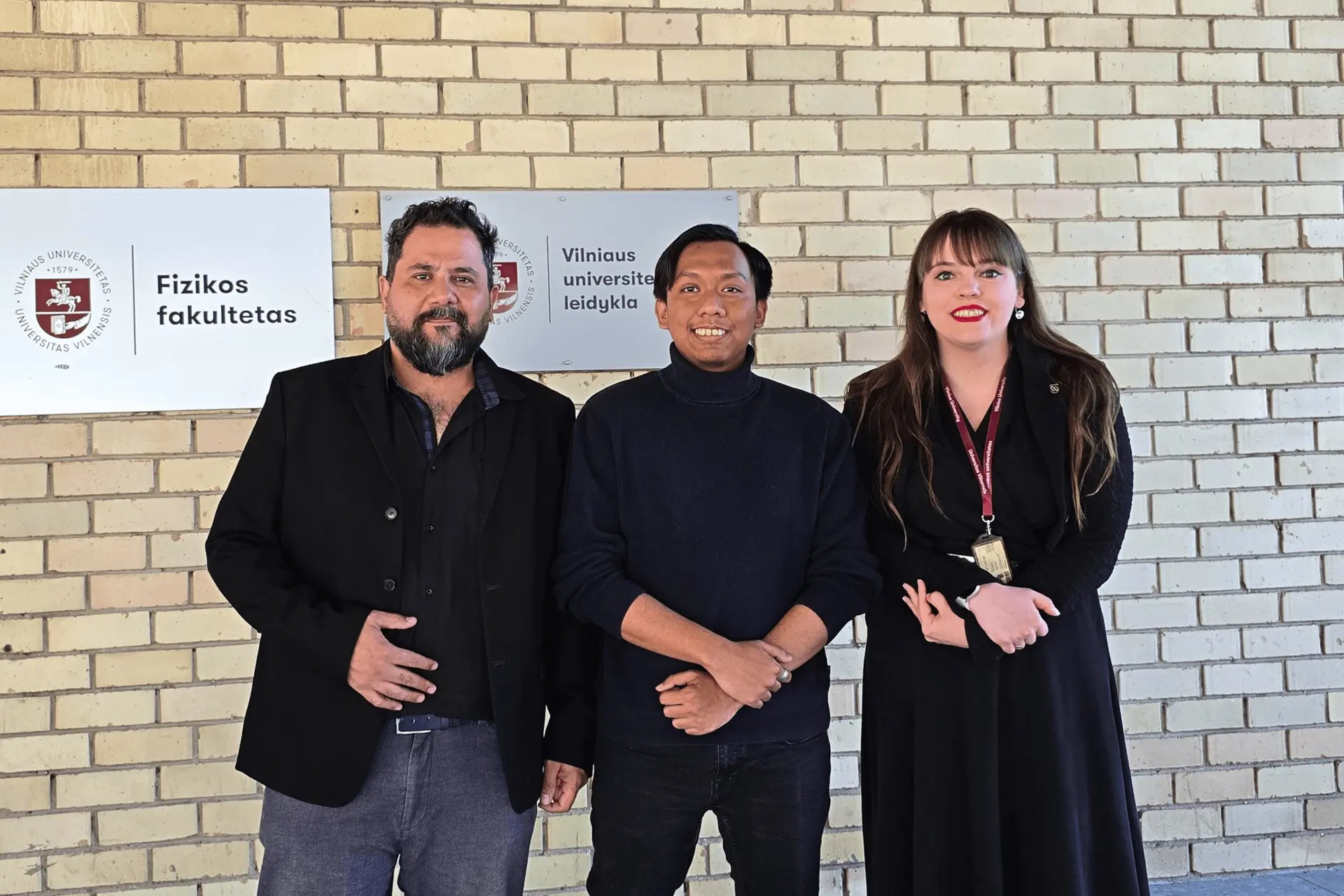
Researchers from the Faculty of Physics at Vilnius University have developed a theoretical model that allows atoms to be “pre-programmed” by light alone to reshape laser beams that carry both a twist and a polarisation. The study by master’s student Dharma Prasetya Permana, alongside Dr Mažena Mackoit-Sinkevičienė, Dr Julius Ruseckas, and Dr Hamid Reza Hamedi from the Institute of Theoretical Physics and Astronomy, opens a magnet-free route to controlling structured light for quantum technologies. The research was recently published in the prestigious journal “Physical Review A”.

The international conference “Nordic-Baltic Astronomy Days 2026” took place in Turku from May 26 to 29. The event aimed to strengthen scientific ties between the Nordic and Baltic countries and to promote joint research. This is an important regional event for the astronomy community, in which Lithuania actively participates, contributing to international cooperation and the advancement of astronomical science.