

Faculty of Physics Graduation Ceremony
We are pleased to invite the graduates of the Faculty of Physics, their relatives and members of our faculty community to the graduation ceremony.

We are pleased to invite the graduates of the Faculty of Physics, their relatives and members of our faculty community to the graduation ceremony.

The international conference “Nordic-Baltic Astronomy Days 2026” took place in Turku from May 26 to 29. The event aimed to strengthen scientific ties between the Nordic and Baltic countries and to promote joint research. This is an important regional event for the astronomy community, in which Lithuania actively participates, contributing to international cooperation and the advancement of astronomical science.

Arqus students are invited to apply for the second edition of the innovative micro-degree programme Artificial Intelligence and Society, offered online by the University of Graz as a virtual mobility opportunity.
At a meeting held on May 25, the Central Election Commission of Vilnius University assessed the compliance of the candidates listed on the rosters submitted by the core academic units with the requirements set forth in the legal acts governing the election of members of the Vilnius University Senate, and registered the candidates for Senate membership.
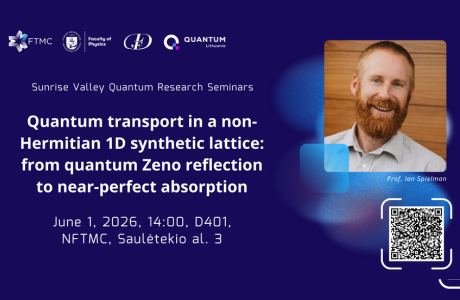
The seminar will present experimental studies of wavepacket propagation in a dissipative engineered quantum chain. The work implements a non-Hermitian synthetic lattice with an abrupt interface between dissipative and non-dissipative sub-chains, using the hyperfine manifold states of an Rb-87 Bose–Einstein condensate. By tuning the dissipation strength, the researchers observed the crossover between ballistic propagation, near-perfect absorption, and quantum Zeno reflection. Numerical simulations revealed that optimal absorption occurs when tunnelling and dissipation are properly matched.
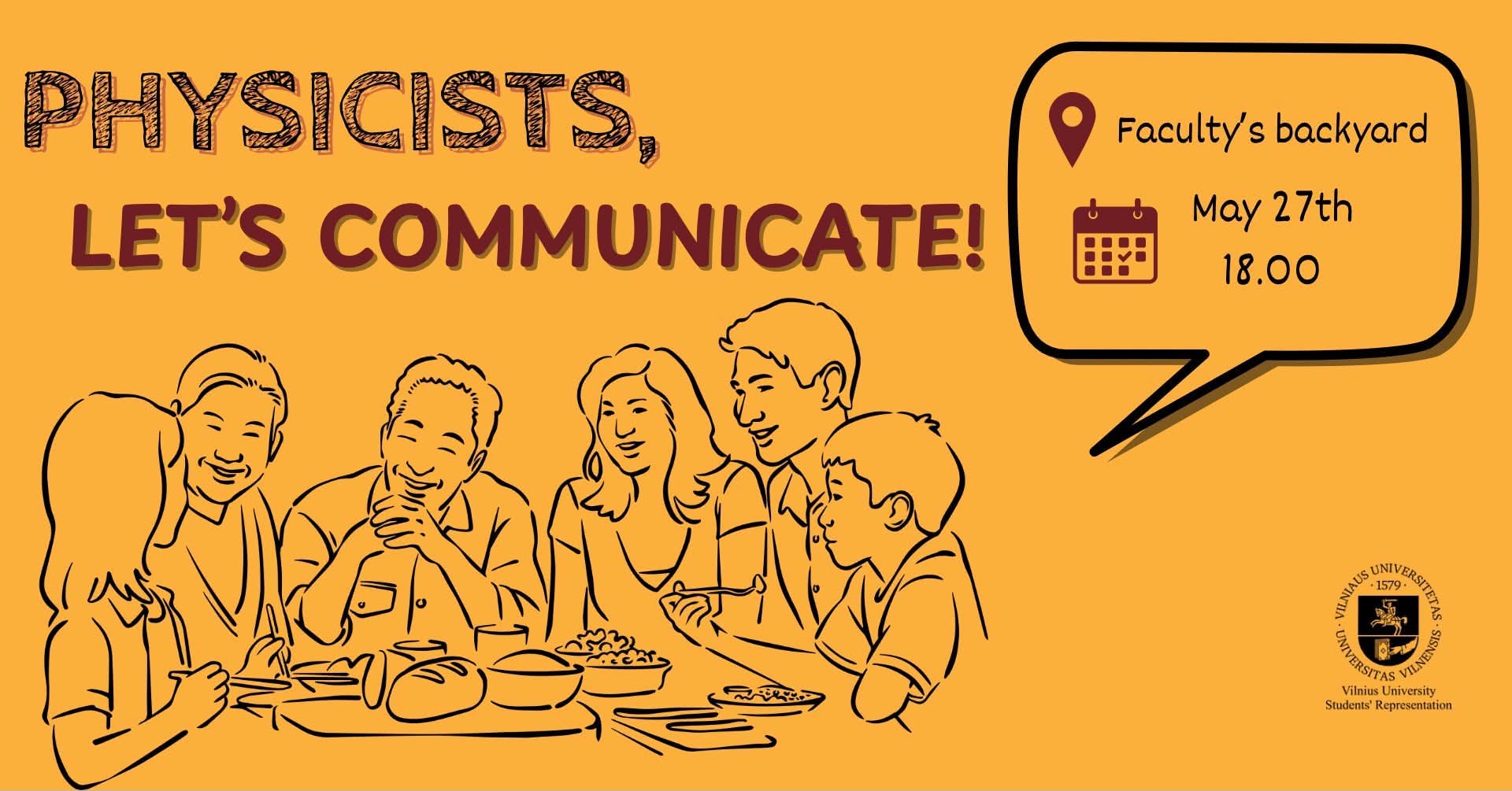
VUSR PhF invites you to our traditional community evening, where all, from students to lecturers are warmly welcome.
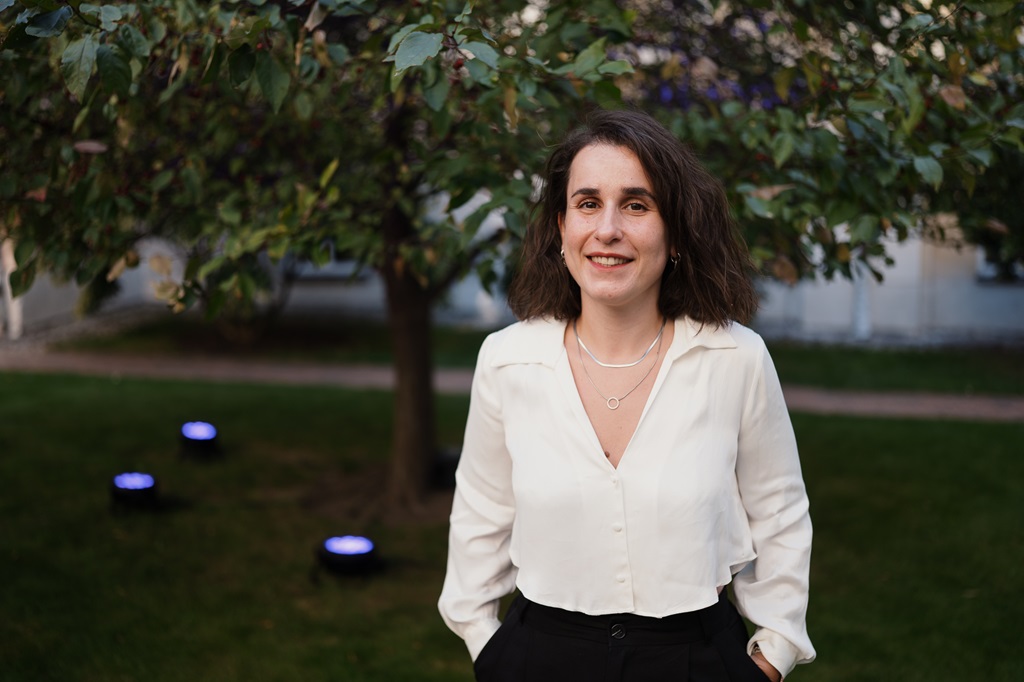
A prestigious Marie Skłodowska-Curie Postdoctoral Fellowship has been granted to Dr Dimitra Ladika, a researcher at the Laser Research Center of the Faculty of Physics at Vilnius University (VU LRC). She will implement the project “Multiphoton Lithography and Advanced Materials Engineering for the Generation of Shaped Single and Multispectral Emission at the Nanoscale (SHINE)”. This time, it is the only MSCA Postdoctoral Fellowship grant in Lithuania.
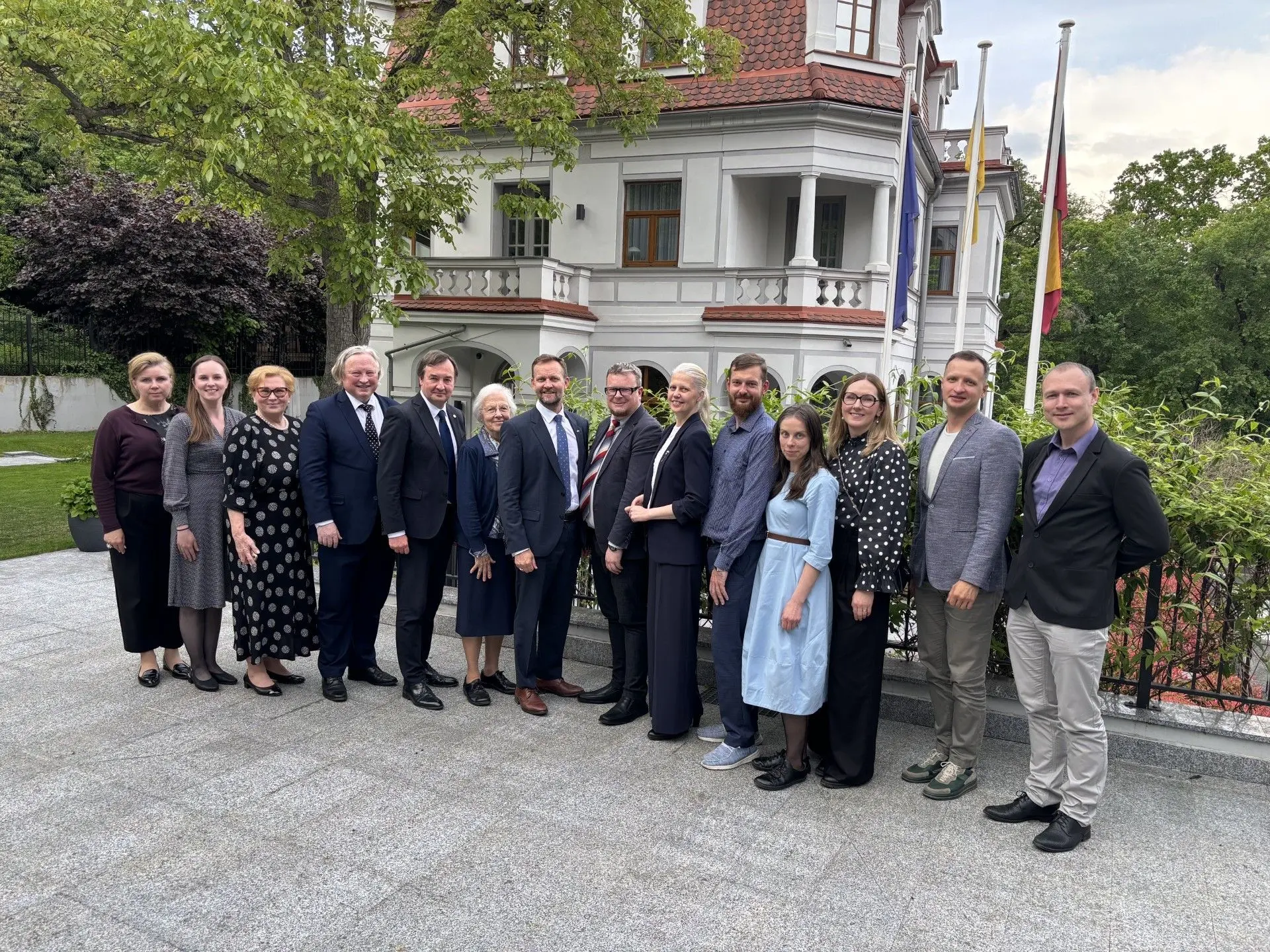
From 14 to 17 May, Rector of Vilnius University (VU), Prof. Rimvydas Petrauskas, and Pro-Rector for Partnerships, Dr Artūras Vasiliauskas, visited the Czech Republic. During their time in Prague, the VU representatives discussed cooperation with Charles University, visited the Extreme Light Infrastructure (ELI) Beamlines Facility, and met with members of the Lithuanian community living in the country.
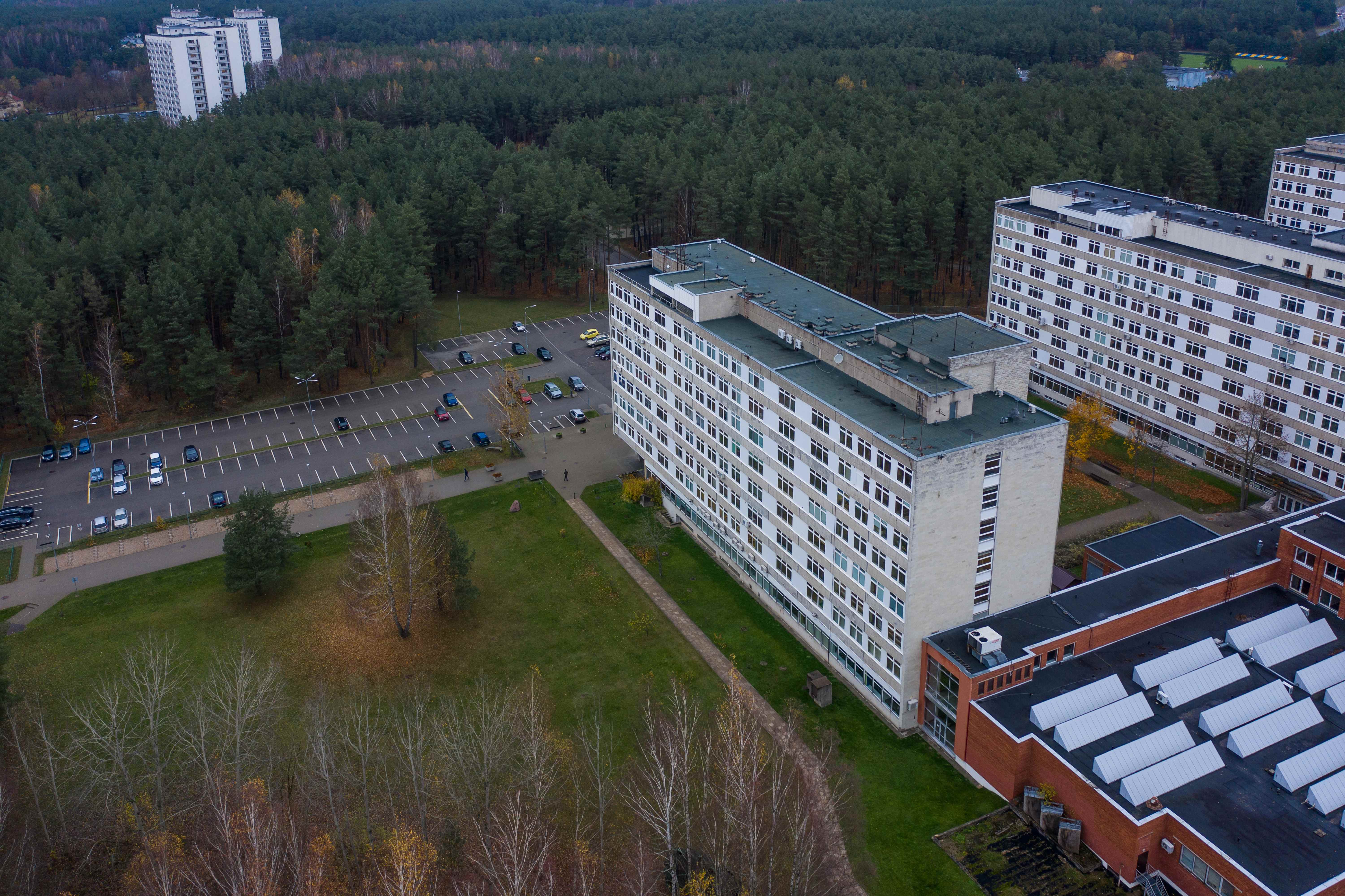
“Marking the Faculty’s sixtieth anniversary, we invited our community to share their most memorable moments. Colleagues, alumni, and students remember a wide variety of stories. We warmly invite you to discover or revisit them: to pause for a moment in the corridors and stairwells of the III Building at Saulėtekioav. 9,” says Dean Prof. Dr Aidas Matijošius.
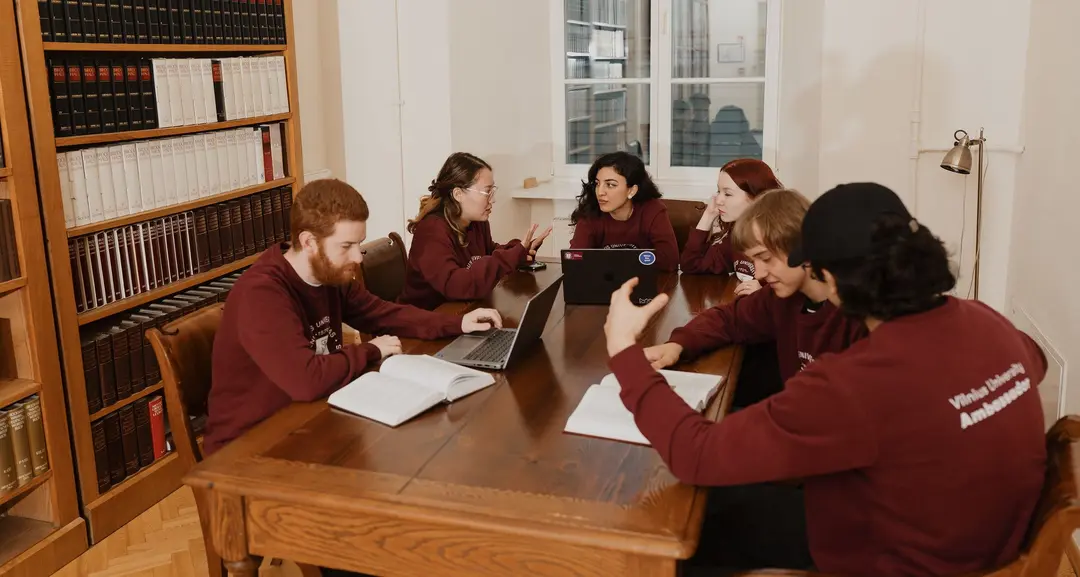
The Arqus Student Council in Leipzig invites students from across the Alliance to an online game night on 15 May at 19:00 CEST, designed to bring together students in a relaxed, informal and engaging environment.
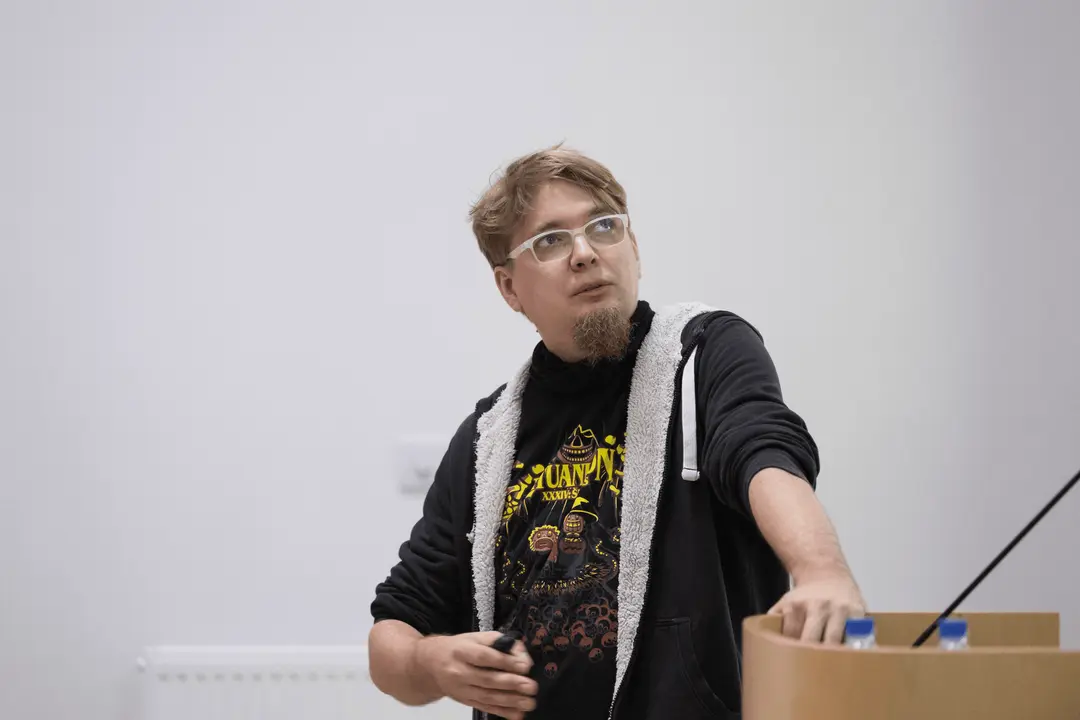
Science fiction is a genre that leaves few people indifferent. Some can’t take it seriously, while others can’t imagine their lives without it. Unsurprisingly, there are a lot of scientists among sci-fi fans. According to Dr Augustas Vaitkevičius, a researcher at Vilnius University’s (VU) Faculty of Physics, this is no coincidence. It’s almost bound to happen with a genre that encourages people to dream, to explore, and to test out even the strangest ideas. Above all, science fiction inspires us not to be afraid of imagining a different, better future.

The Association of Spanish Scientists in the Baltic Countries (ACEBaltic) announced the First Edition of the “Antonia Ferrín Moreiras” Award for the Best Doctoral Thesis in Astronomy and Astrophysics.

On 13 May, Europe will mark the first European Doctoral Day, a new continent-wide initiative dedicated to highlighting the role of doctoral education and PhD holders in research, innovation, and society. The initiative is planned as an annual event during Europe Month and brings together universities and academic networks across Europe.
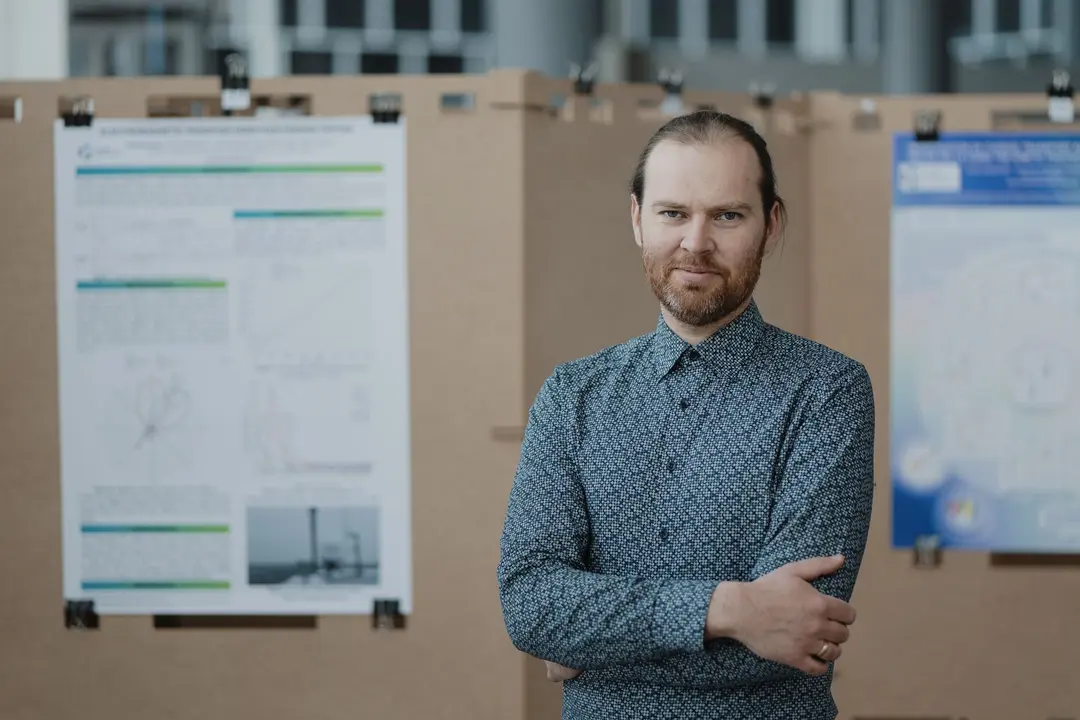
By employing X-ray radiation alongside laser and organic semiconductor technologies, Vilnius University (VU) physicists are developing future materials. The research team aims to create a next-generation dosimetry platform – an advanced technological system capable of measuring, recording and analysing ionising radiation doses at the molecular level. According to researchers from the VU Faculty of Physics, the outcomes of these studies could be highly significant not only for more effective cancer diagnostics and biomedicine, but also for a wide range of other high‑technology sectors.
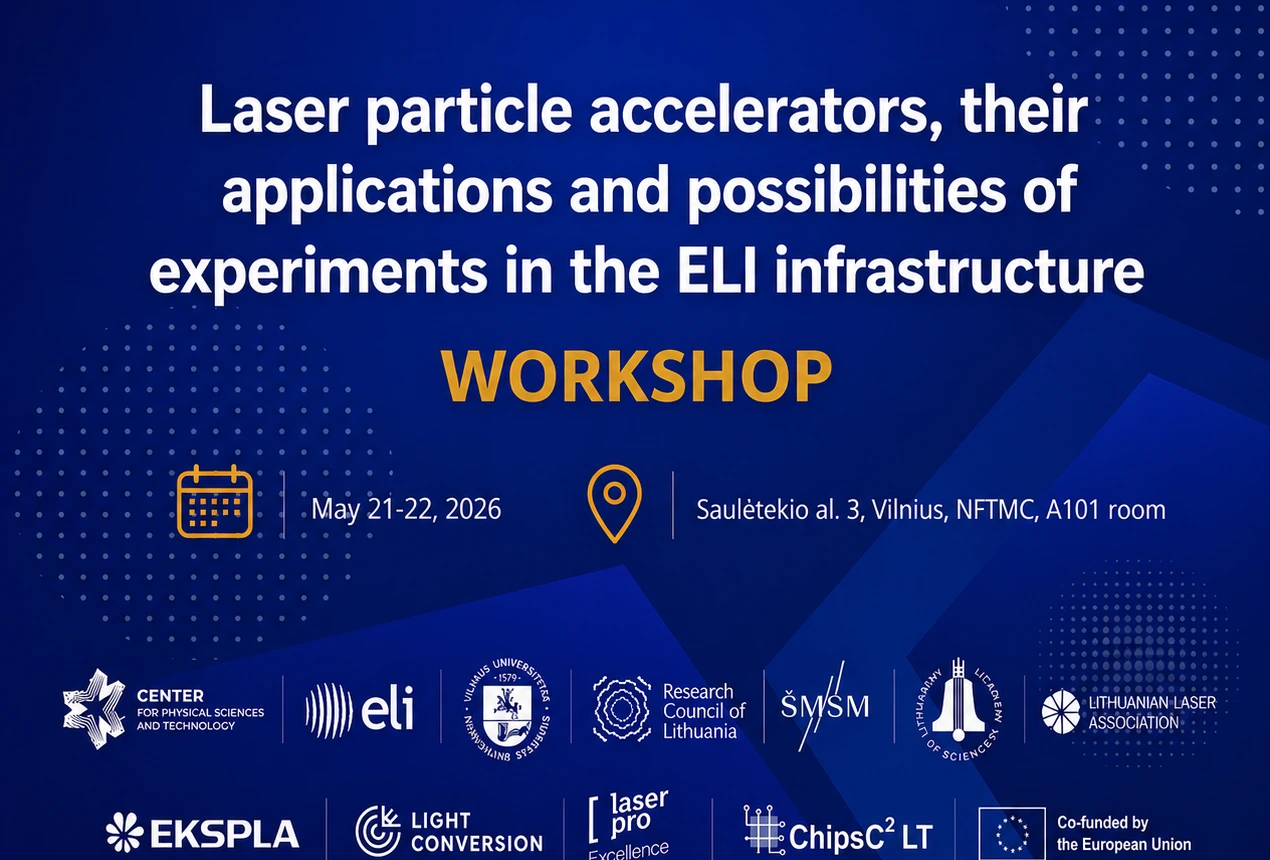
This two-day conference offers a unique opportunity to learn about the latest research conducted at the Extreme Light Infrastructure (ELI) science centre, open access possibilities, and cutting-edge laser plasma technologies. The event is intended for researchers, PhD students, engineers, and anyone interested in ultrafast laser sources, the effects of radiation on biological systems, advances in laser-driven particle acceleration, and the application of artificial intelligence in physics experiments.
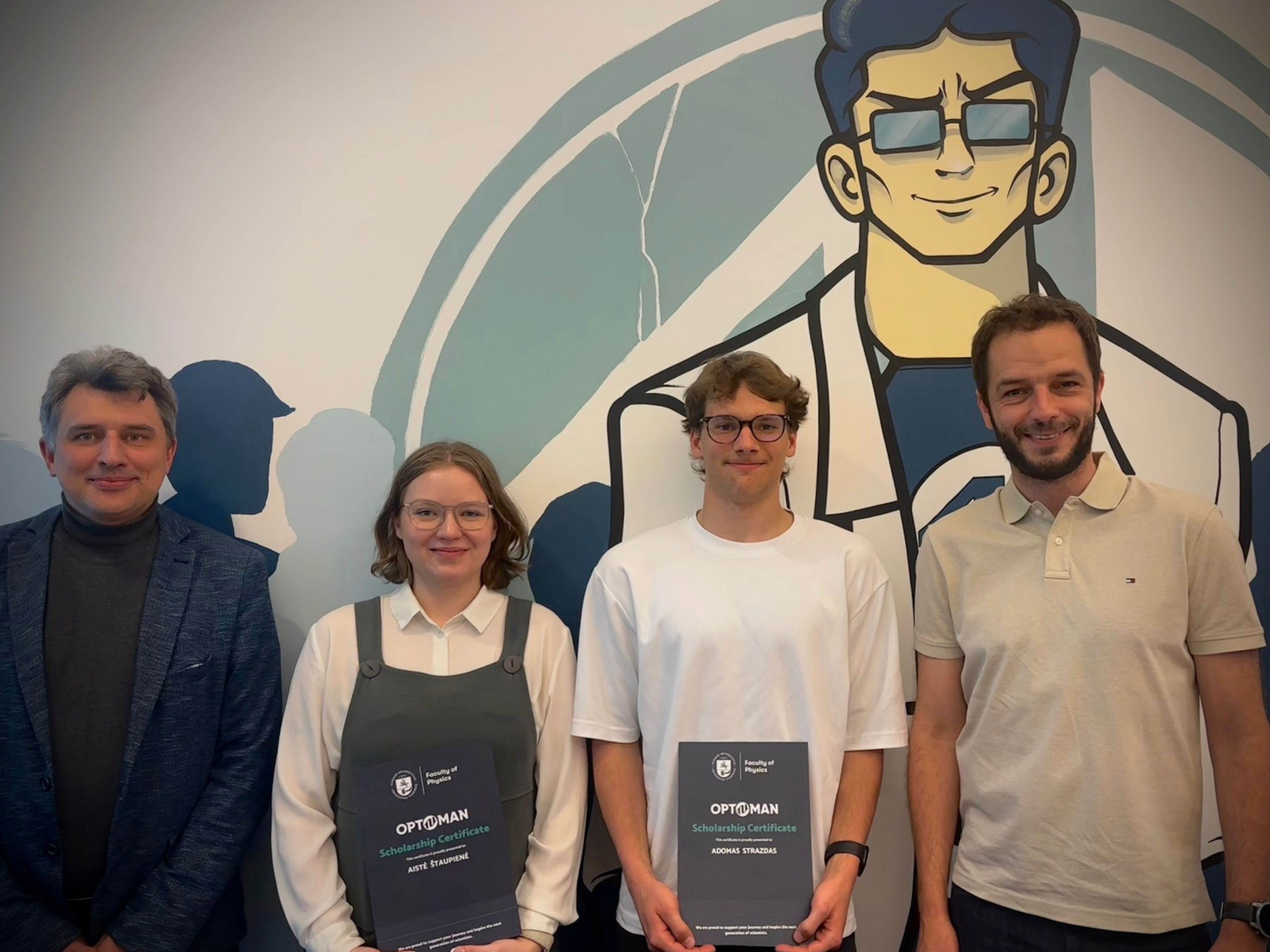
Congratulations master’s student Aistė Štaupienė and bachelor’s student Adomas Strazdas – the winners of the Optoman Scholarship.
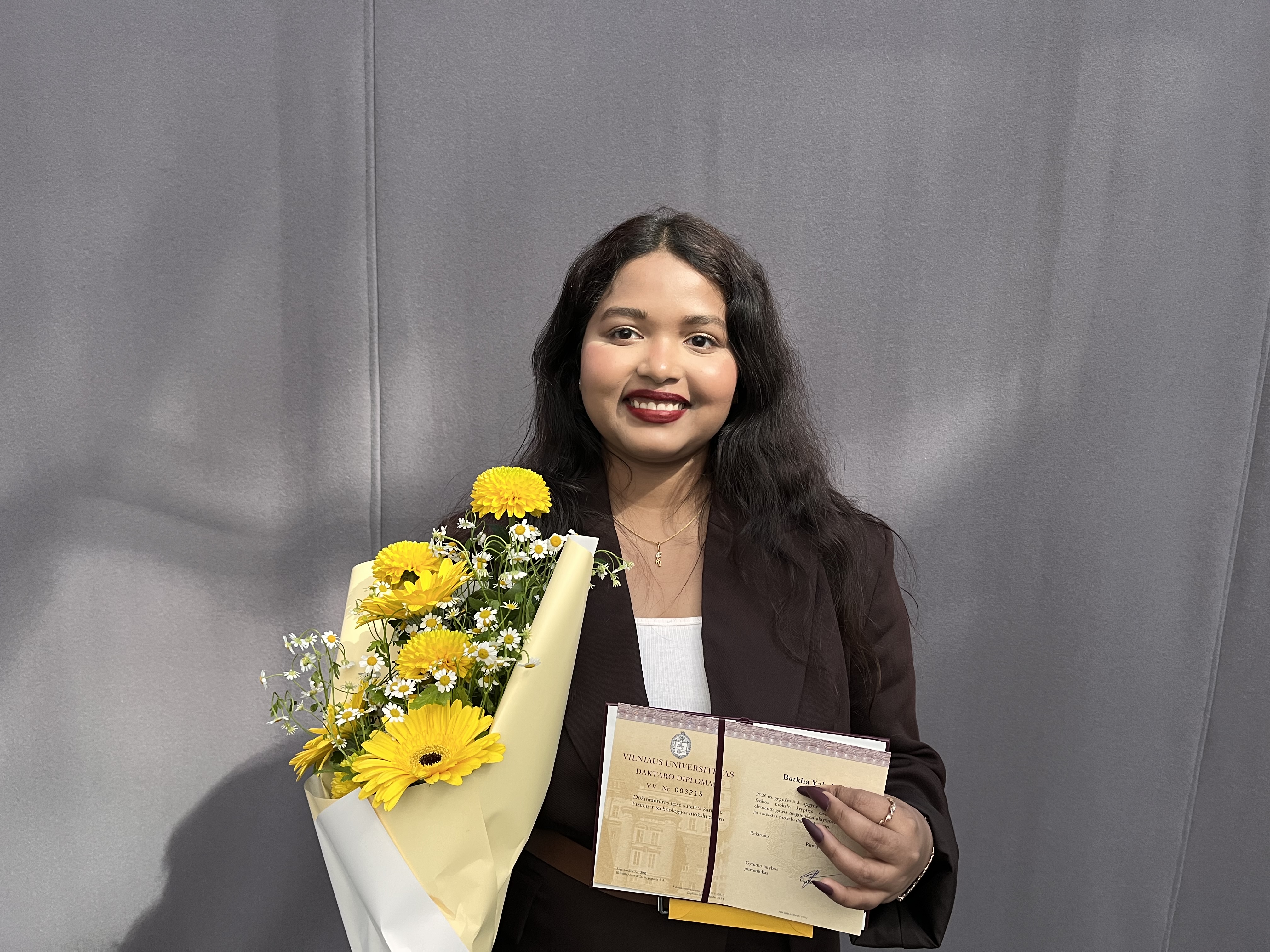
On 5 May Barkha Yakub Bale successfully defended her PhD thesis “Abundances of Chemical Elements in Magnetically Active Stars”. Supervisor – Prof. (HP) Gražina Tautvaišienė.

Vilnius University launches a call for funding interdisciplinary research projects by early-career researchers.
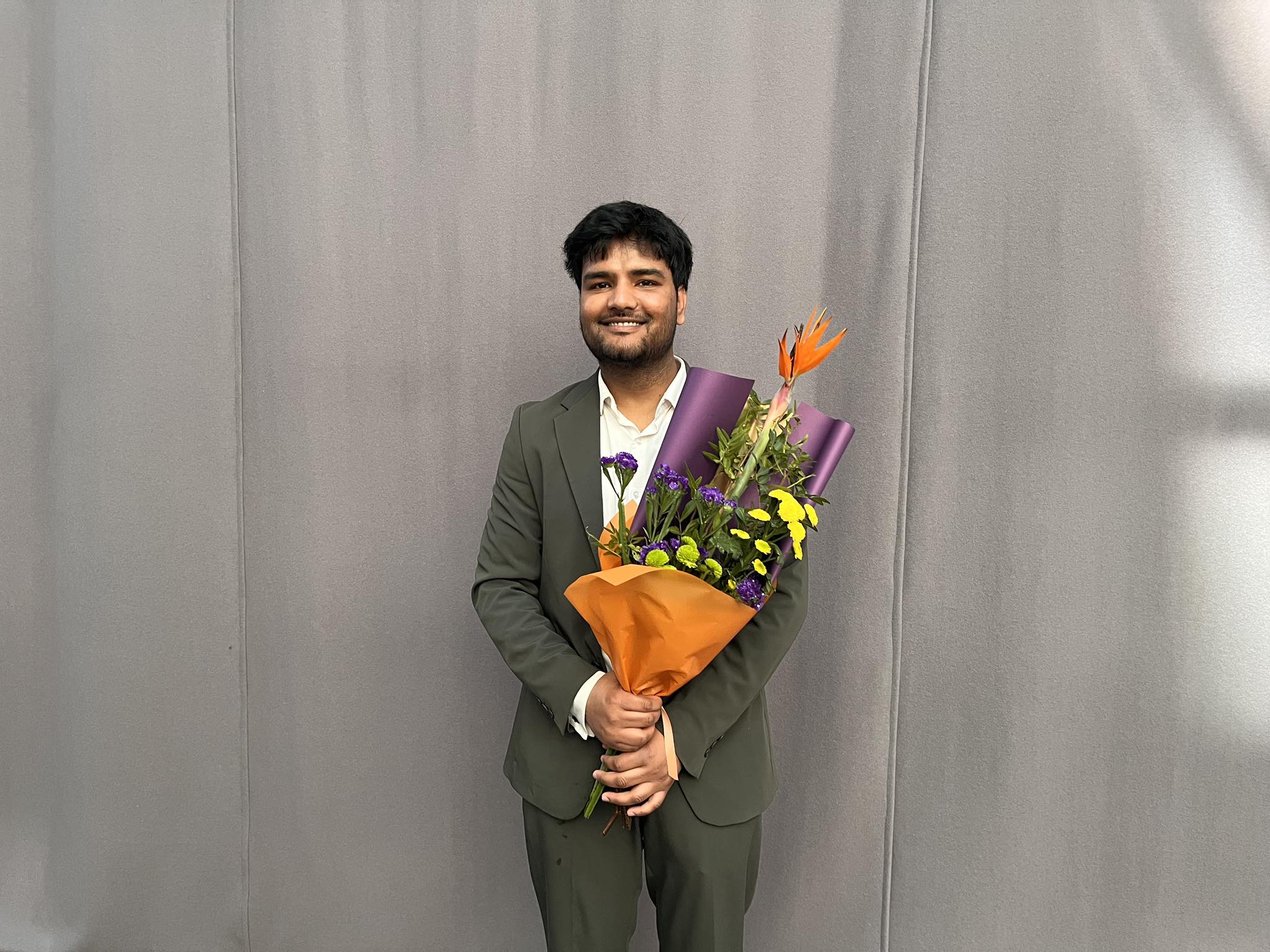
On 4 May, Ashutosh Sharma successfully defended his PhD thesis titled “Spectroscopic study of the planet-host stars“. Supervisor – Assoc. Prof. Edita Stonkutė.
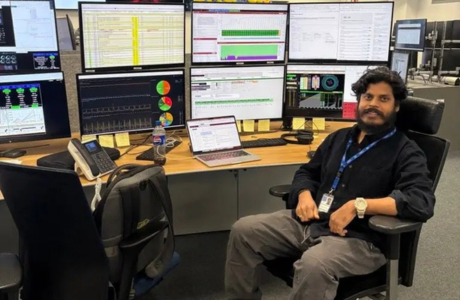
“So, when does it get warm in Lithuania?” Dr Samarendra Nayak asks as our interview wraps up. A postdoctoral researcher at the Center for Nuclear and Particle Physics at Vilnius University’s Faculty of Physics, he arrived in Vilnius from his native India in the middle of winter and admits he has never experienced anything like this cold in his life. In Vilnius, he is adjusting not only to the climate but also to a different approach to work. Even so, Dr Nayak emphasises that Lithuania and India share more than you might expect, and that the language of science allows people from very different cultures to find common ground.