Sidebar

The University of Padua welcomes participants to a webinar dedicated to the Arqus Alliance joint call for Erasmus+ Blended Intensive Programmes (BIPs). The session will present this opportunity, focusing on BIPs taking place during the second semester of the 2025/26 academic year, and will be followed by a Q&A session to address any questions.

On October 29 at 10:00 AM in A101 aud. (National Center for Physical and Technological Sciences, Saulėtekio ave. 3), Professor Jian-Jang Huang will give a public lecture "Nitride-based transistors – from lateral to vertical structure". He is a Distinguished Professor and Associate Dean of the College of Electrical Engineering and Computer Science, Graduate Institute of Photonics and Optoelectronics (GIPO), Department of Electrical Engineering National Taiwan University.

Arqus announces the opening of applications for the first Arqus Open Science Award. Launched during the 2025 Arqus Annual Conference at Leipzig University, this award recognises early-career researchers who champion open science. It celebrates those who set an example for the entire Arqus scientific community by advancing accessibility, reusability, and reproducibility in research.

The Arqus Alliance announces the launch of its 3rd Arqus Alliance Ambassadors Programme. This initiative, led by the Arqus Student Agora, aims to create a network of student ambassadors who will promote the values and initiatives of the Arqus Alliance while engaging with students, staff, and local communities.

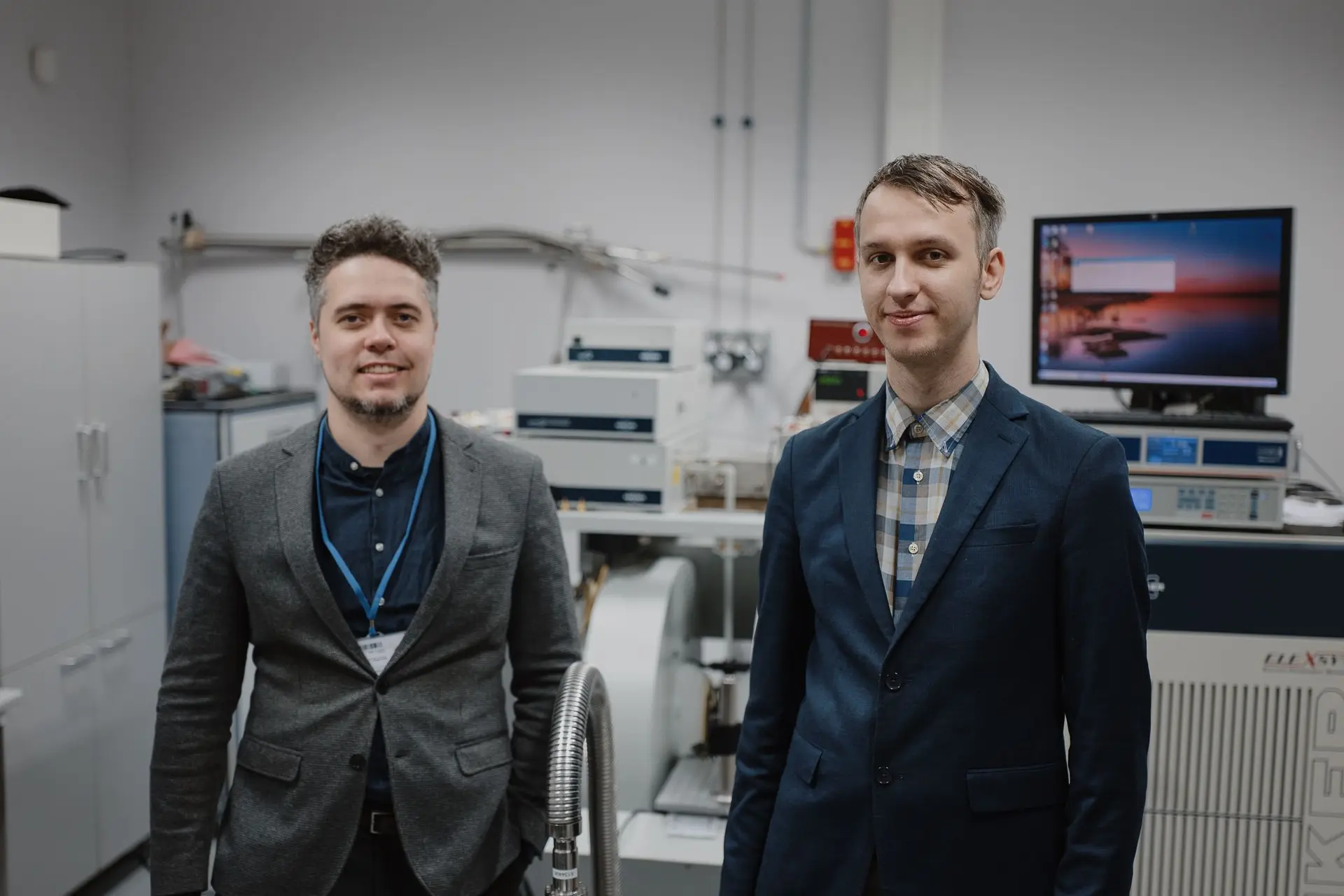
A groundbreaking study from Vilnius University’s (VU) Faculty of Physics explores a highly promising method for increasing light energy. Using organic semiconductor technologies, Dr Edvinas Radiunas from VU’s Institute of Photonics and Nanotechnology, along with colleagues L. Naimovičius, Dr P. Baronas, Dr K. Kazlauskas, and others, has demonstrated how invisible infrared light can be converted into visible light. This unique research, aimed at harnessing light conversion phenomena in organic molecules, was published for the first time in the prestigious journal “Advanced Optical Materials”.

The Institute of Pedagogy, University of Wrocław, and the Faculty of Education Sciences, University of Granada, joined by the Froebel Department of Primary and Early Childhood Education at Maynooth University, invite the Arqus community to participate in this one-day scientific seminar, which will take place online on 10 November 2025.

The European Commission (EC) has allocated funding for the establishment of the LitAI Artificial Intelligence (AI) Factory in Lithuania. It is expected to become a national centre of competence and technology, bringing together advanced computing infrastructure, data access, scientific research, and highly qualified specialists. This facility will unite the public sector, business, and academia in developing and implementing practical AI solutions – from public services and industry to transport and defence.

The Nobel Prize in Chemistry 2025 was awarded to Professor Susumu Kitagawa from Kyoto University (Japan), Professor Richard Robson – a chemist from the University of Melbourne (Australia), and Professor Omar M. Yaghi from the University of California, Berkeley (USA). They were honoured with the most prestigious scientific award a living researcher can earn for their work in creating a metal-organic framework (MOF), which opened up new possibilities for designing porous materials capable of absorbing, storing, and separating molecules.

On October 7th, the Royal Swedish Academy of Sciences in Stockholm announced the 2025 Nobel Prize in Physics. The award went to Prof. John Clarke from the University of California, Berkeley, Prof. Michel Devoret from Yale University, and Prof. John Martinis from the University of California, Santa Barbara. They were honoured for the discovery of macroscopic quantum mechanical tunnelling and energy quantisation in an electric circuit, which laid the foundations for modern quantum technologies – from quantum computers to ultra-precise sensors.

Femtosecond laser systems with high average power and high pulse repetition rate are increasingly used in various fields of science and industry: material micromachining, biomedical imaging, spectroscopy and studies of ultrafast phenomena where high measurement speed and good signal-to-noise ratio are required. Such laser systems, with very high average power (over 100 watts), may also have potential applications in the defence sector.

Vilnius University (VU) invites pupils and anyone interested in studying to take part in its traditional event “Student for a Day” taking place from 20 to 24 October. Participants will have a unique opportunity to explore VU’s study programmes, University spaces, and vibrant community, as well as to experience what it is like to be a student.

Following the great success of the Arqus Dives activity on 26 September, organised by the Arqus Café team, registration for the next edition of the Arqus Cafés is now open. The Arqus Café is a virtual or on-site meeting place where students and staff from the Arqus partner universities can practice their language skills outside of the language classroom.

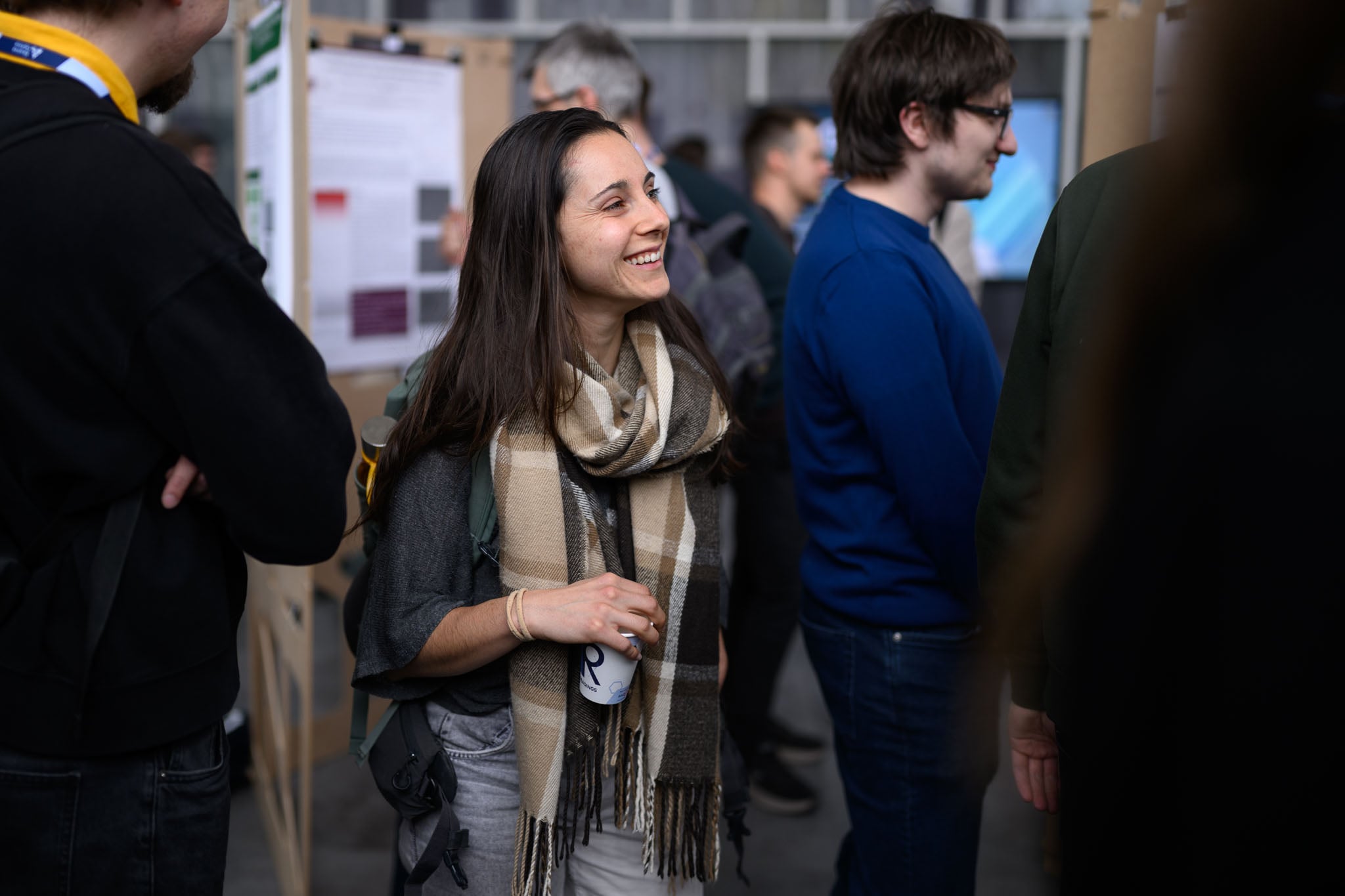
The international conference, EEDS25 – Extended Hanseatic meeting on Exciton Dynamics and Spectroscopy 2025, brought together scientists from Germany, Austria, Denmark, the Netherlands, Spain, Greece, Italy, France, Czech Republic, Scotland, Norway, and beyond.